








King of New York Deep Dive
What the Community Thinks About King of New York
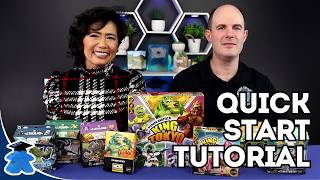
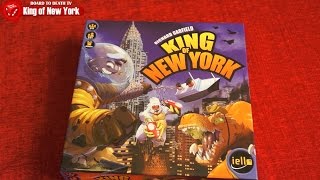
King of New York is widely described as the more strategic cousin of King of Tokyo. Designed by Richard Garfield, the standalone game keeps the monster-bashing core of its predecessor while replacing the single Tokyo city with a fuller map of Manhattan and its surrounding boroughs. Mark Maya of Board Game Coffee placed it at number 50 on their top 50 board games list, arguing that it is easy to learn, easy to teach, and offers more strategy than King of Tokyo. Edo of Gaming with Edo & Jessica reached a similar conclusion, finding that the New York version gives players more to do and is a little less confrontational.
The consensus treats the game as a light, fast filler that still rewards planning. cardboardrhino calls it more like a filler for game nights, while Board to Death TV describes its speed as ideal for a filler or an all-nighter. Rodney Smith of Watch It Played reported that it was one of the hot games at Gen Con this year, with limited daily quantities that required fans to arrive early, which points to demand beyond the reviewers' own tables.
Not every reviewer shares the enthusiasm for the Tokyo family. Adam in Wales - Board Game Design said they do not enjoy King of Tokyo or its take-that relatives very much, though they could not pin down whether the cause was the production, the theme, or the length of play. Edo's preference for New York rests partly on its being less confrontational, which suggests that direct conflict is the main dividing line among players.
Core Mechanics That Define King of New York
Dice Rolling
Each turn centers on a set of chunky dice that the active player rolls, keeps, and rerolls. Board to Death TV explains that the first player takes the black dice and rolls them, may choose which dice to reroll, and may do this a second time, but must keep the final result. Edo describes the system as a monster-bashing Yahtzee, since players select a set of dice and reroll the rest to chase the results they want. cardboardrhino notes that the rerolls teach new players to weigh which results they need against the probability of the dice combinations available. The faces carry the game's economy: lightning bolts generate energy, hearts restore health outside Manhattan, stars build toward the Superstar card, broken buildings allow destruction, skulls trigger attacks from the military units, and paws inflict damage. Because every roll is uncertain, each action stays tense, while the reroll step gives skilled players room to shape the outcome.
Unique Player Powers
Each player chooses one of six monster boards, and each monster starts from its own board with a separate health track and victory point marker. Board to Death TV notes that the monsters can be interchanged with previous sets, so the roster stays varied from one game to the next. cardboardrhino points to the new powers and new monsters as a central part of the experience and recommends the Anubis monster pack for players who want more irregularity. That pack adds a die of fate that is rolled with the other dice and resolved just before them, along with curses that change the rules almost every turn and evolution cards that mix temporary and permanent upgrades. Because each monster brings its own abilities to the same table, the game rewards players who learn how their monster operates inside a game that the others are playing slightly differently.
The King of New York Experience
Epic Power Fantasy
The game's most immediate pull is its sense of scale. cardboardrhino describes how the game creates images of enormous monsters plundering the city, with the sounds of feet tearing down buildings and the squeaks of terrified passengers, and says that it makes you feel powerful like a god. The Manhattan rules reinforce that feeling. A monster that starts its turn in Manhattan earns victory points and energy, and while it holds the island it attacks every rival at once, forcing the others to fight their way back in. Board to Death TV also praises the artwork and production values, which help the theme arrive before the first roll. The result feels less like a tight tactical duel and more like standing above a city while rivals try to pull you down.
Confrontational Monster Bashing
Interaction is the other defining feeling. Board to Death TV says that player interaction is huge and that the game is best played with more people, and the Superstar card can be stolen from any other monster once a player rolls three stars. Attacks depend on location: monsters outside Manhattan hit the monster in Manhattan, while the Manhattan monster strikes everyone else. Board to Death TV also explains that when a single skull is rolled, the military units in the roller's borough attack that roller, while two or three skulls send them against everyone in the borough or the whole city. Edo, however, found that players can meander, gathering Fame and smashing buildings without attacking the leader every turn. The tension comes from deciding how much aggression is worth the risk.
What Makes King of New York Stand Out
A Board That Rewards Positioning
Reviewers consistently point to the map as the feature that separates the game from King of Tokyo. Mark Maya of Board Game Coffee says the flipped military tiles add bonuses and extra damage to the basic monster-bashing, giving the game more strategy than its predecessor. cardboardrhino describes the Manhattan rule as a siege: the first monster into Manhattan can only leave if it dies or if it flees in response to an attack, and another monster can force it out. Those rules turn the board into a question of where to stand, since every borough is a meaningful choice rather than a placeholder.
Replay Value From a Modular Roster
Board to Death TV credits the six monsters and the variety of the card deck with giving the game lasting replay value, and describes it as another soon to be classic for a collection. cardboardrhino points to the Anubis monster pack as the answer for players who have played the base game too many times. The pack is modular: it can be played with the curse deck, or the die of fate can be used alone without the rest of the expansion. For a game that is often sold as a filler, that depth gives it a longer shelf life than its short playtime suggests.
Potential Drawbacks
Early Elimination
Because King of New York can end with a single monster standing, a player who is knocked out early has to watch the rest of the game. Board to Death TV identifies the elimination of a player early on as the main downside of the design. Edo notes that knockout games are rare in today's market and that most players dislike sitting out while others continue, though Edo finds the game fast enough and thematic enough for the format to work, and suggests that a future entry in the King series could give eliminated players a way to stay involved, which would address the criticism directly.
Length and Open-Ended Play
Some players feel the game runs longer than King of Tokyo. Edo reports that critics of King of New York argue the game lasts too long, and that players are not forced to attack the leader, which can leave the pace less focused. Edo disagrees and considers the open paths to victory a strength, but the complaint reflects a real difference in how the two games feel. Board to Death TV also acknowledges that the game involves luck, while noting that rerolls and cards help mitigate it. The same review wishes that the victory point and health markers on each monster board were more visible, since players otherwise have to ask how much life or points their rivals have on almost every turn.
If You Enjoy King of New York
Players who enjoy King of New York's monster-bashing tension should start with King of Tokyo. Edo recommends playing Tokyo first and then moving to New York, describing Tokyo as a king of the hill take-that monster-bashing game at its core. Players who enjoy the dice rolling and the satisfaction of building an engine from dice will find a related appeal in Quarriors!. Adam in Wales - Board Game Design describes dice pool building games as those where players use dice results to buy more dice and grow their pool over time. Mark Maya of Board Game Coffee notes that the Dice Masters games are often compared to Quarriors!, which makes it a natural next step for players who want to see how the same dice-building idea plays out in a different setting.
What Reviewers Are Saying
"First and foremost it manages to create images in your head of the huge monsters plundering the city. You can even hear the sounds of their feet tearing down the buildings, squeaks terrorizing the passengers, and it really makes you feel powerful like a god."
— cardboardrhino
"The reason this guy made it on the list is because first of all it's easy to learn, it's fun to play, and it's easy to teach. It offers more strategy where King of Tokyo is very much just monsters, you're in the city or out of the city, you're rolling dice, you're doing damage, where King of New York introduces like a military element."
— Mark Maya, Board Game Coffee
"The new mechanics, mainly being the building tiles, Go cards, and move phase, added enough depth to the game while still making it remain a family game that even core gamers can enjoy to unwind."
— John Carlo and Felicia, Board to Death TV