/pic5375937.jpg)
/pic2571301.jpg)
On November 30, 1803, the United States purchased Louisiana from Napoleon. U.S. President Thomas Jefferson decided to send two explorers – Meriwether Lewis and William Clark – to discover this huge terra incognita.
Lewis & Clark is a board game in which each player manages an expedition intended to cross the North American continent. Their goal is to be the first to reach the Pacific. Each one has his own Corps of Discovery that will be completed by the Native Americans and the trappers met during the journey. He has to cleverly manage his characters and also the resources he finds along the way. Beware, sometimes frugality is better than abundance.
Lewis & Clark features dual use cards. To be activated, one card must be combined with another one, which becomes unavailable for a while. Thus, players are faced with a constant dilemma: play a card or sacrifice it. During the game, each player acquires character cards that enlarge his hand, building a crew that gives him more options but it needs to be optimized as he will recycle his cards more slowly. This new "handbuilding" mechanism fits strongly with the historical background.
Since the aim of the game is to be the first on the Pacific coast, the timing and the opportunistic use of the other players' positions are crucial.
This page includes videos and mentions from the whole Lewis & Clark family. Drill into a specific game below.
/pic5375937.jpg)

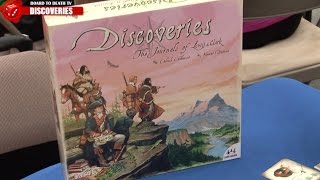
- More accessible than Lewis and Clark
- Historical feel
- Educational rulebook
- Exploration
- America
- Lewis and Clark
Mechanics (from transcript analysis)
- Area Majority — Collecting American Indian cards with different numbers of tribes, whoever has the most of these is going to get more points at the end of the game.
- Dice action — You roll your dice and it goes into your action zone, and then you use your dice to execute different actions.
- Set Collection — Collect different sets of flora and fauna, which are going to be points for you at the end of the game.
Video topics + discussion points
Quotes (from this video)
- if you're not careful you just might learn something
References (from this video)
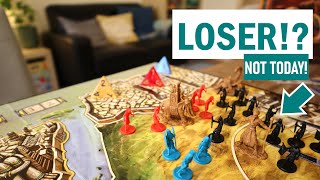
- Exploration and resource management to reach a destination first
- Exploring a trail across mountains along a river to Fort Clatsop
Mechanics (from transcript analysis)
- Card Drafting — Specialty cards are used effectively and efficiently to race.
- Resource Management — Managing resources is key to efficient progression.
- Worker Placement — Players use workers to race to explore a trail.
Video topics + discussion points
Quotes (from this video)
- when it comes to playing board games I think I'm a pretty big loser in fact I think I lose about 75 of the games that I've played
- the feeling of winning is pretty good
- the competitive nature is what really makes games so exciting it's like watching a really tense action movie
- progress is a huge factor for determining whether you're winning or losing and how far you're losing behind the winning player
- hidden information about how far each player is progress throughout the game means that the tension and the suspense level throughout the game remains High until that very final reveal
- this little balancing mechanism as you can see as you get further and further up the victory Point track the red lines become more and more frequent
- the power to manipulate the turn order if you're losing the game really helps to keep things even
- what do you think about losing in board games are you someone who wins a lot loses a lot or you don't care either way I'd love to hear about your board game experiences in the comments section below
References (from this video)
- planning-oriented depth and engine-building potential
- interactive dice pool mechanics (taking opponents' dice)
- thematic integration with expedition and indigenous help
- potentially complex; relies on multi-step planning
- some thematic and mechanic density may slow initial play
- exploration and discovery with indigenous help
- America exploration expedition
- planning-oriented, multi-turn planning with dice-based actions
- Lewis and Clark
Mechanics (from transcript analysis)
- coordinated expedition / loyalty mechanics — expedition members are loyal to you or opponents but operate with the whole expedition; they can be recalled, affecting plans
- dice pool management / dice drafting — players roll colored dice; dice move to a general pool; players may take all their own dice or all dice in one half of the pool; opponents' dice can be used until recalled
- engine-building via character/location cards — cards grant unique bonuses that build a personal engine cascade over the game
- face manipulation of dice — on a turn, a player can change dice faces to achieve desired effects; some faces enable engine-building actions
- sequence planning / delayed resolution — dice are collected and resolved over several turns; players place dice on a tableau for future use
Video topics + discussion points
Quotes (from this video)
- by far in a way the most important life-altering thing that's happened to me in the last month is that I proposed to my then girlfriend now fiance Jessica
- I'm getting married
- I am pretty excited that I just finished recording my first question and answer Vlog
- the last one was in Alien Frontiers
- Welcome to the dungeon is a great idea
- it's gorgeous but it's not the most engaging thing ever
- I prefer this over Race for the Galaxy
- it's a cool pyramid building engine building out the Wazoo game with an auction mechanic that seems a bit thrown on
References (from this video)
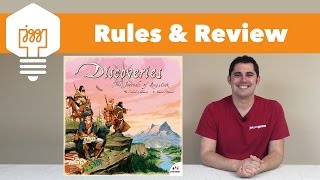
- Fresh take on dice games; players plan turns rather than rolling every turn.
- American Indian cards enable engine-building and dice manipulation.
- Theme integration with exploration and negotiation; not exploitative in portrayal of American Indians.
- Tension from dice recall and competition for opponent dice.
- Replayability via variable card draws and card effects.
- Potential 'rich-get-richer' dynamic in mid-to-late game due to bonus turns and double-exploration.
- Downtime at four players; requires planning ahead.
- Replayability could be limited as most exploration cards are rivers/mountains; want more variety.
- Expansion aversion by some players; expansion may change dynamics.
- Exploration with negotiation with American Indians; engine-building using Native American cards
- The Lewis and Clark expedition across the American Midwest
Mechanics (from transcript analysis)
- American Indian cards — Provide negotiation options and dice manipulation; some change dice to specific faces; support traversal and engine-building.
- Bonus turns with double Explorer — If you explore both a card in front of you and a central board card, you get a bonus turn and can reuse the dice.
- Card-driven action slots — Cards can be acquired from American Indian negotiations and general rows; slots determine actions and card effects.
- Dice Rolling — Players roll dice and evaluate actions by selecting one of four die faces; actions may be immediate or resolved later depending on the card.
- Dice rolling with variable face outcomes — Players roll dice and evaluate actions by selecting one of four die faces; actions may be immediate or resolved later depending on the card.
- Die recall by opponents — Other players can pull dice from your area, including those saved on explore slots.
- End Game Bonuses — End game triggers when a player takes a card not present; scoring combines points from explored cards, set collection by symbol, and TP icons on American Indian cards.
- end-game trigger and scoring — End game triggers when a player takes a card not present; scoring combines points from explored cards, set collection by symbol, and TP icons on American Indian cards.
- Explore and river/mountain balancing — Explore by moving rivers and mountains on cards; must follow order; can burn excess mountains; add new cards to area.
- Journal dice and delayed evaluation — Some actions are evaluated immediately while others use a journal die and are resolved later.
- Set collection and scoring by symbols — Points are awarded for each set of icons (TPS) and for the points on explored cards; VP on exploration cards plus TPS across the board.
Video topics + discussion points
Quotes (from this video)
- Discoveries has a bit of a breath of fresh air into the dice game genre
- I really like the way the game portrayed the American Indians on these cards
- it's a bunch of really refreshing aspects to a dice game
- you are not rolling your dice every single turn you are rolling them and then strategizing out several turns in advance
- that massive re-roll and you get to go in with a bunch more stuff
- I really enjoyed playing this game
- I want to play this game pretty much as often as I can
References (from this video)
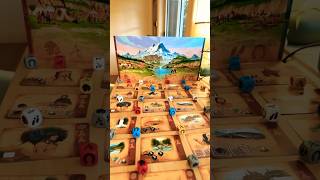
- Accessible and quick to learn
- Dice-driven action creates dynamic tension
- Engine built around tribe cards adds strategic depth
- Discovery cards provide clear paths to points
- Theme-driven exploration feels immersive without being heavy
- Dice luck can gate decision-making
- Some players may find the depth relatively light
- Ethnology/First Nations portrayal requires thoughtful handling
- Exploration, discovery, ethnology, mapping, natural history
- Missouri River valley during the Lewis and Clark expedition (1803-1806)
- journal-based expedition diary
Mechanics (from transcript analysis)
- dice_placement — Roll-to-act dice are placed in action zones to trigger terrain traversal, data collection, or card effects.
- Engine Building — Two types of cards (tribe cards and actions) form an engine powering ongoing turns and points.
- engine_building — Two types of cards (tribe cards and actions) form an engine powering ongoing turns and points.
- point_progression — Discovery points are awarded for geographical, biological, and ethnological data.
- Resource Management — Dice serve as resources, retrieved from the board or opponents.
- resource_management — Dice serve as resources, retrieved from the board or opponents.
- Tableau Building — Players collect discovery cards and build a journal-based tableau to gain points.
- tableau_building — Players collect discovery cards and build a journal-based tableau to gain points.
- terrain_traversal — Terrain types such as rivers and mountains require actions to traverse.
- Track Advancement — Discovery points are awarded for geographical, biological, and ethnological data.
Video topics + discussion points
Quotes (from this video)
- This is a dice powered game of discovery.
- It's a quick, fun, simple game of exploration which I
References (from this video)
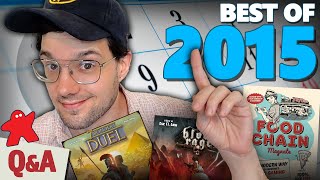
- described as fantastic
- top tier artwork
- dice placement and set collection
- Just Lewis and Clark
Mechanics (from transcript analysis)
- Dice Placement — The host describes it as a 'dice placement kind of set collection game'.
Video topics + discussion points
Quotes (from this video)
- Ticket to Ride Legacy, it's not designed to be played hundreds of times.
- I personally find the more thematic the game the lower the replayability and the more abstract the game the higher the replayability.
- I've recently played White Castle 50 times this year.
- The White Castle remains one of my all-time bangers.
- Not many. I would say Castle Burgundy I've played over 100 times.
- This is a dice placement kind of set collection game. It's quick, it's fast, the artwork is just top tier.
- Shakespeare. Oh, Shakespeare. What a fantastic game.
- Arboritum. One of my favorite card games that exists. It's been remade. The second edition is equally beautiful.
- Nippon, big economic game, but truly a beautiful system.
- Viticulture Essential Edition came out in 2015. Viticulture was my favorite game of all time for a very long time. I love Viticulture.
- Seven Wonders Duel came out in 2015.
- a wild card because that's a little game called Daxu.
- Blood Rage, Code Names, Pandemic Legacy Season 1.
- This is a sequel to Just Lewis and Clark, I think it was called.
- Is it playing Carcasson in Carcasson? You know, going to Gen Con?
References (from this video)

- engaging exploration theme
- cooperative storytelling potential in group play
Mechanics (from transcript analysis)
- set collection / route planning — Historically themed expedition with decisions about routes and provisioning
Video topics + discussion points
Quotes (from this video)
- Life finds a way.
- AI can't do that.
- Talk is cheap because supply always exceeds demand.
References (from this video)
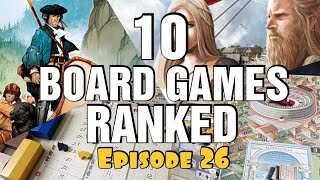
- puzzly, strategic hand management
- strong engine-building feel
- potential for pace drag if mismanaged
- punishment tokens can slow momentum
- deck-building racing and resource conversion
- exploration and river travel
Mechanics (from transcript analysis)
- deck_building — build and utilize a hand of cards to perform actions
- Race — race down the river/mountains with optimal card play
- racing — race down the river/mountains with optimal card play
- resource_conversion — convert resources to movement and progress
Video topics + discussion points
Quotes (from this video)
- "This is a deck deconstruction game where you want to be the first player to abandon all of your artichokes"
- "hidden movement games are a strange one for me"
- "it's a very light game it's very quick bit of silly fun"
- "the more weird a theme is the heavier the game is"
- "Revive is such a great card driven Euro"
- "best game from 2022 No Doubt"
References (from this video)
- Educational and thematic
- Engaging dice-driven exploration
- Some players may find the pacing slower
- exploration and expedition
- early 1800s North America
- diary/journal-inspired
Mechanics (from transcript analysis)
- Dice-based progression — dice influence expedition choices and routes
- set collection / route exploration — collect routes and negotiate outcomes with encounters
Video topics + discussion points
Quotes (from this video)
- it's a beautiful game
- dice are mean
- you gotta feed your birds
- travel with it
- it's a quintessential dice rolling game
References (from this video)
- strong deck-building and hand-management integration
- excellent card synergy and resource conversion trees
- dual use of cards as workers and activators adds depth
- length can balloon beyond the box stated duration
- frustration can arise from negative feedback loops and resource penalties
- the pacing can feel slow for a race game at times
- exploration, river racing, deck-building
- American frontier river expedition with mountains to traverse
- racing with strategic deck-building and hand management
- Coliseum
Mechanics (from transcript analysis)
- crowding management — you must watch crowding on the board and timing of actions to avoid bottlenecks
- Deck Building — build and optimize a hand of cards to move downriver and through mountains
- deck-building — build and optimize a hand of cards to move downriver and through mountains
- Hand Management — cards must be sequenced for efficient activation; some cards activate others
- negative feedback loops — poor choices can create penalties that are hard to shed mid-race
- Resource Management — cards convert into resources; managing what to use as workers versus activators is key
- resource management and conversion — cards convert into resources; managing what to use as workers versus activators is key
- routing/ racing — continuous decision of card usage to minimize wasted movement while racing the clock
Video topics + discussion points
Quotes (from this video)
- I cannot recommend this one
- the box here is way too big
- the components are very small like all the different tokens and wooden bits are a mini skill and they're quite fiddly to handle
- this game shines for me is the deck building and the Hand management part
- the strongest example of a game that I've played that has been completely debilitated by the length
- this is one of the old school Euros dating back to the year 2000
- I would rate this like a six and a half out of ten
- I actually think I prefer Coliseum to the Princes of Florence
References (from this video)

- Interesting dice mitigation mechanics
- Quicker play time
- Thematic exploration gameplay
- Unique special ability system
- Potential for card scoring randomness
- Complexity in learning initial mechanics
- Historical exploration and journal writing
- Lewis and Clark Expedition
- Dice-based expedition management
- Lewis and Clark
Mechanics (from transcript analysis)
- action selection — Players choose actions based on dice rolled and special ability cards
- Dice Rolling — Players roll dice to take actions and move across routes
- Set Collection — Collecting unique animal and feature sets for end-game scoring
Video topics + discussion points
Quotes (from this video)
- I'm kind of perpetually on this quest to find new and interesting ways to play with dice
- Build up, build up, build up and then explode
References (from this video)
- expedition narrative and route discovery
- early American exploration and mapping
Mechanics (from transcript analysis)
- card-driven / exploration tokens — players use cards to guide discoveries and progress along a map
Video topics + discussion points
Quotes (from this video)
- number 10 pallet swapped illustrations
- palette swaps of one color to another
- sexy but space wasting insert
- it's just demeaning
- big floppy rulebooks
- overly homogenized or equitable values
- implicit rather than explicit rules or really just not having clearly defined rules in your freaking rule book
- squared corners on cards
- lack of color blind accessibility options
- once someone puts six stars out then their turn is the last turn and there's no ability for anyone else to recover from that