/pic1401448.jpg)
/pic4766499.png)
/pic2290765.jpg)
/pic2293327.jpg)
/pic1401448.jpg)
/pic2491956.jpg)
/pic3124998.jpg)
/pic2986375.jpg)
/pic3485528.png)
/pic5509189.png)
/pic6583306.jpg)





















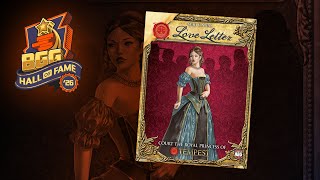



















Love Letter Deep Dive
What the Community Thinks About Love Letter
Love Letter holds a rare place in the board game hobby: a game that reviewers describe as simultaneously simple enough to teach in two minutes and deep enough to have inspired an entire genre of small-card games. Might I Suggest A Game calls it "the gold standard for quick and easy card games" and argues that "no collection should be without" it, placing it second on a list of the best games by Asian designers. Board Stupid describes it as "one of the greatest card games ever devised," while Board Game Coffee awarded it their Seal of Approval, calling it "amazeballs." 3 Minute Board Games calls it "the quintessential filler game," something you can pull out anywhere, teach to anyone, and put away again after a satisfying ten minutes.
The consensus is not without nuance. Chairman of the Board, who counts Love Letter among his most-played games ever, has watched his rating drift downward over time, noting that repeated play eventually turns the experience into "going through the motions." That honest perspective from a longtime fan captures the central tension reviewers identify: Love Letter is nearly perfect for what it is, but "what it is" has limits, and those limits become visible only after many plays. Still, even after all that play, he holds genuine nostalgia for "so many great games over the years" with it. The Going Analog podcast brought in John Zinser, CEO of AEG, who shared the story of discovering Love Letter at Game Market in Japan: designer Seiji Kanai stepped out from behind his booth, dealt cards in the aisle, and played the "perfect game of Love Letter" in two minutes. AEG signed it on the spot.
Core Mechanics That Define Love Letter
Hand Management
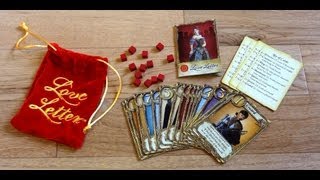
At the heart of Love Letter is one of the most compressed hand management systems in modern card games. As Might I Suggest A Game describes it, the rules are essentially: "draw a card, discard a card, and do what it says on that card." At any moment, a player holds exactly one or two cards, choosing which to play and which to protect. This extreme constraint is what gives the mechanic its tension. Unlike games where hand management involves sequencing across many turns and many options, Love Letter forces each decision into a single moment: which of these two cards do I play, and what do I reveal about what I'm holding by playing it? Board Stupid notes that the game's 16 cards carry special powers, and navigating those powers with so few cards in hand creates the deductive push-and-pull that reviewers consistently praise. The timing and sequencing that define hand management are present, but collapsed into their most essential form.
Set Collection (Hidden Information and Elimination)
Love Letter's win condition involves surviving to hold the highest-value card when the deck runs out, or being the last player not eliminated. This functions as a compressed form of set collection: players are racing to "collect" the right card in hand at the right moment, while using card effects to peek at, compare, or eliminate other players' holdings. Chairman of the Board describes the experience as "trying to eliminate players with some take-that cards, you want to be the last man standing, and by holding a certain card when it comes to the deck being depleted you can peek into players hands." Might I Suggest A Game highlights that "at any given time any player regardless of their experience could win and feel really accomplished," which speaks to how the set collection goal remains accessible even as the deductive layer rewards skilled play. Designer Seiji Kanai built this structure into what the Going Analog quiz identifies as a broader body of work, noting that Kanai's design approach across games like Love Letter and Chitty Mages created "that whole genre of limited cards" that has shaped modern micro-game design.
The Love Letter Experience
Quick and Snappy
The experience of playing Love Letter is defined by its speed. Board Stupid's Wayne describes it playing "in 5 minutes literally," and 3 Minute Board Games notes you can "play a couple of rounds, everyone has a good time, and then you put it away." This brevity is not accidental but is the design's most distinctive feature. John Zinser's anecdote about Seiji Kanai dealing cards in the aisle of Game Market and completing a "perfect game" before a meeting captures it precisely: Love Letter fits into the gaps between other activities. Board Stupid frames this as a core pub game virtue, explaining that the small physical footprint, the 5-minute play time, and the interactive nature all combine to create something you can drop onto a table between rounds of drinks and have everyone immediately engaged. The game never overstays its welcome because it cannot: the deck is too small, the rounds too quick, and the experience designed to end before it has a chance to drag.
Intimate and Diplomatic
Despite its mechanical simplicity, Love Letter creates a surprisingly personal, close-quarters experience. Every card played is a revelation of information: you are constantly reading other players, deciding what to reveal, and reacting to what they show you. Might I Suggest A Game describes "the hidden strategies, the bluffing, the social deduction" as making the game "so much more than meets the eye." Board Stupid emphasizes interactivity as a core requirement for their pub game list, and Love Letter meets it through this deductive negotiation between players rather than through mechanical complexity. The game has also accumulated genuine personal meaning for many players. Board Stupid's Wayne has played his Batman edition for over a decade, his girlfriend custom-designed a personal version using the original rules, and John Zinser gave Love Letter Wedding Edition as a gift at his own wedding. Board Game Coffee came to Love Letter through the Batman license and ended up with what became a hard-to-find collector's item. The intimate scale of the game, two cards, one decision, your read versus mine, has a way of accumulating memory.
What Makes Love Letter Stand Out
Accessible Gateway That Hides Real Depth
One of the most consistent points across reviews is that Love Letter's apparent simplicity conceals genuine strategic depth. Might I Suggest A Game argues that while the rules strip the game "down to its essentials," the result "shines because of that," and that hidden strategies, bluffing, and social deduction make it far more than a simple card game. Chairman of the Board describes it as having "a really low rules overhead" combined with "some pretty fun moments," acknowledging that even after playing the game to exhaustion, those moments of deductive brilliance remain in memory. Board Stupid's Wayne uses a telling phrase: Love Letter has "a little element of deduction," framing it as accessible but not empty. This balance, where a newcomer can win and an experienced player can read the table and make sharper decisions, is what makes the game a legitimate "gateway" rather than just a filler. It genuinely scales to its audience without requiring different rules for different skill levels.
A Design That Inspired a Genre
Love Letter's influence extends well beyond its own gameplay. The Going Analog quiz identifies Seiji Kanai's catalog, citing Love Letter alongside Chitty Mages and Chronicle as part of a body of work defined by small card counts and deep decision density. Going Analog's other episode features Tim McTivier describing Kanai as "brilliant" for having created "that whole genre of limited cards and like the great games." Adam in Wales references the "classic Kanai artwork" seen across Love Letter, Chronicle, and 8 Epochs as a recognizable aesthetic signature. Might I Suggest A Game places Love Letter in the context of Asian designers who have shaped modern board gaming, noting that its adaptation to dozens of licensed themes, from Batman to Adventure Time to H.P. Lovecraft, "really speaks to the mass appeal of this awesome game." The fact that any theme can be dropped onto Love Letter's chassis without breaking it is itself evidence of how cleanly the underlying design works.
Potential Drawbacks
Diminishing Returns Over Time
Chairman of the Board offers the most direct criticism of Love Letter, and it comes from a place of genuine affection. He calls it one of his most-played games ever, but acknowledges that his rating has declined over time because "those kind of returns have really diminished" and the game has become "going through the motions." When a game is this small, there are only so many configurations and only so many surprises the deck can generate before an experienced player has seen most of what it can do. The game works brilliantly as a filler and a gateway, but it may not sustain long-term interest for dedicated hobby gamers who return to it repeatedly. The review from Board Game Coffee includes a small note that even after months away from it, the rules need to be re-read, which suggests the game does not build deep procedural fluency over time the way heavier games do. Whether that is a drawback or a feature depends entirely on what you want from a game this small.
Luck Variance in Short Games
Several reviewers, including Might I Suggest A Game, highlight that Love Letter's accessibility comes partly from the fact that "at any given time any player regardless of their experience could win," which is a genuine strength from a social standpoint but also means that skill does not consistently translate into winning. When a game lasts five minutes and involves a deck of 16 cards with significant hidden information, randomness in the draw plays a substantial role in outcomes. Chairman of the Board notes that while there are "pretty fun moments," the game rewards "playing by ear" rather than sustained strategic planning. This is not a flaw in a pure sense: the game is designed as a filler, and the luck variance keeps it accessible. But players who come to Love Letter looking for a game where reading the table reliably determines outcomes may find the randomness more frustrating than fun, particularly if card draws consistently neutralize deductive play.
If You Enjoy Love Letter
Players drawn to Love Letter's quick card play and social deduction have natural paths into related games that Seiji Kanai himself designed. Chitty Mages, mentioned on the Going Analog quiz as another Kanai design, applies a similar sensibility to a betting and bluffing context around competing magical creatures. For those who want the Love Letter experience with more players and greater theme, the Love Letter: Premium Edition expands the card count and player capacity while preserving the core deductive mechanics. Chronicle and 8 Epochs are part of the same Kanai design family, sharing the compact structure and distinctive artwork that reviewers identify as characteristic of his work. Jaipur offers a similar two-player intimacy and quick play time, but with a trading-post theme and a set collection structure that rewards repeated play with greater strategic depth. Guild Hall, which AEG signed on the same trip where they discovered Love Letter according to John Zinser's story, offers a more substantial card game experience for players ready to step up in weight while staying in the same publisher ecosystem.
What Reviewers Are Saying
"When the rules are draw a card, discard a card, and do what it says on that card, you can imagine this might be the lowest barrier of entry to any card game ever. But the hidden strategies, the bluffing, the social deduction make this game so much more than meets the eye. I consider love letter to be the gold standard for quick and easy card games."
— Might I Suggest A Game
"I went to Japan to go to Game Market, early on, when game market was little teeny tiny small little booths. And we walked past Seiji Kanai's booth and we were introduced to him and he said do you want to play a game? And we're like, well, we're on our way to a meeting. And he came out from behind his booth and he said, it'll take two minutes. And so we put our hand out and we dealt cards and played the perfect game of love letter."
— Going Analog
"Love letter is a fantastic Pub game, look how small this is, you can have it in your pocket, let alone your bag. You can take it out and it's great because again it plays in 5 minutes literally. It has a little element of deduction, it's interactive, you're kicking people out of round. Love letter is a legendary game, it's certainly one of my favorite card games and one of the greatest card games ever devised."
— Board Stupid