/pic3485528.png)
/pic4766499.png)
/pic1401448.jpg)
/pic2290765.jpg)
/pic2293327.jpg)
/pic2491956.jpg)
/pic3124998.jpg)
/pic2986375.jpg)
/pic3485528.png)
/pic5509189.png)
/pic6583306.jpg)













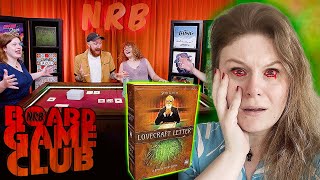

Lovecraft Letter Deep Dive
What the Community Thinks About Lovecraft Letter
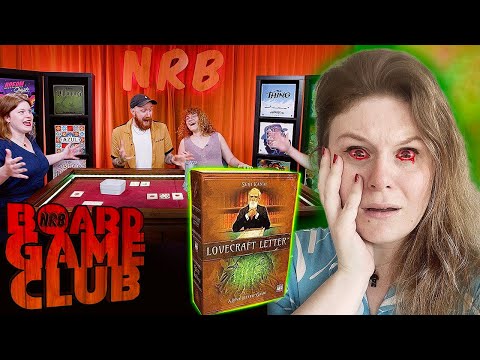
Lovecraft Letter has earned a devoted following among players who cherish quick, high-tension deduction games with a Lovecraftian twist. Channels like Rolls in the Family and No Rolls Barred praise how it combines the proven mechanics of Love Letter with an insanity system that creates new strategic pathways and memorable moments. Reviewers consistently describe it as a worthy successor that deepens the original experience while maintaining the accessibility that made Love Letter popular in the first place.
Core Mechanics That Define Lovecraft Letter
Hand Management and Hidden Deduction
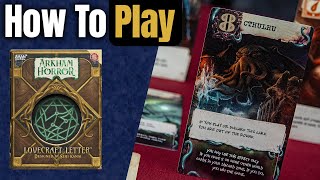
Each round, players hold a single card and draw one more each turn, then play one of their two cards. The card abilities let you guess opponents' cards, compare hands directly, force discards, or protect yourself from interference. As cards are played, everyone can see what has been discarded, building a visible record of which cards remain in the deck. This card-counting layer sits at the heart of the deduction, rewarding attentiveness and memory while keeping rounds short enough that downtime is minimal. Designed by Seiji Kanai and published by Alderac Entertainment Group, it preserves Love Letter's microgame elegance.
The Insanity Push-Your-Luck System
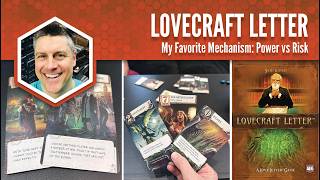
The innovation that distinguishes Lovecraft Letter is the insanity mechanic. Most cards have two versions, one for sane players and one for insane players. When you play an insanity card, you become insane and must make sanity checks each turn, risking elimination if you draw another insanity card. However, insane cards unlock powerful alternate abilities that sane-card effects cannot match. This creates a delicious tension: go insane for stronger tools but face higher elimination risk, or stay sane and play defensively. Winning the game requires either two sane victories or three insane victories, keeping both paths viable until the final rounds.
The Lovecraft Letter Experience
Quick, Punchy Rounds with High Drama
Rounds rarely last more than a few minutes, yet they feel packed with meaningful decisions and dramatic reversals. When only one player survives a round, they claim a point immediately. When multiple players remain after the deck runs out, the highest card wins. The speed of play means even eliminated players wait briefly before the next round begins, and the rapid cycling creates natural moments for banter and celebration. Players often find themselves laughing at sudden eliminations, gasping at close guesses, and eagerly pulling the game back out for one more hand.
Accessible Yet Engaging for Repeat Play
The core rules are simple enough to teach in under two minutes, making Lovecraft Letter an ideal closer for game nights when mental energy is waning. Yet despite its simplicity, the game rewards knowing the cards, understanding opponent tendencies, and managing the insanity threshold strategically. Groups that play multiple times quickly discover subtle bluffs, card-counting patterns, and meta-game moments. A rare instant-win card on the insane path adds a surprise-victory possibility that keeps everyone engaged even when trailing on points.
What Makes Lovecraft Letter Stand Out
A Fresh Take on a Beloved Design
Love Letter is a modern classic, but after dozens of plays its permutations can feel exhausted. Lovecraft Letter solves this by introducing the dual-mode card system and the insanity gambit, which fundamentally expand the decision tree. Rather than simply choosing which card to play, you now consider whether playing insane versions is worth the increased elimination risk. This single innovation opens enough new situations and strategic branches that even players with dozens of plays of the original find the Lovecraftian version feels genuinely fresh.
Flexible Victory Conditions and Risk-Reward Tension
The split victory condition, requiring either two sane wins or three insane wins, prevents runaway leaders from dominating. A player ahead on sane wins might try a desperate insane play to win faster, while a trailing player pursuing insane victories has a mathematical path to a comeback. The insane path even offers a rare one-round victory, creating those glorious moments where someone wins before anyone expected. This design keeps all players invested until the final moment.
Potential Drawbacks
Rules Ambiguities and Availability
The original rulebook contains some unclear language around discarding and ability triggering, forcing house rulings at many tables. Additionally, Lovecraft Letter has largely moved out of print, though newer editions have been released with revised rules. If you do find a copy, expect to reference the rulebook when edge cases arise, though most groups develop consistent interpretations quickly.
Player Elimination and Downtime in Larger Groups
With six players, someone can be eliminated on the first or second turn and wait several minutes for the round to resolve. While the game plays fastest at two to four players, the up-to-six compatibility is a mixed blessing. Some groups enjoy the rapid cycling even with eliminations, while others prefer house rules that reduce downtime. The quick turn structure helps mitigate this, but elimination remains a factor to consider in larger groups.
If You Enjoy Lovecraft Letter
Fans of Lovecraft Letter should explore Love Letter, the original classic that established the hand-management deduction formula. For players seeking higher stakes and deeper investigation in the same Cthulhu mythos, Arkham Horror: The Card Game offers a far richer cooperative experience with significantly more depth and playtime. Those who love the quick, social, reading-your-opponents feel of Lovecraft Letter might also enjoy Coup, which delivers bluffing and deduction with similar speed and player elimination in a sleek package.
What Reviewers Are Saying
"I really like the fact there's two ways to win. There's the human way you could win or the insane way to win. And if you really think about the game, there's a lot of good aspects to what each card ability is."
— Rolls in the Family
"If you go insane, you're risking kicking yourself out of the round, versus being human, when others can just take you out of the round themselves."
— No Rolls Barred
"We had kind of seen every fun situation that can come out of the permutations of the original. Lovecraft Letter just has enough extra things to really give the game some more legs."
— Rolls in the Family