



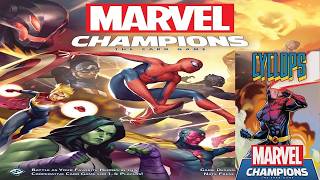
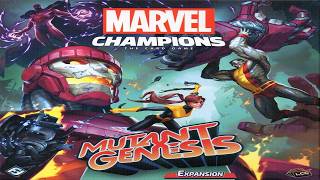

Marvel Champions: Mutant Genesis Deep Dive
What the Community Thinks About Marvel Champions: Mutant Genesis
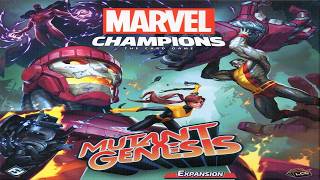
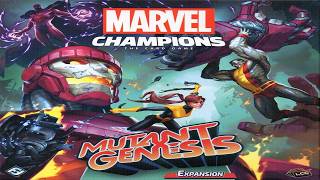
Marvel Champions: Mutant Genesis stands as the fifth campaign expansion for Fantasy Flight Games' beloved living card game, bringing the X-Men into the Marvel Champions universe through a five-scenario story arc. This expansion arrives alongside a roster of new heroes including Colossus, Shadowcat, and Cyclops, each with mechanics that explore different facets of mutant teamwork and combat coordination. Reviewers who have piloted campaigns through Mutant Genesis find the expansion ambitious in scope but divisive in execution, with some drawn to its thematic storytelling and others frustrated by its escalating difficulty curves and scenario design choices.
The campaign arc centers on a narrative mission: protecting Senator Kelly from assassination while the X-Men confront Magneto's master plot to create an army of human-hunting Sentinels. Community playthroughs reveal a campaign that demands tactical preparation and careful hero selection. Across the five scenarios, reviewers encountered varied villain encounters including Sabretooth, Project Wide Awake's Sentinel swarms, and the climactic multi-phase showdown against Magneto himself. The expansion leans heavily into cooperative drama, where decisions made in early scenarios ripple forward, and players can rescue captive allies that become increasingly valuable across the story.
Core Mechanics That Define Marvel Champions: Mutant Genesis
Deck Building and Card Synergy Within Character Constraints
Marvel Champions' foundation rests on deck-building within pre-constructed hero decks, and Mutant Genesis reinforces this through heroes whose identities emerge from specific card synergies. Reviewers noted that success hinges on understanding how a character's unique upgrade cards and abilities interact with the encounter deck's pressure. Cyclops, for instance, carries tactics cards that are temporary and tied to upgrades on enemies, requiring deliberate sequencing to maximize their impact. Shadowcat and Colossus each unlock X-Men allies from multiple aspects, allowing deck building that pulls from a broader pool than typical heroes but still demanding coherent strategy. The expansion's hero packs layer additional card options, but community players emphasized that understanding core synergies within each hero's starter deck remains the foundation for winning scenarios.
Campaign Progression With Modular Scenario Structures and Escalating Stakes
The five-scenario campaign structure weaves narrative progression into mechanical escalation. Each scenario presents side schemes that players can complete to gain one-time rewards, creating meaningful checkpoints within a longer encounter. Reviewers described a campaign where success against early villains like Sabretooth unlocks narrative advantages: defeating captive allies become recruitable resources in later scenarios, or a defeated enemy may flip into an ally working alongside the heroes. However, the expansion's scenario design includes "future past" cards that sometimes penalize players for their victories, flipping completed side schemes into new threats or buffs for the main villain. This creates tension where winning a tactical battle can advance the strategic clock without providing lasting relief. The modular encounter sets remain cross-compatible with earlier Marvel Champions campaigns, allowing players to dial difficulty up or down and mix encounters from previous expansions.
The Marvel Champions: Mutant Genesis Experience
Tense Campaign Swings From Overwhelming Encounter Density
Reviewers consistently highlighted that Mutant Genesis scenarios feel overwhelming in their encounter card density and threat placement. Multiple playthroughs showed moments where a single villain phase generates enough threat to threaten victory or forces a hero into alter-ego form for recovery, only to have that recovery blocked by encounter card timing. One reviewer described the sensation as "these campaign sets just keep adding more and more," where each scenario layer introduces new encounter effects that compound: minions with guard status preventing direct villain attacks, side schemes that multiply threat when flipped, and villain abilities that scale with the encounter deck state. The escalation is intentional, pushing players toward tight resource management and forcing trade-offs between thwarting the main scheme and dealing with minions. Yet reviewers noted this also creates moments of visceral tension where a well-positioned ally or perfectly-timed event card breaks through a seemingly unwinnable position, delivering the satisfying relief that cooperative games depend on.
X-Men Fan Service and Thematic Character Immersion
The campaign narrative grounding Mutant Genesis centers on iconic X-Men story beats: rescuing Senator Kelly, confronting Magneto's master plan, infiltrating Asteroid M. Reviewers responded to the thematic coherence between mechanics and flavor. Cyclops' tactics abilities mirror his field-commander role, commanding allies to focus on enemy weaknesses. Shadowcat's ability to tuck encounter cards under her identity echoes her phasing powers. The campaign's final Magneto confrontation becomes a multi-phase endurance test that mirrors his status as a master strategist and mutant overlord. One reviewer noted finding this particularly resonant when Magneto remained as a playable ally for a pivotal scenario, shifting from antagonist to reluctant partner and creating genuine narrative texture in the cooperative experience. The X-Men roster in Marvel Champions includes recognizable characters like Phoenix, Beast, and Wolverine's supporting cast, lending weight to the campaign's emotional stakes beyond mechanical complexity.
What Makes Marvel Champions: Mutant Genesis Stand Out
Modular Difficulty and Campaign Accessibility for Varied Player Skill Levels
Unlike some campaign expansions that lock difficulty behind a single scaling lever, Mutant Genesis implements modular encounter sets where difficulty changes arise from encounter set composition rather than numerical tweaks. Reviewers described scenarios with "skirmish mode" requiring only one villain defeat, "standard mode" requiring two, and higher tiers introducing additional complexity. This design philosophy allows players to experience the campaign narrative at a difficulty matching their skill level without feeling like they are playing a different game. The encounter sets remain cross-playable with previous Marvel Champions campaigns, giving experienced players the tools to create custom scenarios or increase challenge across earlier expansions. Community playthroughs showed players making these calibrations mid-campaign, adjusting after a demoralizing loss or scaling up after consecutive victories.
Captive Allies and Campaign Continuity Mechanics That Reward Long-Term Planning
The expansion introduces a campaign structure where rescuing captive allies in early scenarios makes those characters available in future ones. Reviewers highlighted Magneto's availability as a particularly powerful ally in the Master Mold scenario, where his ability to defeat Sentinels and self-heal became a cornerstone of several winning attempts. This mechanic creates meaningful decision points: investing resources to rescue an ally now provides dividends later, but requires predicting which allies synergize with heroes in upcoming scenarios. Some captives like Jubilee have modular effects that don't count against ally limits, providing additional strategic depth. The "future past" deck mechanism, while sometimes frustrating to reviewers, reinforces this continuity by reshuffling past victories and defeats into new encounter cards, ensuring the campaign's narrative never feels disconnected from earlier choices.
Potential Drawbacks
Scenario Balance Issues and Difficulty Spikes That Can Feel Arbitrary
One reviewer who played through all five scenarios rated Mutant Genesis a 5 out of 10, describing it as the weakest campaign expansion they had experienced. A recurring frustration centered on scenarios where the main scheme accelerates beyond player control. Reviewers described moments where a single villain phase schemes for four or five threat when the threshold stands at fourteen, halfway to victory before heroes take a turn. This is compounded when heroes cannot afford to transition to alter-ego form for card draw or recovery without guaranteeing a loss, since the villain will scheme again while the hero is vulnerable. Some scenarios felt designed to be dragged out deliberately: the Magneto final confrontation requires defeating three side schemes sequentially to advance phases, and defeating them all unlocks a devastating third phase. While reviewers recognized the thematic intention, several felt the scenario length exceeded the enjoyment of playing through it, with one noting "I don't care for fights where it's designed to just be dragged out."
Random Character Distribution and Hero-Scenario Mismatch in Campaign Context
The randomness inherent in Marvel Champions, where players draw encounter cards and deck cards, creates a tension that some reviewers felt Mutant Genesis exacerbates. Reviewers experimenting with random hero selection through the campaign found certain heroes poorly matched to specific scenarios. Silk, one of the new X-Men heroes, relies heavily on tucking encounter cards under her identity to unlock synergies with her thwarting and attack abilities. Yet many Mutant Genesis side schemes flip when defeated, negating the tucked cards and breaking her core strategy. Similarly, heroes reliant on minion swarms felt less useful in scenarios without minion emphasis, reducing their effectiveness to defending and hoping to draw action cards. While this randomness is baked into Marvel Champions design, reviewers felt Mutant Genesis scenarios punished poor hero-scenario matching more harshly than earlier campaigns, creating moments where a random hero selection early in the campaign set up an uphill battle for later scenarios.
If You Enjoy Marvel Champions: Mutant Genesis
Fans of Marvel Champions campaign expansions will find Mutant Genesis offers ambitious scenario design with genuine narrative progression and modular difficulty options. The expansion is most rewarding for players who approach campaigns as strategic puzzles, where identifying winning hero combinations and ally synergies becomes the satisfaction. If you respond to thematic coherence between mechanics and X-Men lore, the campaign delivers: confronting Magneto across multiple phases, rescuing captive allies, and building a coalition against the Brotherhood of Mutants all feel narratively earned. The modular encounter sets mean this expansion remains compatible with earlier campaign expansions, allowing players to create custom encounters or revisit previous scenarios with Mutant Genesis heroes. Players who prefer tighter, faster scenarios or who value ease-of-setup over emergent campaign narrative may find Mutant Genesis more frustrating, particularly if unlucky with random draws. However, reviewers who persisted through difficulty spikes and invested in understanding hero synergies consistently reported moments of triumph that validated the campaign's complexity.
What Reviewers Are Saying
"The only thing that they gave you every single to kind of keep you leveled up cuz it almost feels like every time their scenarios are just going way against you. It just overwhelms you immediately and if you just have to sit here and just take every top deck in the world of just okay, I think I'll finally go to Alter Ego form. Oh, big mistake. I guess he's going to scheme."
— Board Games UnLocked
"The combined powers of Magneto and the X-Men prove too much for Master Mold and its army of Sentinels to withstand, and the mutants triumph over the machines. Actually, that was true. Keeping Magneto around is probably the sole reason I won."
— Board Games UnLocked
"Mutant genesis will be adding the x-men into the game in autumn and this five scenario campaign adds bad guys like sabretooth the sentinels and magneto into the mix and the campaign has you trying to stop the assassination of senator kelly while you go head to head with the brotherhood of mutants on asteroid m."
— Watch It Played