



Masters of the Universe: The Board Game - Clash for Eternia Deep Dive
What the Community Thinks About Masters of the Universe: The Board Game
Reviewers treat Masters of the Universe: The Board Game - Clash for Eternia as a love letter to the 1980s cartoon, played out with miniatures, dice, and a card-driven opponent. One Stop Co-op Shop presents it as a brawl between the forces of Skeletor and the heroes led by He-Man, where the AI controls the villains and every turn is resolved through shared decks and dice. Its host, Jason, works through a full solo playthrough of the Explore the Dungeon scenario, and that enthusiasm holds up through a long and complicated run.
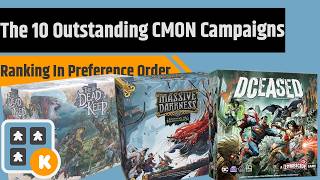
The opinion is warm but not uncritical. BoardGameCo calls it a great game, though Alex Radcliffe explains that the recent release is largely an international reprint with only a few new characters added. Within the CMON catalog, Alex Radcliffe places it among the titles loved most, even while admitting it rarely gets to the table. The Dice Tower offers a shorter verdict, with host Joey Evans calling the game "great on all counts." Taken together, the reviewers agree that the game delivers a cartoonish, tactical experience that rewards clever positioning and resource timing, even when its rules demand judgment calls.
Core Mechanics That Define Masters of the Universe: The Board Game
Energy Flow and the Balance of Power
The defining system is energy. Heroes and villains collect energy cubes, which are assigned to skill tracks on their character sheets, and new energy arrives each round through several means. Jason on One Stop Co-op Shop identifies the balance of power as the rule to remember: when a hero spends energy on a boosted attack or power, the AI receives that energy, so every heroic flourish feeds the opposition. A round is built from eight activations, four for the heroes and four for the controller, and that split stays the same regardless of player count. The order of activations comes from shuffled character activation cards, and reviewers describe the result as a tight economy in which when and how energy is spent matters as much as the dice.
Dice Combat and the Castle Grayskull Face
Combat uses attack dice with three faces: a range success, a melee success, and the Castle Grayskull symbol. Jason explains that the melee and range faces inflict hits, while the Castle Grayskull face also grants the attacker one energy, which makes a strong roll doubly valuable. Characters generally have a basic attack and a set of special skills that consume energy, and players can spend energy to boost attacks or re-roll dice. Royal Guard Elite minions add a different layer, since each carries a shield that must be overcome before a single wound finishes it, and they step in to absorb attacks aimed at nearby heroes. Jason describes the basic turn as simple, with each activation offering a few choices such as move, attack, or interact, and the depth emerging from how those choices interact on a crowded board.
The Masters of the Universe Experience
A Cartoon Brawl Driven by Rule of Cool
Jason plays the game as though it were an episode of the cartoon, having He-Man swing the Sword of Power, dodge danger with Nimble Feet, and watching Man-at-Arms lob a grenade toward a spot near He-Man so that it hits every enemy around it. Reviewers who grew up with the 1980s show treat these moments as the point rather than a flaw. When a ruling is unclear, Jason often resolves it on theme and says "rule of cool" more than once. Jason sums up the attitude after one outlandish move with the line "it's a cartoon all right." Alex Radcliffe takes a similar view of the franchise, describing the game as a great system that is loved, even though it does not get tabled often.
Push, Pull, and Reversals Against a Card-Driven Opponent
The tension comes from how quickly fortunes swing. Jason's heroes lose He-Man repeatedly as the villains pile on through Skeletor's staff, Trap Jaw's modular arm, and Evil-Lyn's bolts, while the AI's strategy deck drains heroes of energy and forces wounds. Jason describes the AI as one that "is powerful but kind of dumb," since the villains rush straight into range and get caught in the heroes' attacks, then bounce back with heals and energy spent on boosted attacks. Fallen characters must spend an action to get back up, and in this scenario the dungeon entrance is blocked by boulders that must be cleared, which raises the escalation track. Jason openly sacrifices He-Man to push Man-at-Arms and Teela into the ruins, which captures the game's appeal: every loss is a deliberate trade-off that can still advance the objective.
What Makes Masters of the Universe Stand Out
A Solo-Friendly AI That Still Plays Like a Table Game
Jason's playthrough shows that the game can be run by a single player against an AI that follows printed cards. The controller holds one card for each of the three villains, plus a strategy card that governs minions and drives the shared energy pool. One Stop Co-op Shop builds its whole walkthrough around solo and cooperative play, and Jason explicitly contrasts the fully cooperative scenarios with the one-versus-many options. Scenario variety is a second strength, since the base game offers many scenarios across both formats and the Box of Power expansion adds more.
Hero Progression Through the Escalation Track
Heroes start with simple abilities, but the escalation track gives each character new options as the scenario moves along. Removing boulders advances escalation, and each step unlocks a green skill with two choices, then a yellow skill, and finally red ultimate attacks. Jason notes that this lets players mold a character to what the scenario demands, such as choosing He-Man's grenade over the alternative that drains energy from enemies. Reviewers also praise the Royal Guard as a defensive tool, and Jason calls the guardsmen "the MVPs so far" because they keep Teela alive while she advances toward the objective. The result is that the heroes evolve over the course of a session rather than staying static.
Potential Drawbacks
Rules Questions and Rulings on the Fly
The most consistent concern in the walkthrough is that the rules leave gaps that players must resolve through judgment. Jason repeatedly pauses to flag questions, such as whether characters can spend energy they do not hold, whether a boulder action counts as an interact action that the AI can take, and whether minions can spawn when no safe space is available. Jason settles many of these with rule of cool, asks the audience about being too munchkin, and admits that some of the resulting interactions feel questionable under the written text. Players who enjoy rules discussion will likely accept these rulings, but groups that want a clean, settled rules set may find the frequent stops tiresome.
Uneven Villain Strength and a Demanding Table
Jason argues that Trap Jaw is "super nerfed" by the way the AI implements his skill, and is not convinced that every villain behavior matches the printed text. Setup and tracking are also substantial. A solo session covering a full dungeon run involves constant updates to the HP and energy trackers, along with a long sequence of activations each round. Alex Radcliffe's own experience points to a related issue: so many big-box games compete for table time that Alex Radcliffe admits "I don't play it a ton," even while praising the system. Prospective players should expect a sizable commitment before the game becomes routine.
If You Enjoy Masters of the Universe: The Board Game
Readers who enjoy the game's card-driven opponent and tactical positioning should look at Cthulhu: Death May Die and Zombicide. Alex Radcliffe says those two games get pulled out more often, attributing that to the fact that "I just know the system is better." Alex Radcliffe also calls Zombicide a more rewarding experience overall, which reflects a preference for systems played deeply and known well. For a group that wants a game with the same sense of heroic last stands and rising pressure, those two titles are the natural next step, while Masters of the Universe remains the choice for players drawn to its nostalgic cartoon spectacle.
What Reviewers Are Saying
"I'm actually kind of glad that happened first uh just kind of goes to show that the AI is powerful but kind of dumb uh just running into a line of fire and about to get immolated. And it does give me the chance to demonstrate some attacking with He-Man."
— Jason, One Stop Co-op Shop
"So, this is a great game. The only reason it's this low on the list is this is functionally mostly a reprint of the game, so that people internationally could go ahead and get the game."
— Alex Radcliffe, BoardGameCo
"Um Masters of the Universe is great on all counts. Yes."
— Joey Evans, The Dice Tower