
The basic idea is each player has his or her own map of the area (in this case the Midway Island) behind a screen. Each player "searches" for the enemy fleet by flying search planes to the various zones on the map and calling the zone co-ordinates. Once found, bombers can be sent in to sink the enemy fleet. The actual attack is fought on a separate battle board where the ships are first placed on a rectangular grid and the attacking planes are placed in adjacent rectangles or on top of the ships themselves to indicate which ship they are attacking.
The basic game is very simple, but there are a number of additional rules which add realism and complexity: CAP fighters, surface actions, anvil and wave attacks, etc.
The game is superior with a neutral referee for true double blind play.
Developed with the technical aid of C. Wade McClusky, Rear Admiral U.S.N. (Ret.)
Avalon Hill Complexity Rating: 3
Counters: 219 excluding blank counters.
Images

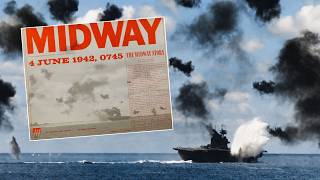
- Allows exploration of alternate history and 'what-ifs'.
- Creates vivid and unpredictable stories with each play.
- Immerses players in historical context and creates tension.
- Transports players to historical moments, making them actors in history.
- Sparks a lifetime hobby due to its engaging nature.
- The Battle of Midway
- World War II, Pacific theater
- Life
- Risk
- Payday
- Monopoly
- Battleship
Mechanics (from transcript analysis)
- Hidden Movement — Players use screens and cannot see where their opponents are, leading to a 'Battleship on steroids' feel where players search for each other.
- Strategic Decision-Making — Players make decisions, try to outthink, outmaneuver, hide, and outpredict their opponents' moves.
- war game — Described as a historical board game, often called war games, exploring historical battles.
- What-if scenarios — The game allows players to explore alternate historical outcomes based on different decisions.
Video topics + discussion points
Quotes (from this video)
- Because it up until that point in time, history is a line and now it's got infinite possibilities.
- It puts you in the shoes of those leaders and it gives you all the ability to make all kinds of decisions to try different things.
- So, the ability for these games to tell stories and unpredictable stories and different stories and infinite stories and be able to relive and talk about those stories afterwards.
- So, the ability for these games to transport you to that historical moment and to help connect you to the emotion and feeling that would have been surrounding that battle or that moment in history, to make you an actor in history instead of a passive consumer of history, is something that just came to life as soon as I started playing this game.
References (from this video)
- Captured the cat and mouse nature of naval warfare
- Highly replayable
- Opened up the hobby
- Profoundly impactful first wargame experience
- Naval Air Battle
- World War II
Mechanics (from transcript analysis)
- Area Strike — Launching strikes and blow up the aircraft carriers of your opponent before they do the same thing to you.
- Hidden Movement — You got the screens where your opponent screens is hidden.
- Search and destroy — You're trying to find your opponent.
Video topics + discussion points
Quotes (from this video)
- So it felt like no matter how many times I played this game, every single time it was different.
- I think it captured operational level combat in a way that the other options in that period of time thinking about things like Africa France 1940 that I just didn't quite gravitate towards from a play level as I did with this one.
- So, it is easy and far away the number one game on my list of top 10 Avalon Hill war games.
- But first up, let me introduce the game to you. Midway Naval Air Battle Game.
- For for what it does, I think it captures that whole cat and mouse and strike first or be struck nature of naval warfare.
- But that whole idea of that being the first war game that I got, I remember think that you could have history in a box like this.
- I mean, paper time machines, right, is the the famous quote is what these are. That hit me so strong the moment I opened this box up and it's why I still play, right? Because it's history in a box.
References (from this video)
- tension and cat-and-mouse play
- easy to teach and highly memorable
- older design; some may find it dated
- nerve-wracking for new players
- carrier warfare and hidden information
- Pacific Theater, Battle of Midway
- nostalgia-driven, tense cat-and-mouse pacing
- D-Day at Omaha Beach
Mechanics (from transcript analysis)
- carrier combat and surprise strike timing — timing and detections drive the dramatic turns
- hidden information / double-blind play — opponent's forces and intentions are not immediately known
Video topics + discussion points
Quotes (from this video)
- nostalgia choice
- nostalgia will color future versions of this list
- the narrative that games generate is a central appeal