

























Monopoly Deep Dive
What the Community Thinks About Monopoly
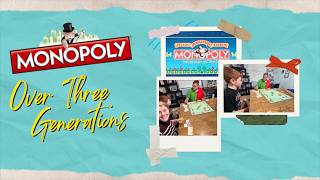
Monopoly holds an unusual place in gaming culture. Reviewers acknowledge its status as the most famous board game of all time, yet their assessments diverge sharply depending on how the game is actually played. The consensus emerges not from universal praise but from honest reflection on what Monopoly means to players, why it endures, and why it divides opinions so dramatically.
Some reviewers defend the game vigorously when played by official rules. TheGameBoyGeek describes Monopoly as "unfairly judged" because most players never encounter the actual game Parker Brothers published. Those who play correctly discover a experience fundamentally different from the marathon sessions that define the game's popular reputation. Board Game Sanctuary reviewers focus on the strategic depth available to anyone willing to engage with the mechanics seriously, highlighting property investment logic and income streams. In contrast, No Rolls Barred's analysis leans into the game's darker reputation: it's a game about greed, bankrupting opponents, and straining relationships, which is partly the point.
The historical perspective adds complexity. Adam in Wales frames Monopoly as a moral commentary on capitalism that Parker Brothers stripped away, transforming an educational tool into a celebration of ruthless wealth accumulation. This ideological shift explains why reviewers see the game differently today compared to its intentions in 1935. The game's brand has evolved so completely that it now reads almost as a parody of itself, shaped as much by decades of house rules and cultural memory as by its original design.
Core Mechanics That Define Monopoly
Roll and Move
Dice rolling drives Monopoly's movement, and reviewers recognize this as historically significant rather than inherently flawed. Shelfside notes that Monopoly was many players' first exposure to this mechanic, which became a staple of mid-twentieth-century board games. The dice determine where players land, triggering property acquisitions, rent collection, or chance card draws. Reviewers understand the mechanic's appeal for accessibility: anyone can understand rolling two dice and moving that many spaces. However, the mechanism also introduces the luck element that critics blame for games dragging on unpredictably and for strategic outcomes depending on the dice rather than decision-making.
Board Game Sanctuary reviewers explain the mathematical probability underneath roll and move: seven has the highest chance of being rolled from any position, which makes certain properties predictably valuable to invest in. Understanding these patterns rewards strategic thinking even though the fundamental mechanic relies on chance.
Property Trading and Auctioning
Reviewers consistently highlight property negotiation as Monopoly's beating heart. TheGameBoyGeek describes Monopoly as a "property trading game" at its core, where "it's it's all about trading and dealing and negotiations." This mechanic creates the social tension that defines memorable Monopoly sessions. Board Game Sanctuary explains how auctions work when a player declines to purchase a property, creating opportunities to acquire assets at below-market prices through competitive bidding. The trading mechanic allows players to negotiate property swaps, side deals, and alliances.
Shelfside notes this mechanic deserves serious recognition in board gaming's evolution. Players evaluate each other's valuations of resources in real time, creating negotiation dynamics that transcend simple mathematical advantage. Games like Sidereal Confluence and Chinatown build their entire designs around trading mechanics Monopoly pioneered.
The Monopoly Experience
Family Drama and Competitive Tension
Reviewers describe Monopoly as a relationship crucible. No Rolls Barred plays Monopoly with friends and captures the experience honestly: "it's a game that ruins friendships and families. That's what's fun about it, if you don't want to continue relationships with your friends, yes." The game's emotional payload comes from watching players progressively eliminated from the competition while survivors gradually accumulate wealth. Players sitting out for the final two hours watch others decide their fates, creating disengagement alongside dramatic swings in fortune.
The tension builds not from mechanical elegance but from genuine human stakes. Someone will win decisively and others will lose, sometimes catastrophically. This makes Monopoly more emotionally resonant than games with tighter catch-up mechanics, though that same quality makes it polarizing.
The Endgame Slog
Reviewers unanimously identify the same pain point: Monopoly's tendency to drag. No Rolls Barred describes the experience of playing by official rules as three hours of repeating moves with diminishing excitement, where elimination creates a two-hour epilogue of watching survivors exchange money. The game reaches a state where outcome becomes inevitable but execution takes additional hours. TheGameBoyGeek insists tournaments run ninety minutes maximum, with most games finishing in sixty, but casual players with house rules consistently report much longer sessions. The typical American Monopoly experience, filled with free-parking payouts and rule variations, extends games beyond most players' patience and creates the enduring complaint that Monopoly simply doesn't end.
What Makes Monopoly Stand Out
Iconic Cultural Dominance
Monopoly transcends board gaming. Adam in Wales observes it's "one of the biggest brands in the toy world and certainly the biggest in tabletop gaming." The game's brand identifiers are universally recognized: the metal tokens, Monopoly money, the board layout with its iconic properties from the London edition, "Get Out of Jail Free" cards, and the Monopoly Man himself. Shelfside credits Monopoly with making board gaming itself a mainstream activity for millions of people in 1935 and beyond. No other board game carries this weight of cultural memory or instant recognition across generations. Parents teach children to play Monopoly because they learned it from their parents, creating a tradition more durable than most games' inherent qualities.
Strategic Depth When Played Correctly
Board Game Sanctuary reviewers spotlight strategy available to engaged players: property positioning based on dice probability, railway and utility investment yield, staying in jail strategically during the late game to avoid high-rent properties, income tax calculations, and housing distribution tactics. TheGameBoyGeek discovered that playing by actual rules instead of house rules creates a fundamentally different game that "people that like their gamer enthusiasts" actually enjoyed more than they expected. The trading mechanic rewards negotiation skill and evaluation of long-term position. Reviewing players conclude Monopoly contains legitimate strategic choices that justify its continued existence for players willing to engage seriously with the system.
Potential Drawbacks
Luck Overshadows Planning
The randomness of dice rolling means players cannot fully control their destinies. A player landing repeatedly on unowned cheap properties while competitors land on prized real estate can fall behind before strategy begins. No Rolls Barred notes that "Luck of dice and randomness can overshadow strategic planning," creating frustration for players who see their careful decisions undone by bad rolls. Early game luck often determines winner and loser before meaningful strategic differentiation emerges, which modern board game design typically minimizes.
Elimination Mechanics Create Disengagement
Once players run out of money and drop out, they sit on the sidelines for the remainder of the game. No Rolls Barred describes the experience: "I was out of the game longer than I was playing the game... those two hours were just the other three players swapping money back and forth." Board Game Sanctuary notes that "Elimination can leave remaining players disengaged" while the survivors finish their grinding competition. Modern cooperative and catch-up mechanics in newer games prevent this problem, but Monopoly's design accepts elimination as a fundamental feature. House rules often extend the problem by slowing bankruptcy, trapping eliminated players in observer status for even longer.
If You Enjoy Monopoly
Players drawn to Monopoly's negotiation and property-trading mechanics will find satisfaction in Lords of Vegas, which offers similar economic competition with cleaner pacing. Acquire, designed by Sid Sackson, delivers hotel-chain investment decisions without the luck-dependent movement system. Chinatown strips Monopoly's negotiations to their essence, focusing purely on trading without dice rolls extending playtime.
Those enjoying the competitive property development will explore Ticket to Ride for route-building competition or Sidereal Confluence for elaborate negotiation over resources. Waterfall Park offers pure negotiation in a bite-sized package. For players seeking modern takes on area control and wealth accumulation, Magnate: The First City provides city-building economic depth with tighter mechanics and tactical positioning.
Interested in Monopoly's historical significance without its pacing? For Sale and High Society deliver auction mechanics and valuation decisions. Carcassonne offers the property set-collection satisfaction with cooperative simultaneous building and faster resolution.
What Reviewers Are Saying
"The game lasts forever. There are countless stand-up routines and scenes in movies and films that make jokes about the fact that monopoly tears relationships apart because it never ends. But if you actually play the rules properly, is monopoly actually good? Yes, but it's still slowing me down, isn't it?"
— No Rolls Barred
"I actually did a video where I played Monopoly with the actual right rules with my gaming group, people that like their gamer enthusiasts, and they all had a different perspective on Monopoly. They all enjoyed it more than they ever had in the past. And it's something that they said, 'Yeah, I enjoyed this and I would play it again.'"
— TheGameBoyGeek
"Monopoly started out as one of those morality games. The Landlord's Game in 1904, produced by a woman who was trying to introduce children to the idea that inequality is bad and that landlords stand to make an awful lot of money at the expense of the poor tenants. But by the time Parker Brothers got onto it, it became a positive thing to be greedy and amass this huge wealth and play this ruthless game of property acquisition."
— Adam in Wales - Board Game Design