



Monster Hunter World: The Board Game Deep Dive
What the Community Thinks About Monster Hunter World: The Board Game
Monster Hunter World: The Board Game brings the hunt from the video game to the tabletop as a cooperative fight against large monsters. Hunters manage their own stamina, equipment, and health while a monster acts on its own schedule. The design is ambitious, and reviewers disagree about whether its complexity pays off at the table, with some praising the depth and others noting that a single fight can take a long time to justify its effort.
Players who have run full campaigns describe a game that rewards planning and punishes careless play. The hunts are tense, the crafting system gives long sessions a sense of progress, and the board reacts to where the hunters stand. Fans of the video game tend to respond warmly to the monsters and the equipment, while players coming from other tabletop games focus on how much time each fight takes and how often a single bad turn can swing the outcome.
Core Mechanics That Define Monster Hunter World: The Board Game
Cooperative Game
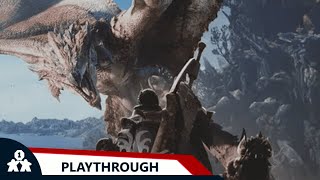
Hunters work together against one monster, and the monster does not wait for a perfect plan. The Behavior deck determines what the monster does, and threat tokens and the front, side, and rear arcs decide which hunter it targets. A reviewer playing through the Great Jagras noted that the monster can attack everyone in its path, so positioning matters as much as damage. The monster also heals and changes its approach as parts are broken, which keeps the fight moving even when the hunters are doing well.
Combat: Deck/Hand
Each hunter plays attack cards from a hand onto a personal stamina board. Attack cards carry combo or break symbols, and the number of cards a hunter can hold on that board is limited. The stamina board is the central tension of the design: once it fills up, a hunter cannot play other cards until some are discarded. Hits are resolved with a deviation deck and a damage deck, and dodge values determine whether an attack lands cleanly. Reviewers describe the combination of these systems as the part of the game that rewards careful sequencing the most.
The Monster Hunter World: The Board Game Experience
Campaign and Arena Modes
The campaign runs across an in-game calendar, and time cards act as the game clock. A campaign can be lost when the time track runs out or when enough hunters faint during a fight. One reviewer reported that a single fight came close to failing after two hunters fainted early, which shows how quickly the campaign can turn. Quackalope also discussed the difference between campaign and Arena play, noting that Arena offers a more direct, one-shot challenge without the longer-term resource management of the campaign.
The Gathering Phase
Between hunts, the campaign uses a choose-your-own-adventure style gathering phase. Track tokens influence which monster behavior cards come up in later fights, so the choices made outside of combat carry over into the battle. Reviewers say this makes each monster feel different from one session to the next, even when the same creature is fought again.
What Makes Monster Hunter World: The Board Game Stand Out
A Board State That Keeps Moving
Quackalope describes the game as one where the board is always changing, even on a player's off turn. Hunters need to track what the monster is doing while they wait, and the same fight can look very different from one round to the next. That fluid approach gives the game a sense of a living encounter rather than a series of isolated turns, and it helps explain why reviewers keep returning to the same fights to see how the monster responds to new choices.
Crafting and Downtime
The crafting system is one of the most praised parts of the game. Hunters gather materials from defeated monsters and use them to upgrade weapons and build armor. Armor can be built in any order, while weapon upgrades follow a fixed path, which gives each hunter a distinct progression. Between hunts, downtime activities let the group spend resources at camp for potions, extra resistance to a chosen element, or a repeat of an earlier quest. These options turn the time between fights into a meaningful part of the campaign rather than a pause.
Potential Drawbacks
Charts and Cards With Errors
The most consistent complaint in the discussions concerns the printed materials. One reviewer found that the crafting charts that came with the game were almost all incorrect, and that the printed components were too small to read comfortably. Errata were being sent to backers, and a few player cards were also affected. Reviewers acknowledge that errors like these are common in crowdfunded releases, but they still make the early sessions harder than they need to be.
Swingy Time Cards
The time deck can change the outcome of a fight in a single draw. One reviewer called the time cards the biggest and swingiest part of the game, warning that they can be brutal and sometimes sweep away an otherwise strong turn. A sleep result, a forced discard, or a sudden threat shift can undo several rounds of planning. Players who prefer steady, predictable turns may find this variance frustrating, while players who enjoy risk will likely see it as part of the appeal.
If You Enjoy Monster Hunter World: The Board Game
Reviewers place the game alongside other cooperative monster-hunting titles. Oathsworn: Into the Deepwood shares the asymmetric, miniature-driven boss fights and detailed combat encounters. Kingdom Death: Monster offers a heavier, more brutal take on cooperative monster hunting with deep campaign progression. Vagrant Song gives a smaller-scale version of the same boss-battle feeling with tactical positioning. Reviewers weighing whether to keep Monster Hunter World alongside a crowded shelf of boss battlers also mention Primal Awakening, Zombicide, and Dungeons & Dragons board games as points of comparison for groups deciding how many cooperative, miniature-heavy games they want to own at once.
What Reviewers Are Saying
"That's kind of the crux of the game, and it's really fun, and it's a good challenge sometimes to ensure that you don't fill up that stamina border."
— One Stop Co-op Shop
"This is probably the biggest, swingiest part of the game, are the time cards, can be brutal, so watch out for that."
— One Stop Co-op Shop
"Yes, definitely. If you love the video game, you will like this."
— Board Game Hangover