







Montana Deep Dive
What the Community Thinks About Montana
Montana draws appreciation from reviewers as a solid mid-weight Euro game that brings an unexpected modern mechanic to the table: a working spinner. Designers love how it combines classic worker placement with accessible gameplay, though opinions diverge on its pacing. TheGameBoyGeek enthusiastically frames it as a worker-placement race toward settlement building, with strong mechanical depth, while players from Getting Games found the game's quick finish surprising, creating a disconnect between expected play length and actual outcome. The consensus suggests Montana works as a fun, lightweight title, but the experience hinges on map setup and player expectations.
Core Mechanics That Define Montana
Worker Placement with a Spinner
Montana innovates on traditional worker placement by introducing a physical spinner that generates your workers each turn. Instead of selecting actions, you flick the spinner to determine which colored workers you receive. This resource can then be deployed across the main board to access different locations and gather materials. The spinner adds tactile enjoyment to the game, making player interaction feel more dynamic than typical Euro turns. Once workers are spent, they return to the general supply, not to your personal stash, creating constant resource scarcity and forcing difficult decisions about where to commit your limited workforce.
Settlement Placement and the Connect Four Bonus
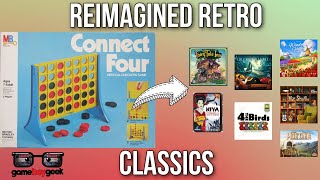
The second half of gameplay revolves around converting gathered resources into settlement tokens that you place on a shared grid. TheGameBoyGeek identifies a crucial mechanic: "Incorporates Connect 4 element: connecting four in a row grants a bonus." This design element becomes genuinely impactful, as achieving a connected line of four settlements lets you place an additional settlement for free, potentially saving several crucial turns in the race to complete your grid. This bonus rewards spatial awareness and forward planning, adding a light puzzle layer to what otherwise feels like a straightforward racing mechanism.
The Montana Experience
Swift and Satisfying Action
Montana delivers a puzzle-like progression where efficient resource management creates a satisfying flow. Players generally report games concluding in around 30 minutes, which most reviewers describe as faster than expected. The spinner mechanic provides moments of interactive enjoyment, and the auction system (reminiscent of Cyclades or Stockpile) creates secondary decision points where players compete for upgraded resources or additional economic advantage. The game moves quickly from turn to turn, minimizing downtime.
A Pacing Tension Between Expectation and Reality
Several reviewers noted an unexpected tension in Montana's tempo. The game's quick finish can leave some players feeling they've barely begun their strategy when the first opponent places their final settlements. This creates a dissonance where the experience feels cut short, particularly when the board layout favors one player's path through the expensive settlement costs. One reviewer captured this: "when the game ended I felt like we should have just crossed the halfway point." This pacing surprise means Montana works best with players who embrace light, tactical play over building long-term engine strategies.
What Makes Montana Stand Out
The Spinner Mechanic in Modern Gaming
Montana dares to revive a mechanic long dormant in contemporary board games. The working spinner feels refreshingly tactile and retro in an era of deck-building and worker placement spreadsheets. Reviewers appreciated that the designer, Ruger Dorn, integrated flicking without making it gimmicky. The spinner also allows resource modification through spending, creating a risk-reward layer: do you accept what luck provides, or do you spend to steer results toward your strategy? This small design choice gives the game personality and makes each round feel interactive rather than purely mechanical.
Designed by a Master of Accessible Strategy
Ruger Dorn's pedigree includes well-regarded titles like Kuba and Jam, and reviewers noted that Montana inherits that same philosophy of blending light rules with meaningful decisions. The game respects player intelligence by avoiding unnecessary complication while still delivering tactical depth. Multiple reviewers acknowledged liking Dorn's design philosophy: engaging mechanics without overwhelming complexity, which makes Montana an ideal entry point into worker placement for newer players while still offering enough texture for experienced gamers.
Potential Drawbacks
Uneven Game Length and Satisfying Endings
The most consistent criticism concerns Montana's finish. Because the race condition depends on how settlement placements align with the board layout, players can experience wildly different game states. One player may hit two expensive zones that grant them multiple free settlements through the Connect Four bonus, while another circles the board unable to complete their grid. The result: when victory arrives, trailing players may feel they never got a real chance to compete. Getting Games summed it up: "one of my opponents just did those and they got all of their tokens out so fast like I still had like three or so left in front of me so I didn't feel like I was even remotely close to winning the game and it was not very satisfying."
Map-Dependent Balance Issues
Montana includes multiple board layouts for variability, but reviews suggest that settlement placement distribution can swing the game significantly. When expensive, high-value zones cluster together, the player who reaches them first gains a snowballing advantage through the Connect Four bonuses. Other layouts may feel more balanced. This makes Montana's replay value dependent on map selection; a poor layout choice can turn a clever race into a runaway victory, and reviewers expressed interest in playing again specifically to test different maps before rendering final judgment.
If You Enjoy Montana
Players who appreciate Montana's blend of luck and light strategy will find similar satisfaction in Ticket to Ride, another route-building race that combines accessible mechanics with spatial puzzle elements. For those drawn to the spinner mechanic itself, PitchCar offers dexterity-based racing with more player agency over outcomes. The auction system echoes Cyclades, which players seeking deeper economic negotiation may explore. Fans of Ruger Dorn's design sensibility should seek out Kuba and Jam, both lighter Euro games that reward clever spatial thinking. Those who love the Connect Four concept in Montana will appreciate how other games like Forbidden Island use grid-based pattern recognition to create satisfying moments of breakthrough.
What Reviewers Are Saying
"There's some heavier games like some mediumweight Euro games like Montana where this is a worker placement game where you're placing your workers, you're getting resources, you're trying to spend those resources to place settlements on a on a grid. And if you connect four in a row of your settlements, and the game's a race, you're trying to get rid of all your settlements and place them all. If you get four in a row, even in a diagonal line, you get to place an extra one for free. And so connect four is a huge bonus in this game that allows you to basically save yourself two or three turns in the game."
— TheGameBoyGeek
"When the game ended I felt like we should have just crossed the halfway point like I felt like maybe we'd be two-thirds way through the game with another third left over but there are many spots out on the board that are somewhat expensive to get to."
— Getting Games
"It's a modern game with a spinner. You have a little board with a little arrow on it. You're gonna flick it and it's gonna spin around and land on a specific spot, and that spot is gonna give you a couple different colored workers that you can then spend out onto the main board. I really didn't mind the spinner, if I'm being honest."
— Getting Games