







Mountains of Madness Deep Dive
What the Community Thinks About Mountains of Madness
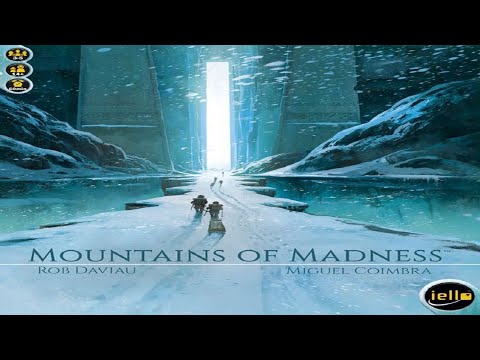
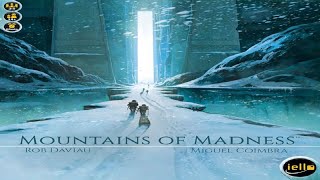
Reviewers consistently describe Mountains of Madness as a party game that does not look like one. Players climb a mountain together on a Lovecraft-inspired expedition, and the higher the group goes, the more Madness cards each character collects. Those cards force players to change how they talk, think, and act at the table, and that is where most of the laughter comes from. A common point of praise is that the humor grows out of the rules themselves rather than from jokes the group brings to the game.
Opinions split on how often the game deserves a place on the shelf. Enthusiastic players say it reliably produces fun, while others find that the specific style of play limits how often it reaches the table. The consensus is strongest among groups who enjoy loud, goofy experiences, and more cautious among players who want a traditional strategy session.
Core Mechanics That Define Mountains of Madness
Cooperative Game
Every player shares one win or lose outcome, so the entire group rises or falls together. The team completes short missions by playing the right numbered cards in combination, but the Madness cards hinder the communication needed to coordinate those plays. Because everyone shares the same result, a player whose ability to speak is restricted still depends on the rest of the table to finish each mission.
Real-Time Timer
Decisions are squeezed into a short window, usually a 30 second sand timer, during which the group must agree on which cards to play. For many reviewers that pressure is part of the appeal, and one describes the timed phase as genuinely a lot of fun. Some players find the constant urgency exhausting, and one reviewer notes that some people really hate real-time games while others thrive under the pressure.
The Mountains of Madness Experience
Absurd
The Madness cards turn ordinary conversation into something strange. All You Can Board describes cards that require numbers to be communicated as Roman numerals and cards that demand a nose scratch whenever a certain word comes up. Actualol points to cards that forbid verbs entirely. The result is a table where players must interpret each other's odd behavior, and the sillier the restriction, the more the group laughs.
Horror
Beneath the comedy sits a Lovecraftian setting that gives the game a darker undercurrent. One review frames it as a horror game with a Lovecraft theme in which players go mad as they climb. Board Games UnLocked describes it as Cthulhu-esque and a game about descending into madness on a mountain, so the mood never fully leaves the table even while the group is laughing.
What Makes Mountains of Madness Stand Out
Communication as the Puzzle
Actualol highlights how the restrictions change the social dynamic of a table, from a card that bans verbs to one that limits speech to the player on the right. The reviewer finds any game that plays with communication completely intriguing. That focus makes talking itself the puzzle, which helps the game feel different from most cooperative titles.
Laughter Over Winning
One review argues that at its best the game is hilarious, and that its strongest moments come from shared laughter rather than from the final result. The reviewer describes being in tears of laughter during play and treats friends laughing together as the highest goal of a party game. Because the enjoyment does not depend on who wins, the game keeps its appeal even for players who lose most rounds.
Potential Drawbacks
Narrow Table Appeal
All You Can Board argues that the game sits in an awkward middle ground, with more structure than a pure party game and more chaos than a traditional board game. That makes it hard to suggest for every mood. The same reviewer notes that the game just does not get played enough because of where it falls, even though the group has a great time whenever the right people are present.
Timer Pressure and Madness Card Quality
One review argues that the timed phase should use an alarm rather than a sand timer, because a sand timer makes it far too easy to cheat. Board Games UnLocked also finds the Madness cards uneven, noting that they are really weird and that players may not know what their own restrictions are or how they are portrayed. Groups looking for a quick session may find these frustrations hard to overlook.
If You Enjoy Mountains of Madness
- Mansions of Madness: Reviewers group it with Mountains of Madness when discussing Lovecraft-themed table games, so it shares the same investigative horror mood.
- Elder Sign: It appears alongside Mountains of Madness in discussions of Cthulhu-themed cooperative games, making it a natural next step for fans of the setting.
What Reviewers Are Saying
"No one knows what your madness is, they just interpret why you're doing things. It's hilarious, it's tons of fun, but it's such a specific kind of game that I find that it falls in this weird middle ground if I want to play a party game."
— All You Can Board
"There's a card that tells you that you can't use verbs. There's a card that tells you you can only communicate to the play with the player on your right, and I love games like that, that change that social dynamic. Any game that plays with communication, I'm completely intrigued."
— Actualol
"So at its best this game is hilarious, and I'm amazed that I would get rid of a game that had me in tears of laughter, because for me that is kind of the pinnacle of where games are, me and my friends laughing, having an amazing time."
— Watch Review
DISCLOSURE: This overview was compiled by MindForge's AI from 10 community video discussions. Watch the featured videos above for the full human perspective.