/pic1087976.jpg)
A prime mechanism of Roman expansion and control in the provinces was the municipium (pronounced MU-ni-KIP-ee-um), the premiere Roman provincial town. Being granted the status of a municipium brought a town into the Roman orbit and involved both duties to Rome and a gradual extension of the Roman citizenship to the inhabitants.
Municipium takes place in one of these municipalities in a western province. The time is the middle of the 2nd Century AD, when the Empire had reached its greatest territorial extent and was enjoying its longest period of imperial peace.
Players are each in control of a powerful family and try to strategically place their family members in the various institutions throughout the municipium and gain the support of the citizens: Scholars, Merchants, Soldiers, and Priests. At various times during the game, if a player has the most influence in an institution, the player can exert the power of that institution and gain the support of certain citizens. Meanwhile, the praefect moves around the municipium and players strive to have the most influence in the institutions that he visits, thereby earning his favour. Each of these institutions have unique powers, and players must decide how and when to use them. The player best utilizing their power will become the most influential family in the municipium.

- Subtle area control
- Nuanced and clever gameplay
- Limited but impactful actions
- Good timing manipulation
Mechanics (from transcript analysis)
- Area Control — Players try to control different regions and utilize their special abilities.
- Card Play — Players can play cards from a hidden deck or their personal cards.
- meeple movement — Players can move some meeples around the board.
- Set Collection — Implied by utilizing region abilities and manipulating the board state.
Video topics + discussion points
Quotes (from this video)
- this is another definitely a a forgotten gem in my opinion
- this is definitely unlike any other kitti game that I've played
- quite a frustrating game um but the hand management is extremely clever um and a very tense game as well
- the cool thing about this game is the twist at the end where if you are the player who spent the most money you are automatically disqualified from winning
- this one seems to be a bit more polarizing but it's a huge hit for me personally
- brilliantly refined very sophisticated and streamlined gameplay um one of the best T placement games out there
- definitely a deeper game than it first meets the eye and it's one of the best auction games ever made
- wonderful game one of the purest games I have in my collection and one of my favorites full stop an absolute work of art
- well Riders was fine Dragon Riders so Dragon master was decent royal visit if you like the tug-of war system you might like this one didn't quite work for me same go to Blue Moon Legends very interesting World designed game but one that didn't quite suit my game style
- definitely one of the highest regarded kitu games and for good reason it's my second favorite kitu game
- this one is another auction Style game where you have fixed bids so you cannot just bid what you want you have four tokens at any time and all you're doing is you are revealing these tokens or these tiles out in this kind of push your luck mechanism
- lots of layers lots of wrinkles um definitely a deeper game than it first meets the eye
- it's one of the best auction games ever made I think it might be my favorite
- this is one of his root building style games as you have a a rack full of tiles you're using them to create huge chains of your particular color and trying to connect these different kind of cities together
- gaml could not be more simple just simply place a TI or think two tiles or more than that at times onto the board and um score accordingly
References (from this video)
- Sylos
Mechanics (from transcript analysis)
Video topics + discussion points
Quotes (from this video)
- for a year we had to try and pronounce this until somebody announced that they were going to call it Mysterium
- This game made such a splash. Like I forgot that people for a year were importing copies of it because it was so different.
- It's actually pronounced Schüttel's. Like shirtless with an uh with that little uh Is that called an umlaut? Yeah. The the the little uh The the dots over the Yeah, the dots over the U. Yeah, but I'm still going to call it Schüttel's.
- You're rolling uh little gnomes out of a cup. You're trying to roll a Schüttel out of a cup.
- It's like basically a stock market game and depending on how many of the pawns you roll out of the cup, like that's number active.
- This one is really interesting in that it is nothing like the game it's based off of.
- This is Flamecraft Duels. I honestly wish they probably wouldn't have called it Flamecraft, maybe like Flame Duels or something like that would make more sense to me um because I don't think this one is anything like a two-player version of Flamecraft. This is a straight abstract game.
- It's got really great PVC cards with some crazy like metal clasp on it. Like the whole thing is overproduced, but it may it just brings to the uh it brings so much to the occasion when you're playing this game.
- It's a really cool abstract game with really cool puzzlingness and thinkingness uh connected with this just top-notch production.
- Is Transformers higher or lower than Wedding Crashers?
- The Bonfire of the Vanities from 1990. A hard-drinking journalist in ignites a scandal in New York City by reporting on a hit-and-run perpetrated by a Wall Street fat cat and his mistress.
- Is Baby Geniuses higher or lower than The Bonfire of the Vanities?
- Alien versus Captain America: The First Avenger. I mean, I know who'd win in a fight, but it's cuz Cap is undefeated.
- So, this We're going to do three in a row.
- I think that there is an unfair bias against Nick Cage.
- National Treasure was 46. Oh. And then Twilight was 49.
References (from this video)
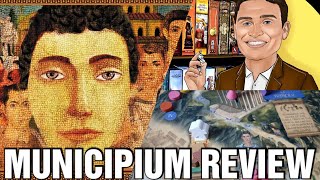
- Top-decking offers a lively, flowing decision space without devolving into pure randomness, and the limited deck size keeps outcomes predictable enough to strategize around.
- The initiative order and tie-breaking mechanics give meaningful control over where and when to invest actions, making turn order feel consequential.
- Thematic integration and mechanics interplay feel cohesive: locations, prefixes, wreaths, and cards all interact to shape strategic choices across different fronts.
- The game scales well with 3–4 players, delivering robust interaction and a chess-like feel as familiarity with the locations grows.
- Component quality is solid, with a compact footprint and a minimal setup that suits frequent plays.
- Visual design is deliberately beige and minimalist, which may feel bland to players seeking a more visually striking presentation.
- Although the box supports 2 players, the player experience is not optimal at that count, and the reviewer notes it is best with three or four players.
- The learning curve can be nontrivial for new players, given the interplay between locations, powers, and the deck-based action resolution; some may prefer more traditional eurogame entry points.
- Some may perceive top-decking randomness as swingy, despite the sense that it adds momentum; a minority of players might find the randomness less appealing.
- Area control and set collection in a stylized, eurogame-design environment where players vie for control of districts to form strategic combinations.
- Ancient Rome-inspired city-state governance and district administration, with temples and public institutions shaping power and influence.
- Abstract, procedural politics. The world is a micro-society with defined institutions (Temple, Basilica, Forum, etc.) that drive scoring and action economy, rather than a strongly narrative or cinematic story.
Mechanics (from transcript analysis)
- Area Control — Players scatter and manage family members across a fixed set of locations on a central board. The majority in a location yields benefits, with specific tokens and resources attached to each site.
- Deck activation and top-decking — On a turn, a player can either activate a personal card or flip and resolve a communal card. The communal deck provides a randomized yet bounded stream of actions that influence which locations are activated and how rewards are distributed.
- Deck Building — Each player has a small personal card pool that they can use once per round, plus a communal deck with a few duplicate cards. The deck sizes are intentionally constrained to maintain predictability while preserving a sense of novelty.
- Deck building and card variety — Each player has a small personal card pool that they can use once per round, plus a communal deck with a few duplicate cards. The deck sizes are intentionally constrained to maintain predictability while preserving a sense of novelty.
- Deck Manipulation — On a turn, a player can either activate a personal card or flip and resolve a communal card. The communal deck provides a randomized yet bounded stream of actions that influence which locations are activated and how rewards are distributed.
- End-game condition and progress tracking — The game ends when a player reaches a set coin total (four or five coins, depending on desired game length). This creates a brisk but strategic arc toward victory rather than a simple point-accumulation race.
- Initiative order and tie-breaking — The Temple location determines the initiative order for the round. This order is crucial for breaking ties in location control and influences which player can act first in the subsequent phases.
- Movement and road network — On a turn, a player may move one family member twice, or two members once, along the road system. Movement choices influence which locations can be activated and which tokens can be collected.
- Set Collection — Players collect color-coded civilian meeples to form complete sets. Each complete set earns a coin, driving the core win condition.
- Wildcard tokens and boosts — Prefix favor tokens act as wild civilians and can proxy any type to complete a set. Wreaths on meeples boost strength, creating a dynamic who-controls-what decision tree during scoring phases.
Video topics + discussion points
Quotes (from this video)
- this game is absolutely fantastic I'm really impressed with the way this game is put together
- I love how familiar it becomes
- longevity here because the more you become familiar with these locations it becomes more tactical
- I would definitely recommend you play until four coins rather than the five
References (from this video)
- appears to balance depth and streamlined play
- follows Knizia’s design ethos of elegant mechanisms
- potentially approachable despite area control depth
- the exact mechanisms are not fully described in the video
- public feedback on Municipium’s consistency is mixed
- urban development, regional power balance
- Roman provincial city control
- abstracted historical governance
- Knizia's back catalogue (reference to his design style and depth)
Mechanics (from transcript analysis)
- Area Control — Players deploy pieces to control regions on a map to unlock region-based powers.
- region-power economy — Control of a region yields powers that influence scoring or actions.
Video topics + discussion points
Quotes (from this video)
- I'm kind of making an effort to go through Knizia's back catalog because his games just resonate with me so well
- this is a 60 Minute area control game by Konitzia
- it's very concise, it's nice and small
- I'm always interested in trying games that do fly under the radar
- almost zero luck... deterministic
- I might have to think twice whether to cover this one on the channel
References (from this video)

- Nuanced, clever design with meaningful choices
- Interesting blocking and set collection dynamics
- Reveals depth after multiple plays
- Initial impression can feel dry or mechanical
- Might require coaching for new players
- urban governance and power dynamics in a Roman city
- Ancient Rome with city-building and region control
- area majority with modular regional abilities
Mechanics (from transcript analysis)
- Area Majority — Control regions to gain tokens and powers.
- initiative and action deployment — Which actions you can take is influenced by initiative and positioning.
- region-specific abilities — Each location grants a unique special power affecting play.
- set collection of meeples — Collect meeple sets to gain coins; efficiency and blocking matter.
Video topics + discussion points
Quotes (from this video)
- The unpredictability with this one maybe a bit too much for my comfort level.
- The board state is very busy and hard to remember what each piece can do.
- Not for me, hence why it's number 10.
- Breezy this game is extremely easy to play.
- I love the way that you have to manage your resources.
- Everything in this game feels good.