


Octopus' Garden Deep Dive
What the Community Thinks About Octopus' Garden
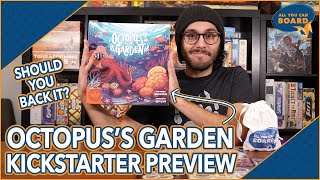
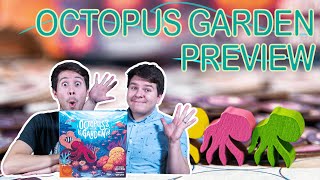
Reviewers describe Octopus' Garden as a tile placement game that is quick to teach but rewards long-term planning. Dylan at All You Can Board calls the rules very simple while the strategy depth is very deep, and sees it as a gateway game that experienced players will keep coming back to. The couple behind kovray reach a similar verdict from a Kickstarter preview: setup is easy, the game is fast, and the strategy scales with the group size.
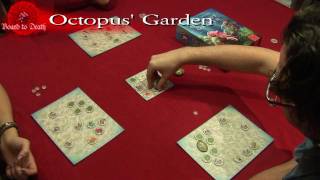
The main disagreement concerns luck and interaction. Dylan accepts that refilling the market can hand an opponent a useful row, while kovray puts more weight on the randomness that appears with three or four players, where two-player games feel more predictable. Board to Death TV - Board Game Reviews is the most measured of the three. It praises the production quality and the colorful artwork, then points to a market that feels a little random and a game with little to no player interaction beyond buying tiles another player wants.
Core Mechanics That Define Octopus' Garden
Set Collection
Kovray describes the game as a set collection game in which players purchase rows or columns from a central market and place them into a personal garden. Each turn, a player must take an entire line and pay the combined pearl cost of every tile in it, so the choice of which line to take is always a question of what you can afford and what your opponent needs. Dylan notes that Octopus' Garden borrows the row-and-column idea from Cat Lady, but drops the blocking rule, so a line taken by one player is never denied to the next. Matching tiles also pay off. Three anemones grouped together earn a clownfish bonus, and five seagrass tiles earn a seahorse, with the first player to complete a group claiming the higher bonus.
Resource Management
Pearls function as the currency, and oyster tokens are the engine that produces them. Each oyster adds one pearl of income at the start of a turn, but it also costs two points at game end, and every new oyster costs more than the last. Dylan describes this as a constant weighing exercise: is the extra income worth it given how many turns remain? Sea stars add a second layer, because they move toward the nearest oyster and consume it, which removes the negative points but also removes the income. Dylan argues that the timing of sea star placement, measured in turns of travel, is one of the most interesting decisions in the game, comparing the tension to the estate cards in Dominion, where early investment in points produces dead hands later on.
The Octopus' Garden Experience
Careful Balancing Under Pressure
Playing Octopus' Garden feels like a steady series of small trade-offs. Kovray emphasizes that the pearl economy makes every purchase a balancing act, since a player may have to accept a weaker tile simply because it is the only one affordable. Dylan adds that the game punishes slow starts: a player who does not execute the economy early can find themselves out of contention. The pressure is paired with satisfaction when a timed sea star reaches its oyster exactly when intended.
A Calm, Colorful Table Presence
The second feeling is warmth. Kovray credits Carrie Aiken's illustrations with giving the game a nature-focused atmosphere, and the couple say the art invites friends to the table before the rules are explained. Board to Death TV also highlights the nice and colorful artwork and interesting special tokens. Dylan compares the appeal to a Pixar film, where adults and children enjoy the same experience for different reasons. The result is a game that feels light and family-friendly on the surface while still rewarding a deeper plan.
What Makes Octopus' Garden Stand Out
Expert Modules
Reviewers return to the expert modules more than any other feature. Dylan counts eight or nine module sets, each with its own tiles and abilities, and says the box almost feels like it includes eight or nine expansions. Kovray notes that the tiles include a diver that collects relics and trash, and a mimic octopus that can act as an enemy or as seagrass. Because each module contributes only a few tiles to the draw bag, reviewers say adding them changes the game without making it dramatically harder. Kovray also points out that the rulebook discourages using every module at once, which suggests that players should explore combinations gradually. These comments come from a prototype, and both Dylan and kovray stress that the module contents may change before release.
Movable Sea Life
Kovray singles out the hermit crabs and sea stars as the most distinctive design choice. Their movement lets a player recover points during the game instead of locking every tile into place when it is placed. Dylan agrees that the hermit crabs add a useful layer, since a crab can carry an empty shell home and turn a single point into six. The rules for these pieces also interact with the coral tiles, which trap them when no path remains, so the board itself becomes part of the planning.
Potential Drawbacks
Luck in the Market
The most common criticism is that the market can swing a game. Dylan describes refilling the market with a strong row that the next player can immediately claim, and admits that in one session Dylan unintentionally supplied an opponent with exactly the tiles they needed. Dylan suggests that a Cat Lady style blocking rule could soften this, although acknowledging it would not remove luck entirely. Board to Death TV also calls the market a little random, although it argues that the seed placement strategy makes up for it.
Limited Direct Interaction
Board to Death TV finds the game has little to no player interaction, apart from purchases that another player might also need. Kovray notes that the starfish race offers some tension, since an opponent could take a starfish before you do, but most turns remain private planning. Players who want direct confrontation may find that isolation limiting, so the critique is a useful reminder that Octopus' Garden is primarily a game of parallel optimization.
If You Enjoy Octopus' Garden
Players who enjoy Octopus' Garden's row-and-column purchasing will find a similar satisfaction in Cat Lady, the game Dylan names as the closest relative. The blocking rule in Cat Lady is the main difference, and it addresses the market luck that Dylan raises. Players who like the resource pressure of pearls and oysters, and the way each early investment can become a dead hand later, will feel at home with Dominion. Those who enjoy a two-player puzzle where the board seems to turn toward you will recognize the planning in Calico, which kovray uses as its direct comparison.
What Reviewers Are Saying
"It is very simple in how it plays you are doing the same thing every time with buying rows and columns and just adding them to your board wherever you would like so it seems very simple but where you place those tiles when you acquire them and what ultimately you're trying to do to maximize your points is where all the depth comes from."
— Dylan, All You Can Board
"I don't think I've seen much of that in many other games where you can essentially save yourself some points by moving things around and I think that's pretty cool."
— kovray
"It's an okay game a little random when it comes to the market but makes up for it in the strategy of your seed placement there is little to none player interaction unless you buy something that another player might need."
— Board to Death TV - Board Game Reviews