/pic8106740.jpg)
Experience the thrill of classic dungeon crawlers, infused with great strategic depth, in a unique dark desert fantasy setting. Find immersion and nostalgia in the intense battles that only the bravest souls dare to explore. With straightforward rules and innovative mechanics, every encounter is unique—you will never know what lurks within the shadowy pits of the dungeons.
Make a pact with a demon lord and combine your attacks with the demon’s, creating a unique combinations and gameplay for each hero. There are dice rolling, but the powers allow to mitigate the luck with good strategy.
Explore the dungeons to find artifacts and hidden secrets, with an exciting loot system. Many items are unusual and make real impact on the hero’s powers. With luck, you can find the set collection for your hero and become much more powerful.
Make tough choices, including moral dilemma and shape the campaign. Your choices will shape the world and determine the ending.
—description from the publisher

Odalin: Dungeons of Doom - Chapter 1: Prologue

Odalin Dungeons of Doom l Section 1 l Part 2
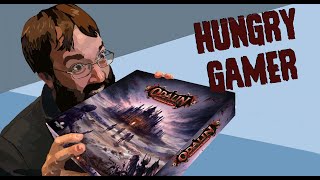
- Engaging card crafting and deck-building that yields high replay variety
- Distinct demon-corruption mechanic that is thematically coherent and mechanically strong
- Constant availability of instant actions keeps players engaged on others' turns
- Strong thematic hook: harnessing evil to do good with meaningful transformation
- Clean component design (token-based) with anticipated high-quality minis from Dori Games
- In-development state raises questions about late-game content, campaign depth, and scaling
- Unknowns about how the campaign/late game will unfold and balance
- The oversized box factor suggests shelf-space and cost considerations
- Harnessing evil to do good; inner demon struggle and redemptive action
- Dungeon crawl fantasy where heroes are fused with demons and must balance power with corruption
- Dark fantasy, loot- and ability-driven progression with thematic demon transformation
- Diablo series (visual and thematic inspiration)
- Tanar Adventures (predecessor)
Mechanics (from transcript analysis)
- Action resolution via dice-based combat — Weapon determines the dice pool; roll to meet or beat enemy defense, then apply damage with shields and other modifiers.
- Camp / progression phase — A campaign-like phase between sessions for upgrades and longer-term progression (late-game content not fully disclosed in the preview).
- Campaign — A campaign-like phase between sessions for upgrades and longer-term progression (late-game content not fully disclosed in the preview).
- Card fusion / deck-building per hero-demon pair — Each hero and demon starts with 10 base cards; players combine cards to create a top action (demon-specific) and a bottom action (instant/blue) to form their active suite.
- Combat: Dice — Weapon determines the dice pool; roll to meet or beat enemy defense, then apply damage with shields and other modifiers.
- Demon corruption and transformation — Collect corruption and souls to transform for a turn into the demon, gaining power and reach; if corruption hits 10, forced transformation can cause you to attack allies.
- Instant actions usable on others' turns — Five instant actions (blue) exist in hand and can be played on any other player's turn, adding interactivity and tempo.
- Looting and gear progression — Loot brings new gear and powers; base cards evolve as players level up and unlock new abilities.
- Order/Chaos track and enemy AI — Defeating enemies moves you along order or chaos tracks, with misbalance adding penalties. Enemies have their own AI decks and initiative.
Video topics + discussion points
Quotes (from this video)
- Harnessing evil to do good
- 80% of this box was air
- card crafting
- transform for a turn into the demon
- there's always these available instant abilities
- I think this is a very good next step for Dori games
- this is a massive box Dungeon Crawl game
- I really like the way that transform happens
- I am familiar with tanar Adventures which was their previous title
References (from this video)
- Deep narrative and lore
- Engaging combat system with demon customization
- High-quality miniatures and production
- Unique Arabian setting
- Potential for complex strategic combinations
- Very expensive
- Requires sustained engagement from all players due to game length
- Demons, magic, exploration
- Fantasy dungeon crawl
- Narrative-driven campaign
- Tanera's Adventures
- Taires
- Smash Up
- Fire Team Zero
- Tainted Grail
Mechanics (from transcript analysis)
- Action cards — Features a top/bottom effect system on action cards, with bottom halves offering instant abilities.
- Campaign play — Features an overarching narrative campaign.
- Deck Building — Players build and upgrade decks with unique action cards and upgrade decks.
- Demon/Hero Synergy — Combines hero abilities with attached demons for strategic combat.
- Dungeon Crawler — Players explore dungeons using modular tiles.
Video topics + discussion points
Quotes (from this video)
- On Trust Odyssey is a 10 out of 10 game for me. there was no reality where any of these other games were gonna surpass this.
- It'll I probably won't even [ __ ] get to it next year when it comes out because I still haven't finished my atto stuff
- This game is is the replacement. Like it's so it's it it is Netrunner. They just changed the terms.
- So in the uh in this game, you're both doing the same thing. They they found a way to merge the corp and the runner for each person to control at the same time.
- Michael Bogs is the creator of this and he was the one doing the last like third of Netrunner.
References (from this video)
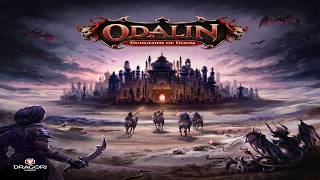
- Engaging narrative and world-building.
- Interesting character abilities and potential for synergy.
- Meaningful choices that impact the story.
- Thematic integration of mechanics like corruption and demon lord powers.
- Exciting setting with unique elements.
- Potential for complex rules or mechanics (implied by discussion of rulebook and stat tracking).
- Some players may find the corruption mechanic challenging.
- The 'Forclor' app's usability is questioned.
- A struggle against demonic forces and the corrupting influence of power.
- A dark fantasy world with Arabian influences, featuring temples, demons, and gins.
- The game's narrative unfolds through story elements read aloud, character backstories, and dialogue choices that impact the story progression.
- Gloom Haven
- Madara
Mechanics (from transcript analysis)
- Character progression — Players bind with demon lords to gain unique powers, suggesting a progression system.
- Character Selection — Players choose characters with unique abilities and discuss team composition and potential synergies.
- Combat System — The game involves tests of agility and vigor, damage, and hero interception during combat encounters.
- Corruption mechanic — Players gain corruption, which can have negative effects and potentially turn characters evil.
- Itemization — Players can equip items like the 'veteran's locket of longing' that provide stat bonuses and abilities.
- Lore and Backstory Integration — Character backstories and lore are read aloud and integrated into the gameplay experience.
- Resource Management — Players manage tokens like 'toughen' and 'empowered' which provide temporary combat benefits.
- Story choices — Players make decisions that affect the narrative progression and outcomes.
Video topics + discussion points
Quotes (from this video)
- Old Hazel was waiting for you. What took you so long?
- Jesus crack open with a Warhammer. Oops.
- This game doesn't seem like it'd be that complex where we're gonna be like, 'Uh, right.'
- You gain a soul.
- Place the crystals here. They hold the soul and essence of the demon lords.
- But beware, from now on, you will have to fight its corrupting influence.
- The rules for this game are horrendously bad.
- We need to go.
- Heroes, take care. We will hide with the rest of the escapees. I'll do my best to give others the hope you gave me.
- Corruption is no simple magic. You are not sick nor wounded. No mortal power can protect from the taint of a demon lord.
- Old Hazel knows many things. Things you wouldn't believe or understand.
- My people taught me every hidden path in these sands.
- You have the heart of a pride protecting its cubs.
- Born under the desert's endless stars, Marukesh was one of the rakasha masters of illusion and elemental magic.
- Don't waste your breath mourning the dead.
References (from this video)
- Engaging thematic elements
- Satisfying itemization and upgrades
- Challenging but manageable gameplay
- Potential for strategic card play
- Satisfying combat mechanics
- Headache-inducing rulebook
- Potentially slow start due to rule complexity
- Some mechanics can feel punishing
- Gloomhaven
Mechanics (from transcript analysis)
- Card Play — Players use cards for actions, attacks, and abilities, with concepts like instants and actions being important.
- character abilities — Each character has unique abilities and can equip items to enhance their stats and actions.
- Combat — The core of the gameplay involves turn-based combat with heroes and enemies attacking, defending, and using special abilities.
- Corruption — A mechanic where heroes gain corruption, affecting their turns and potentially leading to negative consequences.
- Demon Form Transformation — One character can transform into a demon form, gaining new abilities and potentially affecting gameplay.
- Dice Rolling — Attacks and defense rolls are determined by dice, with results like hits, crits, misses, and gaining souls or corruption.
- Initiative tracking — Combat turns are determined by an initiative order, which can be affected by certain actions or card effects.
- Item/Equipment Management — Players find and equip items to improve their characters, with limited slots available.
- Movement — Characters have movement points that allow them to navigate the game board, with some abilities affecting movement.
- questing — The game involves progressing through a story by completing objectives, such as finding items and interacting with the environment.
- Sanctuary/Campfire — Certain locations allow players to rest, heal, reset corruption, and potentially upgrade cards.
- Status Effects — Enemies and heroes can be affected by conditions like poison, weakened, vulnerable, and empowered tokens.
Video topics + discussion points
Quotes (from this video)
- But uh through sheer brain power, we figured it out.
- This section definitely feels like they're fighting you every step of the way.
- The rule book is horrendous, but it's not taking away from my fun of the game currently as much.
- That's a fat whiff.
- So, my first action then is going to be to play overwhelming power. So, I lose a health and I gain three arcane tokens.
References (from this video)
- Powerful character builds and combos
- Interesting tactical combat
- Engaging character progression
- Rulebook clarity issues
- Difficulty in finding enemy minis
- Some mechanics are complex or unclear
- Dark fantasy dungeon
- Taer's
Mechanics (from transcript analysis)
- Card Play — Players use cards for attacks, abilities, and movement, often with upgraded or flipped versions.
- character abilities — Characters have unique abilities that can be upgraded or modified.
- Combat — Players and enemies engage in combat using various attacks and abilities.
- Leveling up — Characters gain experience and can upgrade their cards or abilities.
- Movement — Characters move across a game board with different terrain types affecting movement.
- Objective Completion — Players work towards objectives such as finding relics and defeating enemies.
- Set Collection — Equipment cards are part of sets that provide bonuses when multiple pieces are equipped.
- tokens — Various tokens are used to track status effects, corruption, and other game elements.
Video topics + discussion points
Quotes (from this video)
- The rule book is atrocious. They are incompetent at writing.
- I mean, you could easily just say that you did do that first, If you just want to kill him
- This is what $700 gets, you guys. Is uh is great design. No play testing. No.
References (from this video)
- Engaging combat with tactical decision-making.
- Satisfying character progression through upgrades and items.
- Atmospheric environment descriptions that enhance immersion.
- Meaningful narrative choices that impact the gameplay.
- Good voice acting for the characters.
- Occasional confusion about specific card effects or rules.
- Some equipment found seems less useful than others.
- A dark fantasy adventure involving combat against monsters and navigating dangerous environments.
- A dungeon with flooded chambers, altars, and hidden passages.
Mechanics (from transcript analysis)
- Card Play — Players select and play cards from their hand to perform actions like attacking, moving, or gaining abilities.
- character abilities — Players utilize unique character abilities and upgrades to enhance their performance in combat and exploration.
- Combat — The core gameplay involves engaging enemies in tactical combat, managing health, and dealing damage.
- Dice Rolling — Dice are rolled to determine attack success, damage, and other combat outcomes.
- exploration — Players move through different rooms and interact with objects in the environment to progress the narrative.
- Hand Management — Players manage the cards in their hand, deciding which to play and when.
- item acquisition — Players gain new equipment and consumables through exploration and combat rewards.
- Leveling up — Characters gain upgrades and new abilities as they progress.
- questing — Players are guided by quests and objectives, such as finding specific items or purifying locations.
- Status Effects — Characters and enemies can be affected by status conditions like poison or weakened.
Video topics + discussion points
Quotes (from this video)
- Dude, I've noticed that upgraded dice are worse. They're just inherently worse.
- My path lies with her beyond the confines of the herd's expectations.
- You said you're looking for an offhand. like an offhand for a wizard or for a mage like
- If you could control any element, what would you what would you do?
- I do like the fact that if he was not here that we'd have a completely different experience.
- Recreasing his brow and says, "And the others are safe."
References (from this video)
- The correction to the deck rule significantly improved the gameplay experience.
- Increasing the difficulty and using the balance track are seen as ways to give the game a fair shake.
- Acquiring powerful new items like the Blade of the twin sons enhances gameplay.
- Helping survivors and making positive choices leads to a sense of accomplishment.
- The initial rule for deck flipping was considered a 'garbage rule'.
- The consequences of unchecked demonic power are a significant threat.
- The world is depicted as dangerous and filled with corruption, decay, and violence.
- a cycle of corruption, healing, and reclaiming power
- a fantasy world with deserts, mountains, and ancient cities
Mechanics (from transcript analysis)
- Balance Track — The hosts are incorporating the balance track, which is described as the actual way to play the game.
- Character stats and tests — Characters have stats like power and vigor, and players make tests against these stats to overcome challenges, like fighting scorpions.
- Deck Building — The game involves managing and upgrading player decks, with a correction made regarding the maximum number of cards that can be flipped.
- Difficulty scaling — The hosts are increasing the difficulty from normal to hard, which adds modifiers like an extra enemy on the initiative track.
- item acquisition — Players acquire new gear, such as the 'Blade of the twin sons' and magic items, which provide stat bonuses.
- Moral choices — Players are presented with choices that have ethical implications, such as aiding survivors or avoiding conflict.
- Resource Management — The narrative mentions the need to acquire food and water before journeys, and characters' survival depends on resources.
Video topics + discussion points
Quotes (from this video)
- So, we're increasing it to um hard, which just gives I think it was the first one in a lead modifier.
- But know this. If you continue to wield demonic power unchecked, you will eventually become demons bound to the demon lord's will.
- Priests of Mithra now fallen and left to feed the creatures of the wastes.
- Cultist hired us to place crystals on the altars. Promised us gold and a free run of the city. Once we did, demons flooded the place.
References (from this video)
- Vibrant, multi-layered combat with powerful area effects and demon forms
- Robust loot and set-item system that adds strategic depth
- Strong cooperative play with both shared and individual abilities
- Immersive theme with flavorful room descriptions and relics
- Rule density can be overwhelming, with many interacting tokens and phases
- Loot and corruption management requires careful tracking and organization
- Some rule clarifications would help (e.g., interactions with tainted tokens and environment)
- corruption, demon transformation, relic quests, and sanctuary restoration
- Fantasy dungeon crawl featuring serpentine viper folk, relics, poison, and dark incenses within a cursed dungeon.
- campaign-style dungeon crawl with ongoing story cards and quest progression
Mechanics (from transcript analysis)
- area_of_effect_attacks — Attacks can affect a grid area (e.g., 3x3 or 4x4); all enemies within the area take damage, with rules about including all squares in the area.
- campfire_rest_rules — Campfires allow healing and corruption/soul resets; they function as a save/rest point and campaign progress step.
- demon_transformation — A character can transform into a demon form by spending resources (souls), gaining new abilities and altered survivability.
- initiative_and_turn_order — Each round begins with drawing initiative cards to determine the sequence of actions for all characters.
- Line of Sight — Line of sight mechanics govern targeting, with obstacles like walls and doors; tokens do not block LOS unless specified.
- line_of_sight_and_blocking — Line of sight mechanics govern targeting, with obstacles like walls and doors; tokens do not block LOS unless specified.
- loot_and_equipment_system — Finding and equipping weapons, armor, accessories, and consumables; progression can unlock set items with bonuses.
- quests_and_sanctuaries — Quest cards drive objectives; sanctuaries hold relics that cleanse corruption and advance the campaign state.
- souls_and_corruption_mechanics — Souls power attacks and transformations; corruption tokens track deterioration and can affect health and abilities.
- status_effects — Poison, weakened, vulnerable, stealth, and other tokens modify damage, defense, and actions.
Video topics + discussion points
Quotes (from this video)
- This is going to be so good.
- I'm pumped for that because those equipment cards from last time were amazing.
- Minty. My sister believed, as I do, that a dark force feeds this plague, and the council leader is blind to it.
- Strangers, I am but an alchemist. I mean you no harm.
- The quest is called It's hard to create a cure.