
"The objective of the game is to build and manage a railroad company by laying track, building stations, and buying and scheduling trains. The player may start companies in any of four geographic locales: the Western United States, Northeast United States, Great Britain, or Continental Europe. The company starts with one million dollars in capital; half equity, half a loan. The company may raise additional capital through the sale of bonds.
The player manages the business as described above and may also handle individual train movement and build additional industries. The game models supply and demand of goods and passengers as well as a miniature stock market on which players can buy and sell stock of their own or competing companies. The game also has other railroad companies attempting to put the player out of business with stock dealings and "Rate Wars"."
Source: Wikipedia, "Railroad_Tycoon," available under the CC-BY-SA License.


- Really love this game.
- Great tile laying game.
- All four expansions are crammed into the retail box with an insert.
- Cheating a little bit by condensing two boxes (Darwin's Journey) into one, but then applied to this game.
- Railroads.
Mechanics (from transcript analysis)
- insert design — Designed an insert to fit four expansions into the retail box.
- tile laying — Great tile laying game.
Video topics + discussion points
Quotes (from this video)
- These are games that I think actually are worth the space that they take up on the shelf because they are packed full of content.
- This is how you get views. Have dog.
- I know, yes, I know.
- Although I wish it came with a stain.
- Are you singing me the song of your people?
- My games only get played once, two, three times.
- Bo has decided he's had enough treats and his tail is destructive.
- Let me know down in the comments below which is your physically largest game that is taking up the most space but totally worth it.
References (from this video)
- Fun to play, glad to have it.
- Can't wait to play it again.
- Strategy didn't pay off for one player due to incorrect tile placement and stock collection.
- Economic
- Railroads
- 18XX
- Railroad Rivals
Mechanics (from transcript analysis)
- Pick-Up and Deliver — Transporting goods across lines.
- Route Building — Connecting tiles to form transportation lines.
- Stock Holding — Collecting stocks to win the game.
- Tile Placement — Players place tiles to build routes.
Video topics + discussion points
Quotes (from this video)
- one of the actions that I love most from dreamscape with the insight and but now he's added a dice and everybody knows how much I love my dice
- my strategy didn't pay
- The more I played, the more I liked it
- Okay okay okay okay okay now I kind of see the appeal of it
- The rules that I didn't catch and you and Joel played again because I there are some rules I hadn't caught the price time through and it definitely made a big difference to our experience
- He said you don't know how much that means to a person when they and you don't know what's going on but I just wanted to thank you for just brightening up a couple minutes of my day every couple of weeks going through a rough time
- You just never know how you affect people
References (from this video)
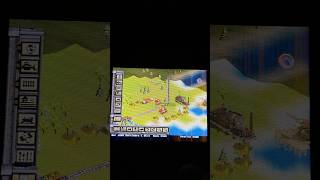
- apparent depth and potential for complex strategic decision-making as the player grows a network over time
- a large, expandable canvas with a wide map and diverse geography that invites long-term planning
- historical resonance and positive reception of the PlayStation version, suggesting a rewarding payoff for players who invest the time to learn
- steep learning curve and a learning process that can feel opaque or opaque at first glance
- the tutorial and early game guidance appear insufficient, leading to confusion about how to generate income and progress
- controls and interface feel finicky on a gamepad, with tension between using the D-pad for speed and the thumbstick for precision
- Railroad empire building and logistics
- Late 19th-century United States during railroad expansion
Mechanics (from transcript analysis)
- city-to-city logistics — The game emphasizes moving goods across space via an interconnected rail network. Building stations and routing goods between producers (farms, factories) and consumers (cities) creates a dynamic, systems-level understanding of how geography and infrastructure shape profitability. The video demonstrates attempts to link Baltimore with other nodes, revealing how logistical placement can unlock or lock in revenue streams.
- economic simulation — Goods are produced and transported, generating revenue that grows as the network expands. The player learns the economic logic of supply chains—goods produced in farms or factories must be shipped to markets via networks of trains. The transcript highlights dairy farms, grain silos, and even a restaurant at a station as elements that shape demand and the attractiveness of particular routes, illustrating how valuation shifts with network development.
- Network/Route Building — The core activity is to plan and lay down rail lines between cities, balancing construction costs, terrain, political obstacles, and future demand. Players must decide where to place depots, stations, and junctions to maximize throughput, while anticipating market changes and potential competition. In the transcript, the player attempts to connect Baltimore to Relay, which demonstrates how initial route choices constrain income streams and future expansion options, creating a foundation for strategic growth rather than a quick payoff.
- Resource Management — Players manage a cash flow that must cover construction, rolling stock, maintenance, and expansion. As the video narrator notes, early money is scarce, requiring careful budgeting and prioritization of which routes and facilities to invest in first. The depth lies in balancing short-term liquidity with long-term asset growth, since failing to fund key connections can stall a nascent network and prevent profits from accruing.
- route-building — The core activity is to plan and lay down rail lines between cities, balancing construction costs, terrain, political obstacles, and future demand. Players must decide where to place depots, stations, and junctions to maximize throughput, while anticipating market changes and potential competition. In the transcript, the player attempts to connect Baltimore to Relay, which demonstrates how initial route choices constrain income streams and future expansion options, creating a foundation for strategic growth rather than a quick payoff.
- Time progression — There is a calendar-driven objective (reach a monetary target by the end of a given year, 1899, in the video). This imposes a long-term horizon where strategic planning must outpace a ticking clock. The pacing creates tension between rapid expansion and the risk that bold investments could fail to pay off within the allotted timeframe, emphasizing the game’s strategic stamina over quick wins.
Video topics + discussion points
Quotes (from this video)
- this has a lot of potential.
- after about 45 minutes to an hour, I can say that this looks like it has a lot going on.
- incredibly good reviews from when it was first released on the PlayStation 1.
- it looks like it's all here if you want to put in the time to learn how to do it.
References (from this video)

- Solid game
- Would rather play Railroad Ink
- Gaming time too precious to force plays for completionism
- Railroad Ink
- Railroad Tiles
- Carcassonne
Mechanics (from transcript analysis)
- network building — Implied by the name and comparison to Railroad Ink.
- Route Building — Implied by the name and comparison to Railroad Ink.
Video topics + discussion points
Quotes (from this video)
- I did not love this one. I I drastically prefer Hey, That's My Fish.
- This felt like a less fun version of Hey, That's My Fish.
- I thought the game was very dry.
- This was very charming. I I like what the game was doing as far as the real-time speed nature of trying not to be the last one holding the bag when everything goes bust, while also trying to collect sets of cards through real-time live trading. This was very fun.
- I was very impressed by how well the game is designed. Uh ultimately it was it was fine to play a few times and then move on from it.
- This was very solid uh going along with Triangulation and Decrypto. It's another one of those clue intercepting games, uh, but done very differently.
- Biggest complaint I have against it is I'm just keeping too many of these games and I can't have all these small box games be everything.
- It's cute. It's fast. It's thematic. I've enjoyed this one, but this kind of real-time game is just not overall my jam.
- Basically, it's a fun charming game. I'm just not overly uh enthused by it.
- Vestige is a great game. I think I just prefer Vindication.
- Vindication will almost always get picked over Vestige each time.