


Space Crusade Deep Dive
What the Community Thinks About Space Crusade
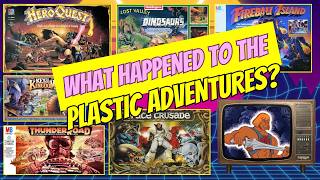
Reviewers who discuss Space Crusade agree on its lineage and its theme. The 1990 game from Milton Bradley UK and Games Workshop is consistently described as the science fiction follow-up to HeroQuest. 3 Minute Board Games remembers it as a standout from the reviewer's early teens, and Adam in Wales - Board Game Design places it in the epic plastic adventure genre as the sequel that took HeroQuest's formula into space.
The reviewers diverge on whether the game still holds up. The 3 Minute Board Games reviewer doubts that it would, and says that memory matters more than a modern re-test. Adam in Wales is more favorable, arguing that the genre's immersion and engagement remain strong even though its design is dated. UndeadVikingVideos mentions the game only in passing during a livestream, but the reference is telling: the reviewer bought Advanced HeroQuest and Space Crusade together from Games Workshop because HeroQuest had been such a cool game in childhood. Across all three perspectives, the HeroQuest connection is the thread that draws people in.
Core Mechanics That Define Space Crusade
Asymmetric Alien Player Versus Marine Commanders
Space Crusade splits its players into two roles. One player controls the aliens as the Alien Player, while the others command three Commanders and their Space Marines. Each game is a mission from the Mission Manual, which the Alien Player reads aloud. The mission tells the group how to set up the game boards and Docking boards and which Blip and Reinforcement tokens to use, so the Alien Player acts as both the opposing force and the keeper of the scenario. Adam in Wales notes that the epic plastic adventures of this period were built around scenarios and expansions, and Space Crusade's mission-based structure follows that pattern.
Dice-Driven Combat Over Streamlined Rules
Adam in Wales argues that the rule sets of the epic plastic adventures "were kept very streamlined to get kids playing as quickly as possible." Adam places Space Crusade beside HeroQuest as a game with "a bit more going on" than the simplest titles of the genre, but still "pretty straightforward." Outcomes are settled by dice, and the rules are light enough that the Marines and aliens can be resolved quickly at the table. That combination of speed and chance is the engine of the experience, and it shapes both its tension and its limits.
The Space Crusade Experience
Nostalgic Childhood Wonder
The 3 Minute Board Games reviewer describes playing Space Crusade as a teenager, with a group that gathered "after school and at weekends at people's houses." The experience is social and personal, and it is remembered as a bright point in a particular stage of life. The reviewer's conclusion is that sometimes "it's best not to revisit games you enjoyed as a kid and just keep the memories as they are." The game feels less like a fresh discovery and more like a return to a specific time and group of friends.
Direct, Unsoftened Conflict
Adam in Wales says the epic plastic adventures excel at player interaction, which Adam describes as "brutal, it's direct, and it's often mean." The games wear their violent themes openly, and that honesty creates pressure at the table. Adam describes how it is "hard not to feel a little bit stressed" when a threat lingers close to your last remaining adventurer. For Space Crusade, that pressure comes from the same source: Marines and aliens meet on the board with little pretense, and each dice roll can change the balance of the fight.
What Makes Space Crusade Stand Out
A Sci-Fi Take on HeroQuest
Reviewers consistently treat Space Crusade as HeroQuest transplanted into space. Adam in Wales calls it "essentially HeroQuest in space," with Space Marines fighting alien species drawn from the Warhammer 40,000 universe. Adam also connects the game's mighty Dreadnought and Genestealer aliens to the toy-driven spectacle of the era. The 3 Minute Board Games reviewer makes the same point from a player's perspective, noting that the game built on HeroQuest's success and added the Space Marines that made it appealing to young players. The core experience carries over, while the setting shifts to Games Workshop's future-war universe.
Rules Light Enough to Keep Players Immersed
Adam in Wales argues that the epic plastic adventures are more immersive than the heavier games that came after them, because their rules stay out of the way. "If you're spending your play time searching through a rule book to clarify edge cases, you're not truly immersed in the game's world." When a rules question arises, Adam says, "you house rule it on the spot," and the games are "super intuitive." For a game designed to be learned quickly by children and teenagers, that lightness is central to its appeal.
Potential Drawbacks
Dice Can Outweigh Strategy
Adam in Wales is candid about the design limits of the genre. Players have "a ton of choices to make," but Adam observes that "the outcome of those decisions is more often than not determined by a dice roll, which makes strategizing challenging." Adam's verdict is that, in most cases, "you're simply in it for the ride." Players who want deep planning may find the results frustrating, while players who value spectacle and momentum will accept the trade-off.
Nostalgia Carries an Aging Design
Both reviewers acknowledge that Space Crusade may not match modern standards. The 3 Minute Board Games reviewer says "I don't know if it would hold up today," while Adam in Wales notes that "the games I experienced as a kid might not necessarily hold up to modern standards in all sorts of different ways." Adam also observes that modern revivals of these titles are "sold on nostalgia rather than their original intent" and are "priced at a premium." Newcomers should expect a design from another era, and returning players may find that the memory is stronger than the rules.
If You Enjoy Space Crusade
- HeroQuest: Adam in Wales describes Space Crusade as HeroQuest in space, so players who enjoy Space Crusade's dungeon-style structure will find the same satisfaction in its predecessor. Adam notes that in HeroQuest "each game constitutes its own mission, and items gathered can be brought forward into future games forming a narrative campaign," which gives the same sense of progression that Space Crusade's missions offer.
- Warhammer 40,000: Players who enjoy Space Crusade's Space Marines against alien conflict will find the same appeal in the universe that inspired it. The Genestealers and Dreadnoughts that Adam in Wales highlights come directly from that setting, so fans of the theme will recognize the game's core identity.
- Advanced HeroQuest: The UndeadVikingVideos reviewer acquired Advanced HeroQuest and Space Crusade together from Games Workshop. Players who appreciate Space Crusade's approach to fast, dice-driven adventure will find Advanced HeroQuest a natural companion within the same family of games.
What Reviewers Are Saying
"This was one of the rare cool board games that appeared in stores and a lot of people got it, and I was like 13 when it came out and it was just the bees knees. We played so many games after school and at weekends at people's houses. It built on the success of HeroQuest from a couple of years earlier, but it had Space Marines in it."
— 3 Minute Board Games
"The sequel, Space Crusade, was essentially HeroQuest in space, pitting Space Marines against a variety of alien species from the Warhammer 40,000 universe."
— Adam, Adam in Wales - Board Game Design
"I got Advanced HeroQuest and Space Crusade all from Games Workshop all due to the fact that HeroQuest was such a cool game when I was a kid."
— UndeadVikingVideos