

Statecraft Deep Dive
What the Community Thinks About Statecraft
Statecraft, the post-Cold War geopolitical strategy game from Do It Games, has so far been covered mainly by Zilla Blitz, who presented a full overview of the game while its Kickstarter campaign was running, and by Zilla Blitz again in a roundup of upcoming wargames, which gave it a shorter segment. The consistent view is that Statecraft is less a traditional wargame than a social strategy game that uses geopolitics as its setting. Zilla Blitz described it as an accessible, fast-playing game with a lot happening, and named its replayability, accessibility, and social dynamics as its main strengths.
The tone is cautiously enthusiastic. The reviewer praised the clean, professional layout and found the complexity light, but framed the entire review around the fact that the copy shown was an early prototype, with production quality and art expected to change. That framing matters: the praise is for the design and the social play, while the verdict on components and final rules is deliberately held back.
Core Mechanics That Define Statecraft
Each game of Statecraft runs four turns, and each turn moves through six phases: agenda, agenda execution, governance, country resolution, declaration, and maintenance. Reviewers identified two systems as the engine of that sequence: the allocation of scarce influence, and a confrontational contest for control of countries and international organizations.
Worker Placement
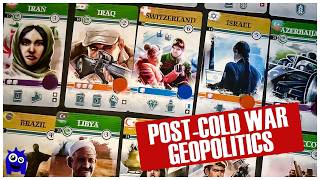
Statecraft does not use meeples or units. Players instead receive a limited supply of power tokens, which Do It Games uses as the game's major currency. In the agenda phase, each player secretly commits five power tokens, and the agenda execution phase then distributes them across the game area according to those choices. The destinations are the country cards in the tableau, where each country has a stability value and unique economic benefits for whoever controls it, and the international organizations on the main board, including NATO, the press, the International Monetary Fund, and the United Nations, where the power with the most influence gains an advantage. Because tokens are scarce, every placement is a trade-off. Zilla Blitz noted that choosing between influence in other countries and votes at bodies like the United Nations "it's going to present the player with a lot of interesting and tough decisions."
Take That
The confrontational side of Statecraft comes from its conflicts and its four major actions: spy, influence, debate, and bribe. Unrest, demonstrators, and national conflicts spring up as leaders try to undermine one another and contest control of the world. When a country destabilizes, players roll custom dice to decide which major power it sides with when the conflict ends. Zilla Blitz explained that the roll reflects how much influence each power has committed to that country, so the power that invested the most usually wins, "but not always." That uncertainty keeps momentum swinging, and it means that attacking a rival's position is as much a part of the game as building your own.
The Statecraft Experience
Shifting Alliances and Betrayal
Reviewers describe the table as the main event. Zilla Blitz said the structure of the game brings negotiation, alliances, and betrayal to the surface as players compete for global influence, and in the later roundup praised the "impromptu alliances and betrayals and bribes" that emerge, with players "shifting allegiances back and forth" to reach their goals. The feel is less of a board game with a fixed plan and more of a negotiation that runs alongside the rules. A leader's agenda, promises made at the table, and the global picture all have to be weighed together. The designer's stated aim, as relayed in the overview, is for players to think about the interests of the rest of the world as well as their own.
Tension and Competition
The second prominent feeling is tension. The designer pointed to El Grande, Power Grid, and The King is Dead as games that create a similar sense of competition, and Zilla Blitz described the result as a game with a lot of wild social interaction. Tension builds because every player is competing for the same countries and organizations with limited tokens, and because the outcome of a contested country is never fully certain until the dice are rolled.
What Makes Statecraft Stand Out
Replayability From Shuffled Leaders and Countries
Zilla Blitz singled out replayability as the game's strongest feature. Each power has several unique leaders, and each leader varies in value, starting popularity, starting countries, and a special ability. Only a portion of the leader roster and roughly half of the country cards are in play in any one game, so the country tableau and its order change from game to game. The reviewer noted that the order matters because countries are checked in turn during resolution, from the top left to the bottom right. The UN resolution cards add further variety, since only some of them appear in a given game. The reviewer's expectation was that replayability would be very high, and that playing the same power again would still feel different because the leader and the board would differ.
Accessible Euro Design With a Historical Theme
Accessibility is the second feature reviewers praise. Zilla Blitz rated the complexity as light and described the mechanics as having a strong Euro feel, which the reviewer felt would be broadly accessible to players who like crunchy games and to players interested in the historical side of things. The designer built the game to be approachable without requiring academic or historical expertise. Leaders do not use historical names, although the reviewer noted that several leader cards clearly evoke recognizable figures. The reviewer also praised the clean layout and the supporting graphics that help new players learn the game.
Potential Drawbacks
Prototype Status and Unfinished Rules
Every reviewer treated Statecraft as an early prototype. Zilla Blitz warned that production quality and art might differ in the final version, that the rulebook would grow to cover the solo mode, and that some rules would likely be refined. The reviewer also said there were a couple of mechanics they were not quite sure of, which was described as normal at this stage of development. Because the game was still in crowdfunding, anything shown on camera should be read as a work in progress rather than a finished product.
Untested Solo Play and a Social Core
The second concern is for players who want something other than a social game. The designer identified players who enjoy dynamic social interaction as the main audience, and reviewers agreed that negotiation, betrayal, and shifting alliances are the heart of the experience. The game also works with two players and solo, but Zilla Blitz had not yet seen the solo rules or gameplay at the time of the overview and declined to rate that mode. Groups that prefer indirect competition or a more predictable plan may find that the game's confrontational and negotiation-heavy design does not suit them.
If You Enjoy Statecraft
Reviewers placed Statecraft beside several established games, and the designer's own references offer the clearest guide.
- El Grande: named by the designer as a game with a similar sense of tension and competition over shared influence.
- Power Grid: named alongside El Grande as a reference for the competitive tension the designer wanted to create.
- The King is Dead: also named in the same breath as El Grande and Power Grid, a fit for players who enjoy direct competition for position.
- Iron Cain: cited by the designer as one of the earliest sparks for the project, a minimalist take on Cold War tensions that also points toward Statecraft's theme.
- Magnates: cited by the designer for simultaneous action and a commitment to keeping gameplay momentum, the same flow the designer wanted to avoid stalling in Statecraft.
Players who enjoy the social, shifting-alliance side of Statecraft, or who want the same tension in a shorter sitting, will find these titles a natural next step while they wait for the final version.
What Reviewers Are Saying
"The game structure facilitates dynamic social interaction. Negotiation, alliances, and betrayal all will come to the surface as players work to gain global influence."
— Zilla Blitz
"Complexity-wise, I'll give this game a three and a half out of 10. The mechanics and gameplay have a strong Euro feel to them, which means that the game will be broadly accessible to players who like crunchy games and players who would be more interested in the historical side of things as well."
— Zilla Blitz
"The strength of this game is in its replayability and its accessibility and its social dynamics. In other words, players making impromptu alliances and betrayals and bribes and working together and shifting allegiances back and forth to try to accomplish their goals."
— Zilla Blitz