/pic6266380.jpg)
Your friend’s mysterious disappearance results in the discovery of an unusual item, leading you to embark on a journey through time and memory. In this narrative puzzle adventure, an intimate coming-of-age story is told through an object that serves as a tarot deck, a puzzle game, and a work of art. You will need to manipulate cards, find hidden messages, and solve logic and word problems in order to uncover the deck’s secrets.
The tarot deck contains 78 cards--56 Minor Arcana and 22 Major Arcana, the latter of which each represent a puzzle. Puzzles are solved using sets of Minor Arcana cards and clues from the story booklet and result in solution keywords that lead players to discover new pieces of the narrative. Some story passages grant items which can be later used to unlock extra scenes, and some puzzles have multiple answers, allowing players to unlock more of the story if they find all the solutions.
Packed with gorgeous illustrations, resonant storytelling, and unique puzzles, The Light in the Mist can be played solo or cooperatively in a small group. It’s non-linear structure and varied puzzle difficulty will engage players of all experience levels with over five hours of gameplay. Do you have what it takes to overcome the challenges thrown your way without getting lost in the mist?

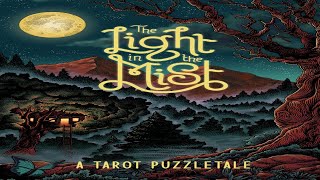
- Good value for $35, with a solid story and over 21 puzzles.
- The hint system is good, guiding without spoiling.
- The narrative element is enjoyed and makes sense.
- The story has a mature tone without being overly gratuitous.
- The writing is pretty good.
- The story is done at a solid pace, and players don't get lost.
- Can be replayed.
- Includes a tarot deck at the end.
- Card art is amazing and creative.
- Good activity for a significant other.
- Better than the Exit series.
- Solid puzzle game overall.
- Some puzzles are 'insanely long to figure out' and feel 'ridiculously long'.
- A few puzzles were not well-developed or designed, making hints unhelpful.
- The multi-use cards can be overwhelming and lead players to get hung up on the wrong thing.
- The reliance on word answers for every puzzle can be tedious.
- The final puzzle's explanation made no sense, and was solved by vocabulary knowledge.
- Some puzzles are not intuitive.
- The narrative blurbs from the major arcana cards can be unclear.
- Has 'two limited plays' but can be replayed with 'ways to continue to replay'.
- Tarot reading
- Unlock series
- Exit series
- The Dark Quarter
- Sleeping Gods
Mechanics (from transcript analysis)
- Hint System — A QR code-based hint system is available on their website, designed to guide players without giving away direct answers.
- Multi-Use Cards — Some cards are 'multi-use in that they go to different puzzles', which can sometimes be confusing.
- Narrative snippets — After solving a puzzle and getting a word answer, players look up a number in a book to read a snippet of the overall narrative.
- Puzzle solving — The core gameplay involves solving over 21 puzzles that range in difficulty.
- Tarot deck integration — The game uses a tarot deck with major arcana cards that present puzzles, and minor arcana cards that help solve them.
Video topics + discussion points
Quotes (from this video)
- And I gotta say they do a pretty damn good job.
- So, it's like some of the hints were really good, others were just like, 'Look, clearly this puzzle wasn't done being developed or designed, so don't include it because it is dog shit.'
- I hate this. I hate this puzzle.
- So, on a scale of 1 to 10, I think I'm going to give this a seven. I think this is a good puzzle game.
- But I would pick this up and do this over any exit series.
References (from this video)
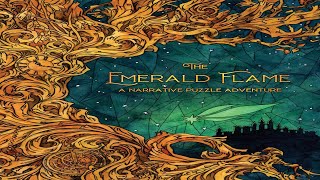
- Completely enjoyable
- Good creative puzzles with variety
- Very narrative focused
Mechanics (from transcript analysis)
- Narrative Focus — Puzzles are integrated into the narrative.
- Puzzle solving — Features creative puzzles with varying difficulty levels.
Video topics + discussion points
Quotes (from this video)
- this box of uh this puzzle game is certainly for a lot of people. Uh however, for me, I found it unbearable.
- this type of um puzzle genre of board games um is very very swingy in my book because you whenever you're designing puzzles you have to one make them extremely creative and fun and that's all subjective.
- I found every single puzzle homework. Like there wasn't ever one that we came across that was like, 'Oh, this one's fun. Oh, this one's challenging. Oh, this one's creative.'
- And it just feels like every single puzzle is just designed to drain hours of your time and for a lot of people they will love that. they will think that that's the most fun thing in the world.
- The difference is the exit games are $15 or they were last time I played them. here. If you're cutting something up and you're trying to figure it out and you messed up, it's like, okay, well, I guess that's done.
- I I have to because I am not happy with the product. So, I'm like, okay, what did my money really go to?
- So, the puzzles, while in depth, the puzzles are in depth, um, I just found none of them fun.
- I don't know who this is for, but it's definitely not for me.
- I don't like puzzle games that make you write or cut up components because if you're wrong, you have now [ __ ] yourself out of trying to solve the puzzle.
- I mean, I had a bad time from off rip. Like I forced myself to play through this just to like I was like ah you know maybe the puzzles will get better and they didn't like I I didn't I I was frequently not having a good time.
References (from this video)
- niche puzzle cooperative experience
- multiplayer puzzle experience
- puzzle/collective experience (Kickstarter prospective)
- campaign-like with modular puzzles
Mechanics (from transcript analysis)
- multiplayer puzzle progression — cooperative puzzle solving in a narrative arc spanning multiple sessions
Video topics + discussion points
Quotes (from this video)
- the quickest meanest knife fight for veteran and 18xx style players
- it's supposed to be a 90 to 120 minute game
- adorable
- i'm going to be playing this game tonight
- i actually purchased a copy of this about 30 minutes ago
- this expansion adds in a few new things which seemed like they would slot in quite well
- this just sounds so cool
References (from this video)
- Cozy and relaxing
- Gorgeous art
- Tarot card based game, puzzle adventure
Mechanics (from transcript analysis)
- Card game — Based on tarot cards.
- Puzzle — A puzzle adventure game.
Video topics + discussion points
Quotes (from this video)
- We're going to jump to our final contributor block and then we'll be back with a game show led by one Eric Summerer.
- SCREAM IS A HAND MANAGEMENT BLUFFING CARD GAME where players race trying to get rid of their cards and have the lowest score possible in front of them at the end of each round.
- The essence essence is fading. Time gets the best of us all.
References (from this video)
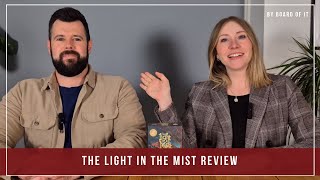
- Puzzles are varied in difficulty with a broad range of scenarios and card requirements
- Clear, flexible guidance that allows players to approach puzzles in multiple ways
- High production quality, with appealing tarot-themed components and attractive artwork
- Narrative integration adds depth and replay potential, especially for solo play
- Strong solo experience; story elements can be very engaging when played alone
- Story elements can feel repetitive, with some passages reiterating the same point across multiple solutions
- The narrative may not land as strongly for players who are not drawn to story-driven experiences
- Two-player is the sweet spot; three players can be difficult to coordinate and see parts of the board or cards
- Compared to similar games like Lost in the Shuffle, the narrative weight may be lighter for some groups, and the humor or levity may be absent
- Coming-of-age journey intertwined with tarot-inspired puzzles, dark mood, and a sense of discovery.
- A magical foggy woods where the player searches for a missing friend, guided by an old woman and a sentient mist.
- Non-linear, puzzle-driven narrative where solving major arcana puzzles unlocks story passages in a linked, evolving tapestry.
- Lost in the Shuffle
Mechanics (from transcript analysis)
- Hint systems and scaffolding — Back of the rulebook hints, QR-coded online hints, and an optional hint order that helps new players start with easier puzzles without spoiling the experience.
- Non-linear progression with narrative linkage — Puzzles can be solved in any order (except for the first and last cards which must be done in sequence), and each solution ties into a story element.
- Progress tracking and solution verification — The game provides visibility into how many solutions a puzzle has, helping players avoid spinning their wheels and waste time.
- Symbol-guided card selection — Each major arcana puzzle comes with a symbol that indicates which minor arcana cards are needed to construct the solution.
- Tarot-based puzzle framework — Major arcana cards determine the puzzle parameters while minor arcana cards supply the necessary cards to satisfy the puzzle conditions and reveal the corresponding word.
- Word-based solutions — Solving a puzzle yields a word; in some puzzles there can be multiple valid solutions, each linking to a different narrative beat or passage.
Video topics + discussion points
Quotes (from this video)
- The puzzles are great. There was only about one in 22 that we both thought was a dud.
- The framework and the guidance that you're given to playing. So you can play how you want.
- Turning to the narrative elements, it's a really nice twist to pair the solutions with a story, particularly because you can tackle the puzzles in a random order.
- The story is somewhat dark. You know, some troubling, difficult situations in there.
- This is a big experience in a small box. You get a lot in it.
References (from this video)
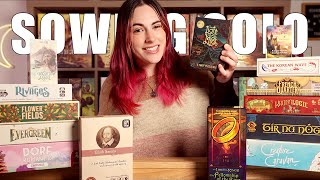
- beautiful component art and tarot aesthetic
- immersive solo experience with strong atmosphere
- could be challenging for newcomers to tarot-based puzzles
- mystery and exploration through major/minor arcana
- tarot-based puzzle adventure with story elements
- immersion through tarot-driven puzzles
Mechanics (from transcript analysis)
- deck-driven progression — cards pulled from a tarot deck determine puzzle flow and story beat
- Image Deciphering — players solve puzzles guided by major arcana cards and associated minor arcana
- major arcana puzzle solving — players solve puzzles guided by major arcana cards and associated minor arcana
Video topics + discussion points
Quotes (from this video)
- the art on these menus are absolutely amazing
- Evergreen is absolutely beautiful
- this is focused on Paris 1920 and specifically the Phantom of the Opera
- it's a very cool game
- I love this so much, solo
- it's just so beautiful
References (from this video)
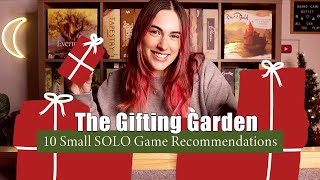
- unique Tarot-based puzzle concept
- strong solo puzzle experience
- good fit for puzzle enthusiasts
- puzzle difficulty can be high for casual players
- solving puzzles within a Tarot deck to progress the story
- puzzle exploration on a mysterious Tarot-based island
- puzzle-driven, self-contained storytelling
- Exit: The Game
Mechanics (from transcript analysis)
- Cooperative Game — supports 1-4 players with solitaire emphasis
- Cooperative/Solo play — supports 1-4 players with solitaire emphasis
- deck-based puzzles — puzzles are embedded in a Tarot-deck mechanism
- Puzzle Progression — solve a sequence of major/minor Arcana puzzles to advance
Video topics + discussion points
Quotes (from this video)
- the coolest game ever
- one deck Legacy game
- puzzle game you can play solo
- it's relaxing and tranquil
- production is incredible
References (from this video)

- cohesive storytelling with strong emotional arc
- beautiful presentation and theming
- great for puzzle solvers and tarot-card enthusiasts
- non-linear structure may be confusing for casual players
- mystery, storytelling, puzzle-solving
- Non-linear narrative mystery puzzle format with tarot-influenced structure
- puzzle tale with dynamic card usage
Mechanics (from transcript analysis)
- Multi-Use Cards — Cards inform you which tarot subset to use and drive the puzzle narrative forward.
- multi-use tarot-style cards — Cards inform you which tarot subset to use and drive the puzzle narrative forward.
- non-linear narrative puzzle — Multiple cryptic mysteries unfold, guided by lead cards and affiliated tarot cards.
Video topics + discussion points
Quotes (from this video)
- five beautiful stocking stuffer games
- it's a stellar Cooperative game
- the ultimate narrative mystery puzzle
- huge amount of game that is packed into a tiny box
- my favorite to date