






The Waste of Parts Deep Dive
What the Community Thinks About The Waste of Parts
The Waste of Parts has arrived with decidedly mixed reactions from board game reviewers, though the consensus leans toward curiosity rather than dismissal. Several reviewers have praised Sky Kingdom Games' latest design as a promising addition to the cooperative genre, with enthusiasts like Rob's Tabletop World calling it a "hidden gem masterpiece" and an "absolute classic" that deserves shelf space alongside other standout releases. The game's theme, presentation, and core concept have attracted genuine interest, particularly for its industrial steampunk aesthetic and the novelty of piloting a damaged mech through a hostile wasteland.
However, Board Games UnLocked offers a sharply different perspective, characterizing the game as competent but ultimately hollow, landing on a middling 5 out of 10 score. Their criticism centers on mechanical confusion, design inconsistencies, and a gameplay experience that feels like "going through the motions" rather than making meaningful decisions. The disagreement between reviewers appears to hinge on whether the game's theme and aesthetic can carry a design that some find mechanically underdeveloped.
This split reflects a genuine divide in how board gamers approach games: those drawn to thematic immersion and escalating challenge may find value in The Waste of Parts' premise, while players seeking tight mechanical depth and difficult decision-making may walk away underwhelmed.
Core Mechanics That Define The Waste of Parts
Cooperative Action-Point Allocation
The Waste of Parts turns on a rotating crew system where each player controls asymmetric characters with unique abilities. Every turn, players work together to spend a limited pool of action points moving between rooms, attacking enemies, extinguishing fires, or scavenging for upgrades. This creates a constant tension: do you push deeper into the mech to secure salvage, or do you hang back to defend critical systems? The firefighter becomes essential during emergencies, the scavenger finds rare equipment, and the brute handles direct combat. The cooperative nature means no single player can carry the group, forcing discussion about resource allocation and turn priorities.
Tower Defense Enemy Waves with Escalating Difficulty
The mech's noise level directly determines how many enemies spawn each turn, creating a resource-dilemma feedback loop: running loud engines gets you closer to sanctuary faster, but it also summons more threats. Enemies begin at level one, dilute and relatively weak, then shuffle level two creatures into the deck at the 10-mile mark and level three enemies at the 20-mile mark. The game also seeded its enemy deck with "just win" cards that do nothing, a design choice that Board Games UnLocked found frustrating because it dulls the tension of escalation. As the mech advances toward sanctuary, the tension should ratchet upward, yet reviewers noted instances where enemy spawns felt random rather than reliably threatening.
The The Waste of Parts Experience
Frenetic Pace and Compounding Pressure
When The Waste of Parts clicks, it delivers moments of genuine tension. A few unlucky die rolls early in the game can snowball into a cascading crisis: fires spread faster than the firefighter can extinguish them, enemies damage the hull, and suddenly the mech is limping toward sanctuary with armor peeling away. Rob's Tabletop World emphasized this frenetic energy, describing how "a couple of bad rolls will really set you back, and it takes a while to get back into the play there, unless you can get some really good scrap and upgrade a couple of rooms to really help you out." The game rewards forward planning and smart salvage management because one wrong salvage draw could leave you defenseless against the next wave.
Industrial Post-Apocalyptic Immersion
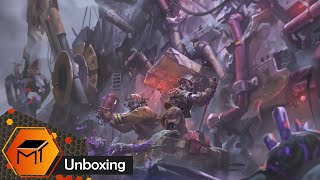
The mech itself becomes a character in the experience. Reviewers highlighted the thematic storytelling of a giant, barely-functional machine limping across a wasteland toward sanctuary, scavenging parts from fallen predecessors along the way. The industrial punk aesthetic evokes Battle Angel Alita, a world where humanity salvages from the ruins of its own creations. Each room serves a narrative purpose: the cockpit must function to move the engines, the salvage bay holds last hope for survival, and the guns mount a desperate last stand. This thematic coherence helped some reviewers overlook mechanical roughness in favor of the narrative experience.
What Makes The Waste of Parts Stand Out
The Scrap Mechanic and Salvage Conversion
The game's most elegant system allows players to convert unused salvage cards into scrap, which then becomes flexible currency for room repairs, hull reinforcement, and rummaging through the deck for specific cards. Board Games UnLocked, despite their overall skepticism, appreciated this thematic elegance: "A lot of the items you get, you scrap them and then it becomes currency to use on other things, which is thematically cool because you're using a medkit and then you can use the scrap from the medkit to do something else." This mechanic makes the salvage deck more forgiving than it might otherwise be, since dead draws can always be recycled. It also captures the desperate resourcefulness of the setting.
The Mech as Living Grid
Rather than a traditional board, The Waste of Parts treats the mech as a network of interconnected rooms, each with specific functions and upgrade potential. Reviewers noted the novelty of this approach: crew members can only move orthogonally and must use ladders to climb between decks, creating movement puzzles. Rooms provide synergies when crew members occupy them for full turns, and each room can be upgraded with salvage to improve the mech's capabilities. This verticality and room-based gameplay creates a distinct spatial puzzle that sets it apart from the sprawling board movement of similar cooperative games.
Potential Drawbacks
Difficulty Balance and Threat Scalability
Board Games UnLocked's core complaint centers on a critical design flaw: once players equip powerful weapons or secure a few strong salvage upgrades, the enemy threat evaporates. Enemies in the level-three range are trivially easy to eliminate with a 5-dice or 7-dice gun, and the game never adequately escalates to match player progression. The dilution of the enemy deck with "win" cards compounds this problem. Reviewers reported instances where the mech took minimal damage despite enemies constantly spawning, removing any sense of desperation. The distance track reaches sanctuary too easily, and by the endgame, players are simply rolling dice to clear remaining enemies. For a game marketed around survival tension, this mechanical failure undermines the thematic promise.
Rulebook Design and Dead Turns
Board Games UnLocked highlighted a secondary design problem: the rulebook lacks player aids explaining what each room does, forcing constant reference to the manual. The metal dials used to track mech stats are also difficult to read from a distance and prone to shifting during play. More problematically, the game includes "dead turns" where crew members have no actions available except sitting in the salvage room until the round ends to draw cards. This design flaw means that in a four-player game, one player might spend their entire turn doing nothing while others make meaningful decisions. A more elegant approach would tie all room effects to active player decisions, forcing crew members to spend actions to scavenge rather than simply waiting for automatic end-of-round draws.
If You Enjoy The Waste of Parts
Players who loved the tower defense escalation of games like Spherian Guard or the theme-first approach of This War of Mine may find value in what The Waste of Parts attempts, even if execution falters. The game's collaborative puzzle of managing rooms, fighting enemies, and scavenging upgrades works best in groups that prioritize shared storytelling over mechanical optimization. If you are drawn to industrial settings and mech-piloting narratives and can forgive some rough balance edges, the game offers a reasonably engaging 90-minute experience. However, those seeking tight mechanical depth, escalating difficulty, and elimination of dead space from their cooperative games will likely find the 100-dollar price tag hard to justify.
What Reviewers Are Saying
"I love the kind of tower defense feel to it, but it's this mech thing, and you were trying to get it across the wastelands, and good luck doing that, okay?"
— Rob's Tabletop World
"The most interesting thing to me was a lot of the items you get, you scrap them and then it becomes currency to use on other things, which is thematically cool because you're using a medkit and then you can use the scrap from the medkit to do something else, you know."
— Board Games UnLocked
"You are piloting a Mech as it goes through the waste of Parts, which is where all the scrap has fallen, and you're trying to survive through this by using this interesting action selection system."
— Man vs Meeple