














Thief's Market Deep Dive
What the Community Thinks About Thief's Market
Reviewers generally agree that Thief's Market has a sharp central tension and a light rulebook, but they split on whether that tension stays fun across a full session. Tantrum House, reviewing the Pickpocket Games prototype, described the game as a balance of greed and restraint: take too many dice and everyone will come after them. BoardGameBollocks reached the opposite verdict, arguing that a simple idea gets buried under too many cards, icons, and effects. Grant Lyon framed the game the same way, saying it comes down to how greedy a player is willing to be. BoardGameCo gave it 3.5 out of 5, with its praise centered on the split and steal choice at the heart of each turn.
Core Mechanics That Define Thief's Market
Dice Drafting
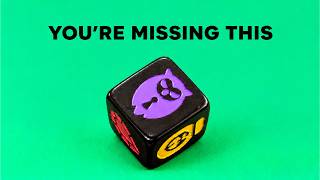
Each round begins with a shared pool of dice rolled at the start of the turn. The first player takes several dice along with the owl first-player marker, and each following player either takes dice from the center or steals another player's entire pile by rolling one of those dice and returning it to the middle. Tantrum House pointed out that the original Thief's Market from Tasty Minstrel Games, designed by Dave Chalker, was built on this idea, and that Pickpocket Games kept the core while streamlining the iconography so players can tell at a glance what a die will become. The result is a drafting decision with a built-in counterattack: a player who grabs the best dice invites a steal, which can send the turn order into a long back-and-forth.
Resource Management
Dice are only the first step. Gems, coins, and owls all have to be converted and spent with care. Coins act as a wild gem when purchasing cards, but Tantrum House noted that the owls are where the victory points come from, so a player who gets caught up in gem conversion without building an owl engine can fall behind. Cards in the market can turn one gem color into another, give coins, or generate owls, and Grant Lyon described the central choice as deciding how many dice to take before the table starts pushing back. Because purchases can only be made from a limited market, every card bought forecloses another option.
The Thief's Market Experience
Tension at the Split
Reviewers describe the moment of splitting the loot as a tightrope. BoardGameBollocks called the split "genuinely intriguing," because a pile that is too attractive will be stolen, yet a pile that is too weak will stall your progress toward relics. Players must also guess whether an opponent is deliberately taking dice to block them, even when that opponent gains nothing. The feeling is one of watching the table closely rather than simply planning your own turn, and that is where most of the fun appears to come from for the reviewers who enjoyed it.
Quick to Teach, Slow to Plan
The game's entry point is intentionally small. Tantrum House and Cardboard Herald both emphasized that a new group can start playing within minutes, with the rules reduced to rolling dice, taking or stealing, and buying cards. The planning load grows over time, however. Once several cards are in front of a player, the effects can interact in ways that make the next round harder to predict. BoardGameBollocks described ending up with around ten cards and no clear sense of which relic would become available, which turned the late game into a matter of hoping the right cards appeared.
What Makes Thief's Market Stand Out
A Teach That Takes Seconds
Multiple reviewers pointed to how little explanation the game needs. BoardGameBollocks noted that the rulebook is tiny and that the whole game could be explained in a few seconds, while Cameron Art of Pickpocket Games described the design goal as a game that can be taught to relatives who rarely play board games. This accessibility is one of the main reasons the game earns a place in mixed-experience groups, even among reviewers who did not fully enjoy the planning side.
Protected Victory Points
Tantrum House highlighted a design choice that sets Thief's Market apart from other steal-heavy games. Players can steal dice during the split, but cards already purchased and the owls already collected cannot be taken by opponents. Tantrum House described this as a good balance, since the game stays mean during the early turns and becomes more cooperative in outcome once a player has locked in an engine. Reviewers also praised the production, with BoardGameBollocks calling the dice chunky and colorful and the artwork strong for a small, inexpensive game.
Potential Drawbacks
Stealing Can Stall the Table
The most common complaint is that stealing can drag on. BoardGameBollocks described situations where one player takes the best dice and the others trade them back and forth, leaving the table waiting for someone to break the deadlock. Reviewers who value a brisk pace may find that the rule allowing the owl holder to dictate turn order makes these standoffs more frustrating than they need to be.
Too Many Cards to Track
BoardGameBollocks also found that the card-buying system becomes hard to manage, because purchased cards change how the relic cards and other options can be reached. This leads to a planning burden that some reviewers felt undercut the simplicity of the core loop. Because the game was still a prototype when Tantrum House reviewed it, some components and wording may change before release, and the complexity concern is one that a final rulebook could address.
If You Enjoy Thief's Market
Players who enjoy the steal-or-take decision at the center of Thief's Market will want to try the original Thief's Market from Tasty Minstrel Games, which the Pickpocket Games edition updates rather than replaces. BoardGameCo recommended Cash and Guns, Good Critters, and Soda Jerk as further picks for players who want the same tension between grabbing resources and denying them to others. Players who prefer the lighter, teachable side of Thief's Market, the part that Cameron Art described as easy to bring to family gatherings, will likely appreciate that these titles keep the rules compact while still rewarding careful planning.
What Reviewers Are Saying
"Thief's Market is a simple game that gets too complicated for its own good. The split mechanic is genuinely intriguing, but I had to ask myself if it was all worth the stress and hassle of keeping track of how you can manipulate a game."
— BoardGameBollocks
"One of the nice things in the game is that you're not stealing any of your purchased items from each other, so even though you're thieves you won't be stealing other people's owls."
— Tantrum House
"The core gameplay hook there is so incredibly simple. I can just say, roll the dice and take as much as you want, and these are the cards you're going to be buying."
— Cameron Art, The Cardboard Herald