/pic7541330.png)
/pic162026.jpg)
/pic306342.jpg)
/pic1420706.jpg)
/pic7541330.png)
/pic3066862.jpg)
/pic3116341.jpg)
/pic3381772.jpg)
/pic3506961.jpg)
/pic4132194.jpg)
/pic4666620.png)
/pic5399450.png)

/pic6850090.png)
/pic7084455.png)
/pic7508512.jpg)

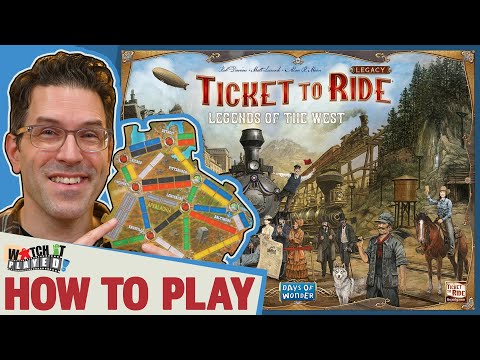






















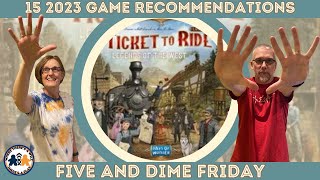











Ticket to Ride Legacy: Legends of the West Deep Dive
What the Community Thinks About Ticket to Ride Legacy: Legends of the West
Reviewers consistently praise Ticket to Ride Legacy as a memorable adventure through the American frontier that respects both the original game's accessible design and the legacy genre's promise of lasting change. The game arrives as a collaboration between the designers behind the original Ticket to Ride and the creators of Pandemic Legacy, positioning it as a natural evolution for fans of both series. While opinions vary on specific mechanics, there is broad agreement that the core experience delivers genuine surprises and moments of excitement throughout the twelve-game campaign, making it a worthwhile commitment for groups willing to stick together.
Core Mechanics That Define Ticket to Ride Legacy: Legends of the West
Route Building and Set Collection
The foundation of Ticket to Ride Legacy remains instantly familiar to anyone who has played the original: players collect cards by color and use matching sets to claim train routes on the board. The game strips away immediate points for placing routes, instead rewarding route completion through a company bonus card that grants two dollars for routes matching the player's company color. This deferred scoring system forces players to balance long-term ticket completion against short-term cash flow, creating strategic tension around which routes to pursue.
Legacy Mechanics and Campaign Structure
The twelve-game campaign forms the heart of the experience. Each game triggers story revelations that unlock new subsystems, modify rules through stickers applied to the rulebook, and occasionally add or retire game components. Players open sealed boxes at the start of each round containing frontier expansions, new mechanics, and hidden narrative elements. The act of discovering what comes next drives much of the anticipation, with reviewers noting that the component delivery system itself stands as one of the game's strongest design choices.
The Ticket to Ride Legacy: Legends of the West Experience
Discovery-Driven Gameplay
The campaign unfolds as a series of discoveries rather than a predetermined story. Reviewers emphasize that opening boxes and learning what new mechanics or components have been added creates moments of genuine excitement. The game deliberately withholds information, instructing players not to examine certain cards or board sections until the story deck tells them to. This creates a constant sense of potential discovery, with reviewers noting that this structure keeps players engaged across the full campaign even when individual mechanics feel temporary.
Table Presence and Map Creation
The board itself becomes a living document of the campaign. Rather than starting with a complete map, players begin with the East Coast and gradually add new board sections as the campaign progresses. This means each group creates a unique version of the final board, with different routes emphasized and different cities featured depending on how the game unfolds. Reviewers highlight this collaborative map creation as one of the most satisfying aspects, as every completed campaign results in a bespoke final game board that groups may choose to play on indefinitely.
What Makes Ticket to Ride Legacy: Legends of the West Stand Out
Accessibility Without Sacrifice
The game successfully welcomes players familiar with Ticket to Ride while introducing them gradually to added complexity. The first game plays nearly identically to the base game, with only minor rule adjustments, ensuring that teaching and learning remain straightforward. As the campaign progresses, new subsystems emerge, but they arrive paced enough that no single game becomes overwhelming. Reviewers note that this gentle on-ramp makes the game feel less daunting than other legacy experiences while still delivering meaningful campaign-wide changes.
Replayability Through Uniqueness
After completing the campaign, each group possesses a permanently altered game board and destroyed components, a physical artifact of their unique journey. While reviewers acknowledge that groups rarely replay the final board as frequently as they might expect before starting, the process of creating that final board delivers sustained engagement across the campaign. The permanent changes mean no two groups will have identical final games, and this uniqueness drives value for collectors who wish to preserve their completed campaign boards.
Potential Drawbacks
Mid-Campaign Complexity Spike
Around the midpoint of the campaign, the accumulation of new subsystems can create a complexity curve that challenges both learning and turn speed. Reviewers report that games in the middle episodes require longer turns as players track multiple overlapping systems simultaneously, and some of these systems feel fleeting, introduced, enjoyed briefly, and then locked away again. The pacing of subsystem introduction leads to moments where the game feels slightly unwieldy before resolving itself as elements get retired toward the end of the campaign.
Shallow Story and Theme Integration
The narrative framing, set in the American Wild West, serves primarily as window dressing rather than thematic integration. Reviewers note that while the story exists, it functions more as a series of vignettes than a cohesive narrative arc. A central antagonist thread appears but doesn't drive meaningful mechanical or thematic consequences. The cartoonish, John Wayne version of the frontier setting, while kid-friendly, lacks depth and cultural nuance, with reviewers observing that the game's themes feel slightly trite compared to the innovative narrative integration seen in Pandemic Legacy.
If You Enjoy Ticket to Ride Legacy: Legends of the West
Players drawn to this experience should explore other legacy games that share similar qualities. Pandemic Legacy (both Season 1 and Season 2) pioneered the legacy format with deeper thematic integration, while Charterstone offers another legacy experience centered on personal player development. Clank: Acquisitions Incorporated blends legacy mechanics with adventure gaming for a different tone. Those who love the route-building core might also enjoy Great Western Trail or revisit the original Ticket to Ride to appreciate how the legacy version modified the formula. For players seeking cooperative legacy experiences, Daybreak offers a mechanically innovative take on the format with deeper thematic resonance.
What Reviewers Are Saying
"After the 12 games in the Legacy you'll have your own unique copy that you can play for a lifetime or be unlike anybody else's."
— Watch It Played
"The way you build the board so you start off with a fully built out east coast but new boards get added throughout the course of the game, and every single group that plays this game will have different color junctions in different places, and I think creating your own Ticket to Ride Board is probably the coolest part of this game."
— Board Game Reviews
"Ticket to Ride Legacy is a good fun slightly janky slightly cheesy Legacy game that doesn't really do anything terrible and doesn't become totally unmanageable but does get a bit wobbly at times."
— Board Game Reviews