







Ticket to Ride: Germany Deep Dive
What the Community Thinks About Ticket to Ride: Germany
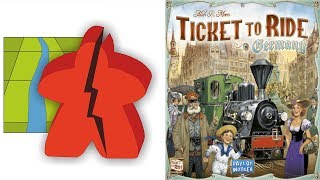
Reviewers tend to present Ticket to Ride: Germany as a polished, approachable entry in the series that keeps the classic route-building formula and adds one carefully limited new idea. The Broken Meeple says the game is about as streamlined as Ticket to Ride USA, with no fairies, tunnels or stations to teach, and they rank it as their second favorite Ticket to Ride release, though they still place the UK map first. Ryan and Bethany Board Game Reviews reach a similar conclusion in their top 100 countdown, calling Germany their favorite of the standalone maps, and Bethany put it first in a blind ranking of Ticket to Ride boards.
Not every reviewer is convinced. Where There's A Wilz, There's a Play placed it sixth among their base games, arguing that the passenger pickups add more than a two-player game needs. Even so, they describe it as one of the titles that first drew them into the hobby, and they acknowledge that many players love the very mechanic they found too heavy. In contrast, The Discriminating Gamer includes it among their favorite games set in Germany, and The Broken Meeple counts it among the friendlier maps in the series, a useful reference point for players who dislike being blocked.
Core Mechanics That Define Ticket to Ride: Germany
Set Collection
The passenger system is the twist that every reviewer returns to. Whenever a player claims a route, they also take one passenger from each of the two cities at its ends, choosing among the passengers when a city holds more than one. The passengers are colored meeples scattered across the board, and at the end of the game the player with the most of each color scores 20 points while the runner-up scores 10. The Broken Meeple stresses that the meeples carry no special abilities: "there's no special ability for the meatballs," so every color is worth the same flat bonus, which keeps the scoring easy to read. Reviewers describe it as a second scoring track running beside the usual tickets, one that tempts players to chase passengers when the board offers a good collection.
Network Route Building
Underneath the passengers sits standard Ticket to Ride route building. Players spend colored train cards to claim routes between cities, complete destination tickets, and score for track length, with the Globetrotter bonus replacing the longest route award in this edition. Tickets to neighboring countries, such as Berlin to Austria or Berlin to France, add a light extra layer that The Broken Meeple finds easy to explain. The map itself offers links from single track up to seven-track routes, and The Broken Meeple warns that the left side of the board is crowded with one-track links that must be claimed quickly. The Discriminating Gamer notes that triple roots on certain player counts give some flexibility, which keeps blocking manageable compared with the tighter maps in the series.
The Ticket to Ride: Germany Experience
Gateway and Accessible
Playing Ticket to Ride: Germany feels light, quick to learn, and rewarding without demanding much from new players. The Broken Meeple emphasizes how little there is to teach beyond the base rules, leaving the passengers as the only real addition. They now use it as the first Ticket to Ride they introduce to newcomers, because the passenger mechanic is simple to grasp and adds "a little bit of extra fun" for the person doing the teaching as well as the learner. Reviewers who have played it with families report that it holds up as a game the whole table can join, which is a large part of its appeal as a gateway.
Cutthroat
Beneath the friendly surface, reviewers describe real competition. The Broken Meeple notes that stealing meeples before an opponent can claim them can be a painful blow, and that some board areas leave players with few alternative paths, so there is "a decent amount of screw" in the game. Where There's A Wilz observe that in two-player games one player can take first place in most passenger sets and effectively win the game by focusing there, while the random placement of cards can derail a route before it reaches the people you need. The Broken Meeple adds that Germany is more prone to blocking than USA, so players who reveal their plans too early can be punished.
What Makes Ticket to Ride: Germany Stand Out
A Streamlined Passenger Twist
Reviewers consistently praise the way Germany adds a scoring layer without disturbing the rest of the game. The Broken Meeple sees it as a streamlined version of the passenger idea from the older Märklin map, and they believe this single addition lifts the base game above its siblings. The Discriminating Gamer calls it "basically just a glorified set collection" that gives players a second strategy: either build big routes or focus on collecting meeples, which "can get you a fair chunk of points" by the end. The result is a game where each route can serve two purposes at once.
The Board and Its Look
The map is the other feature reviewers keep returning to. Where There's A Wilz find it "very German," with an old-town style that looks like an antique map, while The Discriminating Gamer describes it as a beautiful board with wonderful routes here and there. The Broken Meeple likes that the routes are fairly balanced between short and long, so no part of the board feels like filler. The colored meeples gathered around the cities also give the table a lively look during play, which reviewers often mention alongside the board's old-world character.
Potential Drawbacks
Color Accessibility
The most practical concern is color. The Broken Meeple points out that the train cards keep their symbols, so colorblind players can still handle the route side of the game without trouble. The passenger meeples, however, are difficult to tell apart, and players need to know which colors sit in each city before choosing a route. They suggest that colorblind players either ask others for help or treat the meeples as a secondary goal, and they call this a real shame even though the game remains playable. It is a caveat worth weighing before buying for a group with color vision differences.
Passengers in Two-Player Games
Several reviewers feel the passenger system works better with more players. Where There's A Wilz argue that the passengers are "not as strong" at two players, because one player can gather most of a color and secure the scoring before the routes decide much. They also note that if your routes do not run toward the cities holding the passengers you need, you waste cards chasing them. That makes the mechanic feel like a distraction for some pairs, even though they still find it an interesting addition to the set collection.
If You Enjoy Ticket to Ride: Germany
Reviewers point to a handful of other Ticket to Ride releases that share the same spirit, each with a different balance of simplicity and extra texture.
- Ticket to Ride USA: The Broken Meeple considers it about as simplified as Germany, which makes it the natural baseline for players who want pure route building without the passenger layer.
- Ticket to Ride Europe: Where There's A Wilz ranked Europe slightly above Germany for two players, mainly because its tunnels, fairies and stations rarely come into play at that count. It is a good pick for those who want the extra features and find the passenger system less appealing.
- Ticket to Ride Nordic Countries: Where There's A Wilz named Nordic Countries their favorite base set, praising its tight two- to three-player map, its long routes, and the tunnels and fairies that they liked in Europe.
- Märklin: The original passenger-based German map, which The Broken Meeple describes as involving picking up passengers as you go. Ryan and Bethany note that it shares much with Germany but is far harder to find and much more expensive, which makes Germany the practical way to experience the idea.
What Reviewers Are Saying
"The passenger mechanic is straightforward in streamline, is so easy the teacher, but I've really enjoyed it because it gives me something else to do while I'm doing normal Ticket to Ride."
— The Broken Meeple
"For the reason why a lot of people probably like it is the reason that I probably don't like it, and that's the passenger pickup thing. It just makes it a little too complicated for me."
— Where There's A Wilz, There's a Play
"Germany is my favorite map of the ones that are standalone, got a lot of similarities to Markin, but Mark's a lot harder to get, a lot more expensive."
— Ryan and Bethany Board Game Reviews