






Unmatched: Hell's Kitchen Deep Dive
What the Community Thinks About Unmatched: Hell's Kitchen
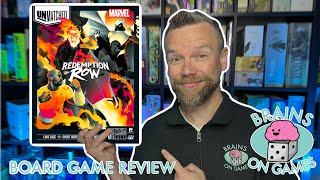
Most reviewers treat Hell's Kitchen as a branch of the wider Unmatched line, a two-to-three player skirmish game in which small rosters of comic book characters fight one another. Brian McDonald of Brains On Games called the series arguably one of the best miniatures combat games released in recent years, and McDonald's review treats this box as the one where the theme is strongest. The lineup of Daredevil, Elektra and Bullseye gives the box a street-level Marvel identity that appeals to comic fans, and some reviewers framed their purchase around that loyalty before the gameplay.
The enthusiasm is not universal, and some households are still deciding. The family behind Our Family Plays Games admitted that Daredevil was the draw while Bullseye was a name they barely knew, and they had not yet played the box. Over at Foster the Meeple, Hell's Kitchen appeared in a monthly roundup of games played, with the Bruce Lee and Deadpool pairing from the wider line singled out as the highlight. The overall picture is of a box people are eager to own and play, with the table verdict still forming for many of them.
Core Mechanics That Define Unmatched: Hell's Kitchen
Asymmetric Hero Decks
As Watch It Played and Brains On Games both show, each hero plays by a different script. Every fighter has a personal deck of action cards, and those cards carry the character's identity into the match. Daredevil draws the top card of his deck as a blind boost and adds its value to his attack or defense. Elektra starts with a health dial of seven, and when it reaches zero it flips to a resurrected side with nine health and new abilities. Bullseye can strike a target up to five spaces away, even across zone lines, which makes his play feel distinct from his opponents. Brian McDonald observed that the decks shape the feel of a match as much as the board does, and that playing each hero well requires a different approach.
Hidden Card Combat Without Dice
Each turn grants two actions chosen from maneuver, scheme and attack, and a player may repeat the same action twice. An attack is played face down, the defender may answer with a defense card of their own, and both cards are revealed together. The attack value minus the defense value becomes the damage, and no dice are involved. Purple versatile cards can serve either role, and battlefield tokens can add a boost to whichever side claims them. The combat is built around no-luck resolution, so the outcome rests on reading the board, the cards in hand and the opponent's likely response. Hand management matters as much as combat, because a fighter whose deck runs empty is exhausted and takes two damage for every card it could not draw, as Watch It Played explains.
The Unmatched: Hell's Kitchen Experience
A Comic Book Battle Unfolding Turn by Turn
Brian McDonald described the box as dripping with theme, comparing the feel of a match to a battle from a comic book or a Marvel film. The artwork on the attack and defense cards resembles comic panels, the flavor text gives each card a character voice, and the matchups between recognizable heroes carry an immediate sense of a brawl. For many players the pleasure is watching two characters they already know trade blows across a shared board, and the reviewers agree that the presentation makes the theme land quickly.
A Quick, Flexible Puzzle Each Turn
The second feeling is that of a short game that keeps posing new questions. Brian McDonald estimated play at roughly twenty to forty minutes and called the game quick to play and easy to learn. Yet each turn works like a fresh puzzle, because the positions on the board, the cards in hand and each hero's abilities keep shifting. McDonald tied that experience to flexible problem solving and spatial reasoning, the kind of thinking that requires a plan but also the willingness to abandon it when the previous turn changes the situation.
What Makes Unmatched: Hell's Kitchen Stand Out
Production Quality That Makes Setup Feel Special
Brains On Games spent much of its episode on the box itself and was clearly impressed. The cardboard punch-outs are printed with comic panel art instead of plain white stock, and the insert is labeled so each piece has a home, with room for sleeved cards. The miniatures' bases are color coded to match the card backs, so newcomers can see at a glance whose character is whose. Brian McDonald also praised the sculpts, saying the figures look exactly like their comic book counterparts, and that combination of tidy presentation and strong sculpting gives the box its premium feel.
A Line Built to Be Mixed
Brains On Games described the Unmatched boxes as compatible with one another, with older sets including Buffy the Vampire Slayer, a Bigfoot and Robin Hood set, and a Bruce Lee box. Watch It Played explained that owning a second Unmatched Marvel set lets players combine any four heroes into a team game. Brian McDonald cautioned that a mismatch such as Hulk against Bruce Lee will not produce an even fight, but the open-ended pairing is a large part of the appeal. That is why reviewers tend to discuss the line as a whole rather than as a single box.
Potential Drawbacks
The Marvel Tax
Brian McDonald was direct about the cost. Licensed sets such as the Marvel boxes and Buffy the Vampire Slayer run about ten Canadian dollars more than the regular Unmatched boxes McDonald compared at the local store. McDonald admitted that the Marvel characters were the reason for buying in, having passed on the Buffy set despite liking that show. The premium is easy to justify for a fan of these heroes, but it is a real consideration for anyone building a collection across several Unmatched boxes.
A Roster That Does Not Land for Everyone
Not every household found the lineup exciting. Brian McDonald's son was disappointed that the box centers on street-level Marvel heroes rather than powerhouses such as Hulk and Spider-Man. In the companion Redemption Row box, the same son found Luke Cage straightforward to the point of being almost boring, since much of his play involves following along and punching people. The reviewers did not frame this as a design flaw, but it does mean the box rewards players who already care about the characters in it.
If You Enjoy Unmatched: Hell's Kitchen
The most direct next steps stay within the line. Foster the Meeple was eager to try Battle of Legends Volume Two, which features Bloody Mary, Sun Wukong, Achilles and Yen. Brian McDonald pointed to the Cobbles and Fog set, with the Invisible Man and Dr. Jekyll and Mr. Hyde, for players who want characters outside the superhero roster. Beyond the line, the following titles came up in the same conversations:
- Root, which Foster the Meeple praised for its asymmetric factions, with the Marauders expansion adding fresh options.
- Cry Havoc, an asymmetrical area control game that Foster the Meeple enjoyed, noting that its AI player makes two-player games work well.
- Marvel United, which Board Game Coffee called awesome, making it a natural pick for Marvel fans who have not tried it.
- Undaunted: Normandy, a tactical wargame that Foster the Meeple loved after playing the intro scenario.
What Reviewers Are Saying
"It feels like a battle from a comic book or from one of those Marvel movie. It really does. You're looking at the card that you're playing, the artwork, it looks like a comic book panel, and it's beautiful."
— Brian McDonald, Brains On Games
"I love Unmatched series, two people get two characters and go at with some cards, and you can, it's kind of, you know, the cards are kind of, you know, themed after the characters."
— Our Family Plays Games
"Got me some Hell's Kitchen Unmatched. Huge comic book fan, especially Marvel. Had to have it. Looking forward to playing that."
— Board Game Coffee