


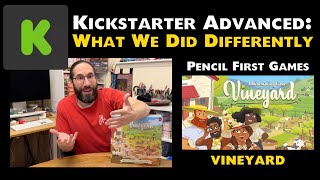



Vineyard: A Winemaking Game Deep Dive
What the Community Thinks About Vineyard
Vineyard has impressed board game reviewers as an accessible yet surprisingly deep entry into the winemaking game niche. Unlike heavier competitors such as Viticulture and Venos, Vineyard succeeds in delivering a light-medium weight experience that feels more substantial than its design suggests. The game resonates particularly with reviewers who value clever puzzle design wrapped in a cozy theme. Pencil First Games has positioned this title as a step into medium-weight territory, and the reception indicates they have struck an effective balance between approachability and strategic engagement. Reviewers consistently praise the game's production quality and art direction by Katherine Waddell, while noting that it creates meaningful decisions without requiring extensive table time.
Core Mechanics That Define Vineyard
Shared Worker Placement and Card Limitation System
Vineyard's signature system uses shared workers called "friends" that all players move around the vineyard board. Unlike traditional worker placement where each player controls their own workers, here every player can move any of the shared workers on their turn. This eliminates the blocking mechanic entirely, ensuring no player ever feels locked out of an action space. However, the designer introduces tension through a card limitation mechanic: players use action cards from their hand to place workers, and they cannot play a second card under the same friend until all friends on the board have taken at least one action. This creates a natural rhythm to the game, forcing players to think ahead about which workers they move and when. As players progress through the game, they can upgrade these workers with special abilities that activate when other players move those workers, creating a layer of indirect player powers that reward clever planning.
The Cultivation Puzzle and Tactical Elements
Woven into the worker placement core is a cultivation mini-game, a three-by-three grid puzzle reminiscent of childhood sliding-tile games. During the cultivation action, players manipulate grape tokens within this grid, then flip the entire row or column they select to reveal grape values. This mechanic adds a spatial reasoning element that breaks up the flow of standard worker placement turns. Train cards scattered throughout the game provide situational bonuses and tactical catch-up opportunities, allowing players to take advantage of favorable board states or recover when falling behind. Together, these systems create a puzzle that encourages multiple plays to master fully.
The Vineyard Experience
A Puzzle That Feels Heavier Than It Is
Reviewers consistently highlight that Vineyard delivers surprising crunch in a light package. The shared worker placement system and card limitation create meaningful decisions where a single choice can cascade across the rest of the round. Players must balance immediate needs against long-term positioning, considering not just their own actions but also how to position workers for their opponents to use. The cultivation puzzle adds spatial reasoning demands that feel more akin to a mid-weight design, creating tension without padding playtime. This mismatch between weight class and decision density is exactly what makes Vineyard compelling: it plays in 45 to 60 minutes but delivers the puzzle satisfaction many gamers seek in heavier games.
Cozy Competition and the Push-Your-Luck Dynamic
The winemaking theme establishes a cozy atmosphere where players are collectively moving through the production process, yet competing for dominance. This creates an interesting psychological dynamic where you can see which actions your opponents have queued up and must decide whether to provide them with a setup opportunity or gamble that they will execute it themselves. The game encourages reading the table and making informed bets about opponent behavior. A player might hold back on a harvest action to avoid setting up an opponent's wine production, or they might take the risk and hope the opponent chooses a different path. This tension between cooperation and competition gives the game a distinct feel from pure worker placement games.
What Makes Vineyard Stand Out
Beautiful Components and Elegant Design Choices
Vineyard stands out immediately through its presentation. Rather than using wooden meeples like many light games, it features premium acrylic player piece stands that make the board visually striking. The artwork by Katherine Waddell contributes to a warm, inviting aesthetic that reinforces the cozy theme. Production quality exceeds what reviewers typically expect at this price point, with clearly readable barrel tokens and intuitive iconography for actions. These design choices do more than look good; they make the game easier to play by reducing cognitive load when scanning the board state. Reviewers noted this level of component care as comparable to far more expensive titles.
Accessible Gateway Into Medium-Weight Strategy
Compared to established wine games like Viticulture and Venos, Vineyard offers a shallower learning curve without sacrificing engagement. Reviewers praised the rulebook as exceptionally clear and well-structured, making the game quick to teach. The design allows players to jump into strategic play immediately rather than requiring multiple rules clarifications mid-game. This accessibility does not come at the cost of depth; instead, Pencil First Games has designed a game that reveals itself gradually across plays. New players understand the core loop by turn two, but mastery of the upgrade system, optimal worker placement sequencing, and table psychology takes time. This makes Vineyard particularly valuable for playgroups looking to graduate from light games without committing to a three-hour rules study.
Potential Drawbacks
Replay and the Light Game Commitment Question
Like most lighter games, Vineyard's theme and core loop are fixed across plays. The game does not feature legacy elements or evolving mechanics that unlock new experiences with each session. Instead, replayability comes primarily from learning optimal play and adapting to different player behaviors. This creates a question for different audiences: some players enjoy mastering a single system through repeated plays, reading opponent behavior and refining strategy with each round. Others prefer games that introduce new content or rule variants across plays. Reviewers acknowledge this is a matter of preference rather than a design flaw, but it is worth noting if you expect significant rule or theme variety across your game library.
Competing in an Established Category
Vineyard enters a field already occupied by successful, beloved titles. Viticulture and Venos have established fanbases and familiarity within the board gaming community. For casual players seeking a wine game, they may default to a recognized title rather than exploring this newer option. Additionally, Venos is notably more complex for players seeking deeper strategic challenges, while lighter pure-theme games occupy their own market segment. Vineyard must find its own niche: medium-weight without being as heavy as Venos, thematically strong enough to justify winemaking choice, and accessible enough to reach players intimidated by established options. Early reactions suggest the game succeeds here, but it will require active promotion and word-of-mouth from reviewers and content creators to claim shelf space in retail and collections.
If You Enjoy Vineyard
Players drawn to Vineyard's blend of accessibility and puzzle depth should explore Concordia, which shares the action selection philosophy with a broader historical trading theme. Viticulture remains the gold standard for winemaking simulation, offering deeper production mechanics and variable player powers for groups comfortable with longer playtime and more complex rules. For those seeking lighter shared-control mechanics, Venos delivers a faster experience with more direct negotiation, though it demands more cognitive effort during the winemaking phase. Reviewers also suggested that fans of medium-weight worker placement with beautiful production should consider games like Agricola or Calico, which share Vineyard's commitment to marrying approachable rules with satisfying strategic depth.
What Reviewers Are Saying
"I really enjoy the way the shared workers and the card limitation works in this game because there's a lot of worker placement games out there but the way this one works is you're using the same workers and they always have to move and then you're limited by when you can play a second card on an individual worker and each worker is developing powers as you go it really makes for an interesting puzzle and a fairly unique feeling game."
— Hungry Gamer
"It makes the game feel crunchier and heavier than it actually is because of the decisions that you're making. It really adds a level of thought and puzzle and crunch to the game that you just don't usually get in light games."
— Hungry Gamer
"Yeah, you've got to, you know, put a quite an investment of time into those games. Whereas this one, I feel like you can jump right into it."
— Good Time Society