/pic3601388.jpg)
/pic1447198.jpg)
/pic54514.jpg)
/pic348981.jpg)
Warhammer 40k is played in a space populated with various bits of terrain. Two players control an army of miniatures each and take turns to move their armies across the board, shooting their opponent’s figures or mashing them up in close combat as appropriate. The game is played across five battle rounds, with each player taking a turn in each battle round. Each turn consists of seven phases; the command phase, the movement phase, the psychic phase, the shooting phase, the charge phase, the combat phase and the morale phase.
The 8th edition is a total revision and simplification of the rules and army structure, introducing the Three Ways to Play concept. It is not compatible with 7th edition and earlier Warhammer 40K books/materials.
The Core Rules explain everything you need to play to play Warhammer 40,000. Moving, shooting, using psychic powers, charging, fighting and morale tests are covered, giving you the basic framework to play with. You can play a game using only these pages, bolting on more advanced and complex rules when you and your opponent are ready.
Open Play – pick some models, put them on the table and begin a game. This is the most flexible approach, designed with near-limitless possibilities; all you need is some models, their datasheets and the core rules. Included are some themes and ideas you can use or build upon to add atmosphere to your games, and 3 example missions.
Narrative Play – Warhammer 40,000 has a vast, rich history with countless epic battles. Narrative Play is designed to let you and your friends re-enact those battles at your leisure. There are special rules to help you do this, such as Concealed Deployment and unpredictable, random battle lengths, and the book includes several missions * 6 Crucible of War missions and 1 Echoes of War mission, each showing you how to play in this style.
Matched Play – for many players, Warhammer 40,000 is an opportunity to prove their mettle with tactics and strategy, an exercise in out-thinking and out-gunning their opponent with balanced, equal armies: Matched Play is for them. There are several ways to ensure that your forces are balanced against each other – a points limit is the typical way, but the system is flexible enough to allow armies based on unit numbers, Power Ratings, Wounds; as long as your limits are agreed, the possibilities are manifold. This book provides details on choosing your armies, and provides missions as examples of the tactical challenges available: 6 Eternal War and 6 Maelstrom of War missions, with explanations covering the use of Tactical Objectives.
Advanced Rules
While the Core Rules provide with you with everything needed to play, the Advanced Rules are a selection of rules and expansions that can be used to play with your miniatures the way that you want to. With these rules, there are always new challenges to face, new battles to fight, and new ways to play.
This page includes videos and mentions from the whole Warhammer 40 family. Drill into a specific game below.
/pic3601388.jpg)
/pic2079275.jpg)


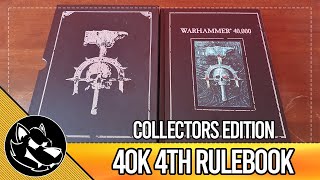
- Strong codices and a robust, well-regarded core rule set in 4th edition
- Value in the starter set and the delicious mix of hobby and gaming that encouraged painting and assembly
- Clear, accessible deployment and force organization that helped players plan battles quickly
- Rich, DIY-friendly terrain guidance that inspired offline table setup and community play
- A large, iconic model range with memorable sculpts (especially Imperial Guard and related factions) that fueled hobby enthusiasm
- Rule complexity for newcomers, especially around older hit charts and line-of-sight rules that require careful study
- Greater emphasis on model density and codex expansion in later editions (codex creep) that contrasted with the simpler aesthetic of 4th edition
- Collector’s edition pricing and heavy investment into metal minis could be prohibitive for new players or casual hobbyists
- Artwork and presentation (black-and-white era) may feel less vibrant compared to later, color-rich publications
- Terrain and board construction, while accessible, required effort and materials that not all players could easily source
- Military strategy, model collection, and hobbyist painting as entry points into a sprawling fictional universe.
- Sci-fi grimdark imagined in the 41st millennium; Imperium of Man clashing with diverse xenos and Chaos factions.
- nostalgic/experiential—retrospective exploration of the edition’s impact and evolution
- Third Edition
- Fifth Edition
- Grim Dark Future
- Kill Team
- Combat Patrol
- Armageddon (campaign/setting)
Mechanics (from transcript analysis)
- Combat Scenarios and Small-Scale Play — The book covers a wide array of missions and small-scale game formats (e.g., Combat Patrol-like concepts), along with a large number of missions, which the speaker notes as a major strength of the edition’s breadth and replayability.
- Combat: Damage Based — Combat resolves with weapon skill versus opponent profile; hits generated by the attacker's WS, then wounds depend on Strength versus Toughness, followed by saves. The speaker notes the presence of hit charts and the stepwise math involved in resolving attacks, which could feel precise and tactical.
- Force Organization Chart (FOC) and Deployment — Deployment is organized by a set of slots (HQ, Troops, Elites, Fast Attack, Heavy Support, etc.), with a clear mission deployment flow. The book presents straightforward hard limits on what you can bring and how you deploy, which the speaker recalls as simple and intuitive.
- Line of Sight — Old LOS concepts and terrain rules govern what can be targeted; line-of-fire considerations and terrain effects make positioning critical. The speaker contrasts this with newer, more abstracted systems that allow aiming at any target more freely.
- Line of Sight, Fire and Terrain — Old LOS concepts and terrain rules govern what can be targeted; line-of-fire considerations and terrain effects make positioning critical. The speaker contrasts this with newer, more abstracted systems that allow aiming at any target more freely.
- Terrain, Boards, and Template Construction — The rulebook and companion guides provide guidance for creating terrain sets, boards, and even templates to build battlefields. The speaker highlights that templates, cardboard terrain cutouts, foam boards, and practical, DIY terrain ideas were part of the appeal and accessibility.
- To Hit and Wounding — Combat resolves with weapon skill versus opponent profile; hits generated by the attacker's WS, then wounds depend on Strength versus Toughness, followed by saves. The speaker notes the presence of hit charts and the stepwise math involved in resolving attacks, which could feel precise and tactical.
- Unit-specific vs Universal Rules — 4th edition used a mix of universal rules and unit-specific rules. The speaker remarks that, compared to later editions, there was a balance between universal effects and distinct unit mechanics, which could be simpler to grasp but demanded careful attention to each entry.
Video topics + discussion points
Quotes (from this video)
- fourth edition has probably the best codexes that they ever made
- this is my baby basically for my reminiscence
- I think the fifth edition starter set is the best starter set Games Workshop ever did, for what you actually got in the Box
- I didn't read any of this not a single thing
- it's jam-packed... it's worth the money even now
References (from this video)

- disliked seventh edition
- stopped playing until 8th edition
- perceived fatigue with large army games
- grimdark space warfare and imperial conflict
- Universal sci-fi battle between factions in a grimdark future
- epic-scale warfare with apocalyptic stakes
- Warhammer 40,000 Seventh Edition
- Warhammer 40,000 Eighth Edition
Mechanics (from transcript analysis)
- armies with many models — collectible infantry and vehicles for multi-unit battles
- Combat: Dice — dice determine hits, saves, and casualty removal
- dice-based combat resolution — dice determine hits, saves, and casualty removal
- fleet and army-building — list-building and points-based army construction
- Line of Sight — terrain influences line of sight and cover
- Terrain and line of sight — terrain influences line of sight and cover
Video topics + discussion points
Quotes (from this video)
- i would be tempted i'm not gonna lie um
- i like the concept of it i think the models are cool
- no interest in army games like big army
- i already played seventh edition 40k
- didn't like it
- it's what caused me to stop playing 40k until 8th edition came out
References (from this video)
- Iconic system with a large, long-standing community
- High entry cost and complexity
- vast interstellar warfare
- grimdark sci-fi universe
- epic-scale warfare
- Flames of War
- Age of Sigmar
Mechanics (from transcript analysis)
- Combat: Dice — large-scale tactical battles with dice resolution
- Line of Sight — rules interactions influence positioning and engagement
- miniature army combat — large-scale tactical battles with dice resolution
- Terrain and line of sight — rules interactions influence positioning and engagement
Video topics + discussion points
Quotes (from this video)
- bellwether is the person that picks a direction and starts the ball rolling
- it's easier on them to learn a skirmish game because the investment of time is usually lower
- the bellwether of the group had something to do with it
- i'll run it and help you roll up your characters
References (from this video)

- Huge breadth of units and hobby ecosystem
- Vibrant, long‑running community and tournaments
- Complexity and frequent updates requiring multiple books
- Perceived obsolescence risk as new editions and codices arrive
- endless war, faction dominance, personal heroics versus cosmic threats
- Futuristic sci‑fi battles across a grimdark, galaxy-spanning war
- epic, sprawling, army-scale conflicts with lore depth
- Kings of War
- One Page Rules
- Grim Dark Future
Mechanics (from transcript analysis)
- Miniature-based wargaming — Armies of models dice-off in tactical skirmishes at army scale with shooting, psychic and melee phases.
- Movement trays and deployment considerations — Players discuss tray usage, speed of movement, and how to manage large pits in the play area.
- Specialized army books and data sheets — Rules and unit stats are distributed across core books and faction codices, with updates and FAQs.
Video topics + discussion points
Quotes (from this video)
- Rank and flank if only good if the rules are streamlined like uh Kings of War
- the main book is 200 220 maybe 250 I forget the exact number
- One page rules for free otherwise if you want to get the less simple you know kind of document it costs five bucks or you can join their patreon for five bucks a month and then get access to all of them
- Goblin brain video made me think about my hobby spending towards Beyond games and models tools and paints are a big fomo trigger for me I watched the video and the proceed to buy the Space Marines Herobine blocks
- as soon as they made it so you didn't have to worry about the swag bag that's just what I purchased because back in the day people who were the first like thousand people got the swag bag and everybody else didn't
- looking forward to the tanks of the Apocalypse event at adepticon
References (from this video)
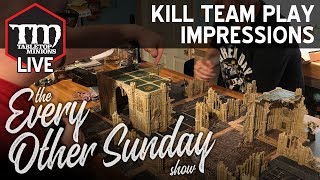
- deep, large-scale army options and a rich hobby ecosystem
- strong ongoing support and codified rule structure
- familiarity for players transitioning from Kill Team
- higher complexity and time commitment
- cost and model management can be daunting for beginners
- military science fiction with heroic characters and large-scale battles
- Futuristic sci-fi battles across multiple human and alien factions
- expansive universe with ongoing lore and campaigns
- Kill Team
- Age of Sigmar
- X-Wing
Mechanics (from transcript analysis)
- Phases and action economy — combat is divided into discrete phases (movement, psychic, shooting, charging, melee, morale)
- Strength vs. toughness interaction — wound resolution uses a simplified strength vs. toughness framework
- Unit-based and weapon-based customization — extensive keywording and loadouts shape list-building and battle strategy
Video topics + discussion points
Quotes (from this video)
- it's a great system to start with
- it's a good primer for playing 40k
- the rules are in one book
- the board that it comes with is 22 by 30 which is a really smart thing
- it's always a good idea for a business to try to find an easier way for people to get into into the game
References (from this video)
- Sci-fi futuristic warfare
Mechanics (from transcript analysis)
- Miniature army painting — Large-scale army painting and collection
Video topics + discussion points
Quotes (from this video)
- Hobby motivation can frequently be a matter of what you're painting or how you're doing it, not just the act of painting itself
- If what you're doing now isn't working, then continuing to do it exactly the same way probably isn't the right answer
References (from this video)
- provides structured list-building via codex/army books
- clear role delineation for HQ and troops in list construction
- well-established publish-and-update cycle for ongoing play
- points changes can require frequent updates
- army collection can be expensive to realize a full legal roster
- complexity grows with larger, multiple-forces matchups
- epic warfare and factional conflict across the galaxy
- grimdark sci-fi battlefield
- militaristic, campaign-driven
- Age of Sigmar
- Flames of War
- Warhammer 40,000
- Kill Team
- Warcry
- Conflict 47
Mechanics (from transcript analysis)
- army composition constraints — mandatory slots for HQ, troops, elites, etc., shaping core list
- codex/army book as core reference — unit stats and rules are organized in army-specific publications
- Point-based army building — lists constructed around a points system guided by codex/army books
Video topics + discussion points
Quotes (from this video)
- no plan ever survives contact with the enemy
- don't start by buying models if you've decided you want to get into game X by the rulebook for game X
- start with the book
- start with the Codex for that army
- paint troops first
- don't buy the entire army all at once
- definitely definitely do some test models
- set deadlines for small portions
- start small and grow slowly
References (from this video)
- Streamlined rules
- Free indexes
- Accessible entry point
- Potential uncertainty and last-minute changes
- Details about codex removal unclear
- streamlined rules; codex/index removal; universal box play
- Warhammer 40K universe; grimdark sci-fi fantasy
- announcement preview and analysis
- 8th edition
- 9th edition
Mechanics (from transcript analysis)
- Combat Patrol format — Boxed, self-contained rules and stats; simplified entry
- free index downloads — Indexes available for free; codices may be simplified or removed
Video topics + discussion points
Quotes (from this video)
- it's very very cool
- I think that's going to be the most fun
- Mercs is a game I enjoyed quite a bit back in the day
- they announced the 10th edition Warhammer 40,000 will be coming soon
- indexes will be free downloads
- Death Watch Combat Patrol box now you'll notice there's nothing in here
References (from this video)
- Strong community engagement and ongoing support
- Improved transparency and communication with players
- Continued investment in accessibility and product cadence
- Very large investment in time and money for full armies
- Historically complex faction rules can be intimidating for newcomers
- Endless war, factional conflict, cosmic scale
- Futuristic grimdark war in a sprawling galaxy
- Campaign-driven, with ongoing lore and codex-driven storytelling
- Star Wars: Legion
- X-Wing Miniatures Game
Mechanics (from transcript analysis)
- Line-of-sight and cover — Strategic positioning and terrain-based bonuses affect combat outcomes
- Miniature skirmish/large-scale wargame — Tactical movement and combat on a tabletop using squad-sized forces
- Point-based army building — Players assemble armies within points limits to balance encounters
Video topics + discussion points
Quotes (from this video)
- it's a renaissance time too
- it's a great time to be a war gamer
- we're not apologizing to them because things were bad then but now it's an acknowledgment
- positive reinforcement they got to know they're making us happy
- we're going to make plastic Sisters of Battle and bring people back into the fold
- the open engagement on Twitch with Warhammer TV is just ongoing
- X-Wing money they're sitting on
References (from this video)
- deep, lore-rich universe with a strong hobby ecosystem
- scalable army options and a long-standing community
- cultivates a broad painting and modeling culture
- rules complexity can be daunting for newcomers
- rules and codex updates may require ongoing learning and updates
- military conquest, loyalty, faction warfare
- grimdark sci-fi battlefields across a vast future
- lore-rich, faction-driven campaigns
Mechanics (from transcript analysis)
- army-building — construct an army from squads, vehicles, and leaders; balance points, roles, and synergies
- Dice-based combat — resolve battles using dice with probabilistic outcomes influenced by stats and modifiers
- Movement and terrain — maneuver units on a tabletop with terrain effects affecting line of sight and reach
Video topics + discussion points
Quotes (from this video)
- Thin your paints to avoid thick, clumpy coats.
- Build yourself a wet palette so you can keep thinning and layering for hours.
- Don’t get overwhelmed—paint in small groups and take it step by step.
- Start out with regular troops before moving to the big fancy models.
- It’s about having fun; if you’re not enjoying it, it’s not really a hobby.
- Patience is a virtue; take it slow and document your process for future reference.
References (from this video)
- Detailed miniatures
- Rich lore
- Extensive model variety
- Expensive
- Complex rules
- Oversized shoulder pads
- Futuristic warfare
- Dystopian sci-fi universe
- Military science fiction
Mechanics (from transcript analysis)
- Miniature Combat — Tabletop wargame with detailed miniature models
Video topics + discussion points
Quotes (from this video)
- Good enough is good enough to get minis on the table and actually enjoy games
- The only person you have to make happy with your paint job is you
References (from this video)
- Free ruleset
- Accessible entry point for new players
- Cheaper combat patrol options
- Variety of factions
- Still relatively expensive
- Limited model selection
- Potential supply chain issues
- Interstellar conflict
- Sci-fi futuristic warfare
- Miniature-based wargaming
Mechanics (from transcript analysis)
- Combat Patrol — Simplified entry point for new players with smaller model count
Video topics + discussion points
Quotes (from this video)
- Combat Patrol was a format designed to help get more people into the game of 40K
- GW committed to the rules being free for Combat Patrol
References (from this video)
- deep lore and expansive model range
- strong community and official support
- very steep learning curve and heavy rules
- models can be expensive and time-consuming to paint
- epic planetary-scale and squad-level conflict with proprieties
- grimdark sci-fi future of war spanning across galaxies and factions
- grand, militaristic, expansive
- Star Breach
- One Page Rules
- Maelstrom's Edge
Mechanics (from transcript analysis)
- d6-based combat with unit stats — combat resolved with dice against unit profiles with weapon and defense values.
- points-based army construction — players assemble armies using a points system to balance forces.
- well-documented codex rules and dynamic for armies — multiple codices govern each faction, providing variety and depth.
Video topics + discussion points
Quotes (from this video)
- change is the only constant
- model agnostic games or miniature agnostic games or just ma games
- there are plenty of games out there just a rule set that is designed to kind of pick up all that extra leftover pieces from when you've decided that you're done with big game X
- if you take a miniature from game A and try to use it in game B there will no fires will start the police won't come it's it'll be all right
References (from this video)
- activation scheme is disliked; desire for more back-and-forth play
- perceived complexity and pace can be challenging for store play versus home play
- military conquest and faction warfare
- Sci-fi grimdark military warfare in a dystopian future
- campaign-oriented, large-scale battles
- Age of Sigmar
- Warcry
- Kill Team
Mechanics (from transcript analysis)
- activation scheme — turn-based activation sequence with a specific order of unit activations; the speaker expresses dislike and a preference for more back-and-forth play
- combat resolution — dice-based resolution for shooting and melee, with range considerations, casualties, and morale dynamics
- Combat: Dice — dice-based resolution for shooting and melee, with range considerations, casualties, and morale dynamics
Video topics + discussion points
Quotes (from this video)
- the majority of games get played at home
- miniatures agnostic means it's about the rules
- i still kind of hate the activation scheme
- i like things to be a little bit more back and forth
- the comments sections are toxic and nasty
References (from this video)

- Iconic models and a strong, recognizable visual language
- Big centerpiece units (e.g., Dreadnoughts) that are satisfying to model and discuss
- Active community presence at events and conventions
- High cost and long-term investment to build and paint full armies
- Ardent focus on large models can complicate entry for casual players
- Some list-building pressure to include heavy units for competitive viability
- militaristic zeal, survival and existential threat
- grimdark sci-fi galaxy spanning conflict with a human empire and myriad factions
- lore-driven, factional warfare with iconic units and storytelling through battles
Mechanics (from transcript analysis)
- Points-based army building — lists crafted to fit a chosen point total with faction-specific rules and upgrades
- turn-based tactical combat — movement, shooting, and assault phases with unit-based actions and line-of-sight considerations
Video topics + discussion points
Quotes (from this video)
- this is 40K land
- the guns of an entire Army attached to it
- You can fire the Doomsday missile anywhere you want
- pink trees are beautiful
- this is a smaller local convention that's also raising money for charity
- the birthplace of Dungeons and Dragons for sure
- you people are smart
References (from this video)
- Immense universe and model variety
- Deep hobby ecosystem for painting and converting
- Time-intensive and rules heavy
- Early editions had balance and learning curve challenges
- Military conquest, faction conflict
- Sci-fi grimdark future war in the 41st millennium
- Anecdotal, personal recollection
Mechanics (from transcript analysis)
- dice-based combat resolution — Resolution relies on dice pools with hit rolls, saves, and modifiers.
- Miniature skirmish/large-scale battle — Players command squads across a battlefield with unit movement and combat in a shared map.
- Terrain and line-of-sight interaction — Terrain features influence movement, cover, and visibility.
Video topics + discussion points
Quotes (from this video)
- I wish I would have bought an airbrush sooner
- Kickstarter not all of them I've had some luck with
- gateway game kind of like your zombicide
- I started painting but I need to really fix the terrain issue
- I wish I hadn't done that
References (from this video)
- iconic IP with deep lore and community ecosystem
- rich model range and customization options
- high entry cost in time and money
- complex and rules-dense; steeper learning curve
- epic, narrative-driven futurist warfare
- grimdark sci-fi universe with vast armies and planetary warfare
- lore-rich, campaign-oriented
- One Page Rules
Mechanics (from transcript analysis)
- command/activation style with hierarchical units — command structure and orders influence unit effectiveness
- infantry/vehicle statistics and wound management — units track wounds, armor saves, and various weapon profiles; complex damage resolution
- range and line-of-sight based combat — engagements depend on ranges and cover; tactical positioning matters
Video topics + discussion points
Quotes (from this video)
- Good war games are not about nitpicky rules gotches and knowing all the Arcane strategems
- streamlined or rules light games aren't worse they're just different
- complexity doesn't make a rule set good
- War Games aren't about dense rules and detail they're about getting the rules out of your way so you can focus on strategy
References (from this video)

- Detailed miniature design
- Customizable armies
- Painting as part of gameplay experience
- Time-consuming painting process
- Expensive hobby
- Galactic warfare
- Futuristic sci-fi universe
- Competitive tabletop wargaming
Mechanics (from transcript analysis)
- Army building — Collecting and preparing units for battle
- miniature painting — Detailed painting of individual model units
Video topics + discussion points
Quotes (from this video)
- Slop and drop - that's my painting style
- No price is too high in the war versus the gray
- Painting is all about returning back to the color you've just painted
References (from this video)
- Huge model range; depth of customization
- Rule bloat; many books to track; perceived complexity
- Strategic large-scale warfare; codices & books
- Future sci-fi war in a dark universe
- Campaign and narrative play across factions
- Kill Team
- Warcry
Mechanics (from transcript analysis)
- Codex-based armies — Factions with unique rules & units
- Large-scale battles — Points-based large battles with deep stratagems
- Powerful rules expansions — New codices and supplement books define play
Video topics + discussion points
Quotes (from this video)
- zona alpha is a game by osprey it's a little moderny sort of skirmish style game but it is based lightly off of the concepts from games like stalker on the video games metro 2033
- no swords and wizards and junk like that it's all ak-47s
- vanilla kill team is good clean fun on its own
- the only constant is change
- start with troops
References (from this video)

- Extensive ecosystem and model variety
- Established player base makes pick-up games easier
- Large range of official and unofficial content and expansions
- High entry cost and complexity for new players
- Can be difficult to shift away from Warhammer to indie titles
- Experience and learning curve may deter casual players
- Factions vie for control; existential threats in a dystopian universe
- Distant future grimdark sci-fi war between factions
- Epic, grimdark, large-scale battles
- Malifaux
- Infinity
- Stargrave
- Five Parsecs from Home
- Planet 28
- Space Weirdos
- Dark Eldar (Warhammer 40k faction)
Mechanics (from transcript analysis)
- Miniature combat resolution — Dice-based combat where unit outcomes are resolved through rolls and modifiers.
- Point-based army construction — Players assemble armies using a points system to balance forces.
- Terrain and line of sight interactions — Terrain affects movement, cover, and line-of-sight for shooting.
- Turn-based phases (movement/shooting/assault) — Sequential phases within a turn govern actions and combat resolution.
Video topics + discussion points
Quotes (from this video)
- the best way to save money in wargaming by not playing warhammer
- miniature agnostic
- 3d printing now
- it's far cheaper to get into indie wargaming and 3d print stuff and pdfs
References (from this video)
- Highly customizable and large hobby ecosystem
- Rich community and ongoing product lines
- High entry cost and time investment
- Requires space and setup time
- Strategic warfare, collecting, and model-building as a hobby.
- Science-fantasy universe with ongoing battles and miniature armies.
- Array
- X-Wing
- Age of Sigmar
Mechanics (from transcript analysis)
- Mini-Games — Assemble armies, move units on a tabletop battlefield, resolve combat via rules.
- Miniature war-gaming — Assemble armies, move units on a tabletop battlefield, resolve combat via rules.
- Point-based army construction — Build forces within a points budget to balance gameplay.
Video topics + discussion points
Quotes (from this video)
- Isle of Cats does a really great job of it
- it's got a fantastic proper game as i call it and a really good beginner's game as well
- make sure your board game makes an outstanding first impression
- but also continues to surprise and delight with subsequent plays
- Expansion material
- nobody needs this sort of stress in their life
- there are parallels to these business practices in the board game industry
References (from this video)
- Iconic setting and model range
- Tactile, immersive tabletop experience
- Expensive, complex rules
- Restocks/availability can be inconsistent
- grimdark warfare, factional conflict, survival against vast odds
- The 41st millennium, a grimdark future of interstellar war
- epic, galaxy-spanning saga
- Infinity
- Kill Team
- Zona Alpha
- Dwarven Forge
Mechanics (from transcript analysis)
- Combat: Dice — combat resolved with dice rolls, hits, wounds, and saves
- Dice-based combat — combat resolved with dice rolls, hits, wounds, and saves
- Line of Sight — terrain blocks sight; cover modifies hit probabilities
- line of sight and cover — terrain blocks sight; cover modifies hit probabilities
- objective-based missions — play includes mission-specific goals and victory conditions
Video topics + discussion points
Quotes (from this video)
- GW's the most expensive brand out there for the most part within wargaming
- Mostly rattle can primer but for plastic terrain kits I prefer rattle can
- Flames of Orion is made by one of the guys from The Hive of scum podcast
- three games of tanks for the Apocalypse in adepticon
- five par sex is obviously very solo oriented for the most part
- GW restocks can be squirrly
References (from this video)
- Extensive faction variety and long-term support
- Deep strategic options and evolving meta with new codices
- Complex rules and a steep learning curve for new players
- Grimdark sci-fi warfare with codex-driven lists
- Warhammer 40,000 universe
- Competitive, narrative around warbands and factions
- Age of Sigmar
- Star Wars: Legion
Mechanics (from transcript analysis)
- codex-based army building — Each faction has unique rules and unit interactions
- Faction codices and balancing — Rules evolve with new codex releases and updates
Video topics + discussion points
Quotes (from this video)
- it's Star Wars - big license, so that's gonna draw you in; that milkshake is gonna bring the boys to the yard
- the terrain that we've made before Shadow War is gonna work really well
- the terrain is all custom-built stuff that's not stuff they're gonna be selling
- not pre-painted, you have to build these guys and paint them
- the next three or four codex books are already printed and sitting in a warehouse
- Gen Con 50... they sold out four day badges early
References (from this video)
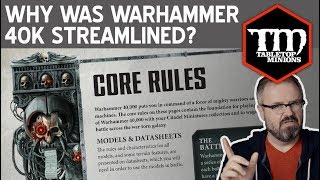
- Easier to learn and play
- Brings new players back into the hobby
- Perceived fun and accessibility
- May reduce perceived depth for some players
- Not universally liked by fans of earlier editions
- Streamlining and accessibility vs crunch
- Grimdark sci-fi tabletop universe, near-future war in the 41st Millennium
- Analytical commentary on rule changes and market impact
- Age of Sigmar
- Warmachine
- Company of Iron
Mechanics (from transcript analysis)
- Command points and stratagems — Introduction of command points to influence gameplay with stratagems
- Core rule consolidation — Core rules reduced to a compact core (8-10 pages) with pullouts in starter kits
- Deep strike changes — Removal of scatter for deep striking units, focusing on positioning
Video topics + discussion points
Quotes (from this video)
- Predominantly yes
- the streamlining the thing that brought people back into it because it made the game perceived to be fun again
- the trick is however is it doesn't seem to necessarily work for everyone
- tabletop wargaming is a business when you sell more product you're doing well
- rip off the band-aid with eighth edition
References (from this video)
- galactic empire, corruption, religion, and imperial ambition
- grimdark sci-fi across the 41st millennium with vast armies and perpetual war
- epic, saga-driven warfare across multiple factions
- Star Wars Legion
- Age of Sigmar
- Kill Team
- Battletech
Mechanics (from transcript analysis)
- Asymmetric Mechanics — heavy rule systems driving complex, multi-unit engagements
- large-scale tactical play — heavy rule systems driving complex, multi-unit engagements
- Points-based army building — codex/armies built around unit costs and upgrades
Video topics + discussion points
Quotes (from this video)
- This is generally known as churn in the wargaming industry.
- New additions cause many players to rebuy the books that they already have because some small things changed in the rules.
- What I mean by sunk cost is this. If you get into a war game ecosystem like Warhammer 40,000, and it is an ecosystem with all the rules and the models and the terrain and the novels and the video games and the merch, all that stuff, then you're less likely to switch to a different ecosystem or even a different game that isn't its own ecosystem.
- Lately, Games Workshop has gotten into a pattern where every other edition of 40k, they also invalidate all of the cotices as well.
- They'll be doing it in Age of Sigmar as well, fourth edition of Age of Sigmar which just came a little while ago did it.
- This is generally known as churn in the wargaming industry. And it's kind of different than just like making and releasing a lot of products, right?
- The main reason that big companies come out with new editions of their games kind of constantly is money.
- New editions cause many players to rebuy the books that they already have because some small things changed in the rules.
- Three-year edition cycle is something I would certainly stop; some people say five years is more reasonable, and while that's technically true, is that still necessary?
- A longer gap would let them make more optional add-on books during that time.
- The problem is that they don't want to make too many optional books; they want the new add-on books to seem optional but required.
- If something comes up that needs a change, then they usually have a free download that fixes it.
- Battletech is great because it's been the same addition for so long.
- Paid new edition is pretty clearly a cash grab.
- If you're not even interested in having to learn new editions at all, then I'd tell you to look at most smaller indie games because generally they don't do new additions of their games.
- What do you think? Are you okay with game systems with paid updates on a fixed schedule, like video game seasons?
References (from this video)
- Rich, deeply developed universe with broad model support
- Clear, well-known product structure that many players understand
- Historically, rules and data sheets were not free; model-centric revenue strategy can be expensive
- New editions may require ongoing purchases to stay current with rules and supplements
- Tradition of selling both rules and miniatures; distinct approach to core books versus codices
- Futuristic, grimdark sci-fi battle universe with decades of lore
- Age of Sigmar
- Kill Team
- Pariah Nexus
Mechanics (from transcript analysis)
- Core book + codices model — Players purchase a core rulebook and then codices for army-specific rules and units
- Extensive miniature lines — A large ecosystem of miniatures supports diverse army builds and customization
Video topics + discussion points
Quotes (from this video)
- the first taste of a game is often the most important moment for a new player to decide if they want to dive deeper
- we're going to give you the whole game, it's free
- the entire taste is free—the entire rule set
- you can proxy whatever you want to proxy
- money does need to get made, so the business has to decide how to monetize
- vote with your wallet and figure out how you want to do things
References (from this video)
- deep lore
- epic scale
- model hobby
- complex rules
- frequent cycle churn, updates
- epic war with lore-heavy universe
- grimdark sci-fi war across galaxies
- grand, lore-rich, sprawling campaigns
- Age of Sigmar
- Warcry
Mechanics (from transcript analysis)
- codex-driven army customization — faction-specific rules and stratagems
- large-scale miniature warfare — armies comprised of many units with complex rules
- Line of Sight — rules for positioning and combat resolution
- terrain, line of sight, and initiative systems — rules for positioning and combat resolution
Video topics + discussion points
Quotes (from this video)
- the five-year schedule makes a lot of sense
- summer of 40k, war cry, age of sigmar, kill team
- 3d printing is a curse the number of amazing models increases exponentially daily
- grimdark aesthetic can be satire
References (from this video)
- Creative use of spare parts
- Personalized model creation
- Resourceful approach to modeling
- Imperfect green stuff work
- Lacking official head piece
- Space Marine Modeling
- Futuristic Science Fiction
- Personal Hobby Project
Mechanics (from transcript analysis)
- Miniature Conversion — Combining parts from different model kits to create a custom model
Video topics + discussion points
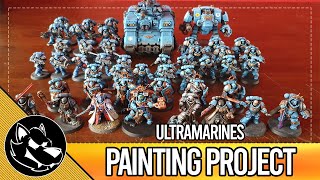
Quotes (from this video)
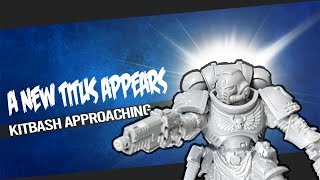
- I'm pretty happy with what I've achieved using just the spare bits that I've got to hand
- he will sit proudly in the ultramarines from now on
References (from this video)
- deep, expansive universe and lore
- strong hobbyist ecosystem with starter options and community
- clear culture of assembly and painting that reinforces immersion
- high complexity and large investment to play at scale
- steeper learning curve for new entrants due to dense rules and army-building
- older rules may feel unwieldy without active community support
- Epic warfare, factional conflict, galaxy-scale storytelling
- Sci-fi grimdark battle universe where galactic factions vie for dominion
- Lore-driven saga and large-scale campaigns
- Warhammer Fantasy Battle
- Necromunda
Mechanics (from transcript analysis)
- miniatures-based tactical combat — Players field armies of models and resolve clashes with dice-driven combat resolution.
- points-based army construction — Players assemble forces within a point budget to craft varied, balanced lists.
Video topics + discussion points
Quotes (from this video)
- I happen to love Games Workshop and their products I really really am into the games where I'm a 40,000 necro Munda shade spire
- this is where the space is this is where gaming is going this is where society's going we love streaming we love video we love seeing we love hearing
- it's an amazing time to be a tabletop gamer and I'm reveling in it
- the data is astounding you won't even believe your eyes when you see this data
- Wall Street Journal bestseller now it's funny that it's in the nonfiction section because it's about a role-playing game but it's it's a manual you know that's why it's nonfiction it's a manual for a game
References (from this video)

- Iconic IP with deep lore
- Large model variety and hobby potential
- Rich, narrative-driven tabletop experience
- Complex rules can be daunting
- Cost of models and books is high
- Epic battles with vast armies, psychic powers, and heroic factions
- Far-future grimdark warfare
- Epic and grim, with lore-rich universe
Mechanics (from transcript analysis)
- Large-scale miniature battles — Movement, shooting, assault phases with cover, morale, and command decisions
Video topics + discussion points
Quotes (from this video)
- meeting cool people from the Internet is one of the best parts of the internet
- Nova was great
- Kickstarters that don't deliver is just fraud
- Starfield has been enjoyable, like Skyrim in space
- Barbie movie was Omega lit nice
References (from this video)
- deep strategic potential
- large variety of units and playstyles
- expensive codices
- complex and sprawling rules
- epic warfare, strategy, base-building
- grimdark sci-fi universe
- procedurally deep with codices and supplements
- Age of Sigmar
Mechanics (from transcript analysis)
- codex-based army building — Create armies using codices with varied factions.
- kill team — Small squad, specialized missions and rapid play options.
- rule book complexity — Extensive rules and supplements drive depth.
Video topics + discussion points
Quotes (from this video)
- these are my opinions so please don't tell me in the comments oh you're wrong cuz it's my opinion
- if you've got some things that you want to see in 2017 from Games Workshop put it in the comments below
- maybe they'll read it I don't know probably not but maybe they will I'll read it at least
- more blood bowl teams I have recently purchased blood bowl ... I want them to do it faster
- I would like to see all the Sisters of Battle as there's so much online complaining
- I definitely want 40K to be streamlined now
- changes are good in my opinion
- please please please do something please just make something happen
References (from this video)

- depth of hobby, hobby integration
- streamlined rules for 8th edition
- costly miniatures
- long play sessions
- epic sci-fi fantasy warfare, miniatures hobby
- Warhammer 40k universe
- grimdark, expansive
- Blood Rage
- Rising Sun
Mechanics (from transcript analysis)
- hobby/lifestyle integration — collecting, painting, and theorycrafting lists
- miniatures-based warfare — full-scale tactical battles with painting and collection
Video topics + discussion points
Quotes (from this video)
- this one is sort of a pure version of Rising Sun
- you get a hand of cards
- I can't beat the miniatures in the box
- I happen to like Norse mythology so I think this one just fits me a little better than Rising Sun
- it's such a heavy theme of like you're you get you have this attachment to your brothers in arms
- City of Iron is my absolute favorite
References (from this video)
- Rich setting and lore that fuels hobby enthusiasm
- Strong painting and modelling hobby integration
- Active community and ongoing model releases
- Complex rules can be intimidating for newcomers
- Cost of models and ongoing expansions can be high
- militaristic conquest and survival in a brutal, dystopian universe
- The 41st Millennium, a grimdark science fantasy future where humanity fights endless wars against xenos threats and Chaos.
- epic battles with a focus on faction lore and battlefield presentation
- Warhammer 40,000: Kill Team
- Other 40k rule sets and spin-offs
Mechanics (from transcript analysis)
- Dice-driven combat resolution — Combat outcomes are determined by dice rolls with modifiers based on unit stats and situations.
- Miniatures-based skirmish/battle — Players deploy and maneuver miniature units on a tabletop to simulate large-scale battles.
- Point-based army construction — Players assemble forces within a points budget to balance their forces and strategies.
Video topics + discussion points
Quotes (from this video)
- Old Times old old times that's probably six years ago isn't it Jesus Christ
References (from this video)
- Iconic, recognizable models and design language
- Extensive range of options and factions
- Big models can be difficult to assemble, paint, and transport
- High entry cost for aspiring hobbyists
- Industrial-scale conflict and towering war machines
- Grimdark sci-fi future with constant warfare across a vast galaxy
- Epic, cathedral-scale battles with iconic units like Imperial Knights
- Apocalypse
Mechanics (from transcript analysis)
- army point-building and matchups — Standard 40k play uses point values; large-scale modes like Apocalypse exist for even bigger battles
Video topics + discussion points
Quotes (from this video)
- Dragons are big and massive and it's sensible that dragons are big.
- i don't generally want to paint something that large
- there are folks out there who might like that stuff
- it's not for everybody, not for me
References (from this video)

- Detailed miniatures
- Engaging painting process
- Variety of painting techniques
- Initial cost of entry
- Time-consuming painting process
- Galactic warfare
- Futuristic sci-fi universe
- Militaristic
Mechanics (from transcript analysis)
- miniature painting — Painting and preparing miniatures for tabletop play
Video topics + discussion points
Quotes (from this video)
- Anybody can paint like this. Just take paint straight out of a pot and put it on a miniature.
- Slop and drop. That's what it's all about.
- The best part about contrast, it does two things in one. It not only paints the model, it also shades the model at the same time.
References (from this video)
- Dedicated hobby with robust miniature painting and modeling community
- Extensive official campaigns and narrative scenarios
- High upfront and ongoing costs for miniatures and scenery
- Time-intensive setup and painting requirements
- Large-scale wargaming with lore-driven factions
- Futuristic grimdark science fantasy battles in the 41st millennium
- Faction-driven campaign and narrative battles
- Age of Sigmar
- Magic: The Gathering
- Dungeons & Dragons
Mechanics (from transcript analysis)
- Line of Sight — Terrain effects and visibility influence tactics and outcomes
- Miniature-based combat — Players command squads of miniatures on a tabletop battlefield
- Point-based army construction — Pre-determined points allow balanced army building
- Terrain and line-of-sight — Terrain effects and visibility influence tactics and outcomes
- Turn-based movement and shooting — Distance-based movement, shooting, and melee combat with dice rolls
Video topics + discussion points
Quotes (from this video)
- Starting business is hard anywhere in the US or probably anywhere in the world
- Know your network of people within your area
- I finally got tired of taking orders from someone else I wanted to be my own boss
- I spent a lot of years networking through previous jobs getting to know a lot of the other gamers in town
References (from this video)
- Iconic and expansive universe with a long history of play
- Large range of models, missions, and玩法 options
- Rule complexity and potential for long setup/play sessions
- Epic massed battles with varied unit types and long-range engagements
- Futuristic grimdark sci-fi warfare
- Epic, campaign-ready scale with narrative potential
- Kill Team
- Age of Sigmar
- Infinity
- Kings of War
Mechanics (from transcript analysis)
- line_of_sight — LOS governs which targets can be fired upon
- range_based_combat — Weapons with varied ranges drive positioning and terrain use
- terrain_cover — Terrain modifies shooting outcomes and maneuverability
Video topics + discussion points
Quotes (from this video)
- the amount of terrain that you have on a table and it also depends completely on the size of the table
- having decent cover in a game that has big ranges to all the weapons is important
- there's nothing wrong with just grabbing a bunch of pieces of train stewing them about the table and starting to throw dice
- cover is important when people are sling and lead you want to not be standing out in the open
- the trick is is that you may have a lot of terrain on the board but if you've built it so that there are a lot of just open streets you are building lanes that long-distance shooters are being really given an advantage on
- the tables are all a lot alike because that makes it fair
- think not only about constructing and making your terrain look cool but think about how you construct the board
References (from this video)
- military conflict, faction warfare
- Warhammer 40,000 universe, far-future grimdark sci-fi war
- lore-driven, campaign-style battles
Mechanics (from transcript analysis)
- dice-based combat resolution — Attacks resolved with dice rolls using unit stats, weapons, and abilities
- Movement and line-of-sight — Tactical placement of miniatures with line-of-sight rules
- unit-based troop actions — Units perform actions in turns with morale and command elements
Video topics + discussion points
Quotes (from this video)
- "2020 was a hell of a year"
- "production can't keep up their release schedule"
- "hobby sales have increased"
- "getting stuff in people's hands is more important than getting it into stores"
- "I hope 2021 is a better year than the last one"
References (from this video)
- Rich, expansive lore and worldbuilding
- Multiple hobbies within the hobby (craft, painting, gameplay, lore)
- Flexible engagement paths for different preferences
- Steep learning curve and complexity
- Significant time and resource investment
- Lore-centric aspects may overwhelm newcomers
- Warfare, lore-driven narrative, and hobbycraft synergy
- Fictional fantasy universe with sprawling lore and factions; setting spans multiple worlds and eras
- Lore-rich, expansive, and gradually revealed through books and codices
- HeroClix
Mechanics (from transcript analysis)
- Army building — Creating and organizing armies under a ruleset
- Miniature-based combat — Battles using assembled miniatures and terrain
- Terrain interaction — Use of terrain to influence movement and combat
- Turn-based resolution — Sequential turns with dice-based outcomes
Video topics + discussion points
Quotes (from this video)
- There are two parts to this hobby.
- the craft portion of it doesn't particularly require the play portion of it
- it's the craft and it's the gaming
- the lore is very very very big
References (from this video)
- iconic IP with broad community support
- extensive model diversity enables varied tabletop narratives
- high entry cost due to a large model collection
- complex rules can be intimidating for new players
- grimdark sci-fi warfare
- Warhammer 40K universe
- epic, campaign-driven miniatures battles
- Warhammer 40,000
- Star Wars Legion
- Kill Team
Mechanics (from transcript analysis)
- army-building and deployment — fielding varied units with army lists, point costs, and tactical objectives
- miniature-based tabletop skirmish — dice and stat-line driven combat with unit-based movement and morale checks
Video topics + discussion points
Quotes (from this video)
- I think the future of wargaming is going to be moving more and more towards just shorter quicker games, things being accessible in the way that everything is included.
- The future is going to be controlled by the communities and the players more than it has been by the companies.
- We don't bowl alone—that's just it; our game requires someone else to play with, to partner with, to have a club, to have a group, to have a community and I think that is very much in demand.
- Bloomhaven getting some good minis recently and that's one of those things that got a lot more people into playing nerdy board games.
- Indy is going to be a bigger part of it; I really like to see people see their miniature collection as the game engine and the rules be something you can plug the cartridge in and be playing lots of stuff.
- I think it's a really exciting time for skirmish games; the manufacturing world is broken open so everybody almost anybody can make their own cool game.
References (from this video)
- Iconic and expansive universe with rich hobby ecosystem
- Allows highly personalized miniatures and dioramas
- Supports tactical depth and hobby fulfillment
- Complex rules and high learning curve
- Can be expensive and time-consuming to assemble and paint
- military conflict in a dystopian future
- Warhammer 40,000 universe; grimdark sci-fi battlefield setting
- grimdark, epic sci-fi battle narratives
Mechanics (from transcript analysis)
- armory and morale elements (optional) — Equipment selection and morale rules affect unit performance.
- dice-based combat resolution — Roll dice to determine hits, wounds, and saves; probability shapes outcomes.
- line of sight and cover — Visibility determines shooting opportunities; terrain provides cover bonuses.
- movement and range measurement — Units move across a tabletop with measured distances; positioning matters.
Video topics + discussion points
Quotes (from this video)
- this portion of drilling barrels the most important part
- it's not electric it's not gas-powered it's just a hand drill
- you basically be using this pin to start a pilot hole
- you got yourself a drilled barrel
- it's just so much better looking
References (from this video)
- Streamlined for the big-war feel
- Accessible entry point compared to earlier editions
- Still complex, with many detritus rules and codex interactions
- Grand-scale war, heroic narratives, dynasty and faction rivalries
- Grimdark sci-fi future where human factions battle across the galaxy
- Campaign and battle-driven with era-specific lore
- Kill Team
- Age of Sigmar
- Shadespire
Mechanics (from transcript analysis)
- Core rulebook-based play — Unified structure for combat, movement, psychic powers, and stratagems.
- Vehicle and infantry synergy — Varied unit types with unique rules and equipment interactions.
Video topics + discussion points
Quotes (from this video)
- International tabletop day is a time for people to get together and play games; it’s basically a big promotional thing.
- Consistency is key if you're starting a YouTube channel—post on a schedule and keep it up.
- Gloomhaven has put my 40k on the back burner, but it’s because it’s that good a game.
- Start collecting boxes are great values for starting a new army; you get a lot of model for a fair price.
- I would like to try Star Wars Legion just to get the experience and talk about it more directly.
- 3D printing terrain is a game-changer for terrain variety and customization.
- If you want to paint big models, spray primer can save a lot of time and give an even base.
References (from this video)
- Encourages community building and meeting new players
- Door prizes add excitement and accessibility
- Variety of armies and factions fosters diverse matchups
- Tournament format emphasizes participation over pure result
- Long event duration can be tiring
- Potential imbalance across factions may appear in some rounds
- Factions clash in large-scale tabletop battles
- Warhammer 40,000 universe; sci-fi/fantasy warfare in a grimdark future
- Tournament narration and event coverage
- Chaos
- Eldar
- Imperial Guard
Mechanics (from transcript analysis)
- Armies built using points — Players construct army lists within a fixed point limit (e.g., 1500 points)
- Armies diversity — Variety of factions and armies represented (Chaos, Eldar, Imperial Guard, etc.)
- Movement, line of sight, and terrain — Terrain affects visibility, melee and shooting ranges; movement mechanics govern unit positioning
- Randomness and luck — Dice-based luck influences outcomes of fights and morale
- Tournament structure — Round structure, standings, and prize/ plaque system with door prizes
- Turn-based phases and combat resolution — Combat resolution through dice rolls across shooting and assault phases
Video topics + discussion points
Quotes (from this video)
- we're trying to make it an event you get to meet new people spread the hobby
- door prizes it's the big crap shoot
- seen a lot of different armies today
- the top three guys who are fighting kind of for first place are Eldar
- G the Orcs it's again with the Orcs I hate the Orcs or whatever the deal is
- you could come and really suck it up for four rounds straight lose lose lose lose