/pic2615670.jpg)







Warhammer Age of Sigmar Deep Dive
What the Community Thinks About Warhammer Age of Sigmar
Warhammer Age of Sigmar holds a distinctive place in miniatures wargaming. Reviewers consistently praise it as a hobby experience that extends far beyond the tabletop itself. The game commands devoted enthusiasm from painters, collectors, and narrative-focused players who value the rich Mortal Realms setting alongside competitive play. The third edition has particularly reinforced the game's commitment to storytelling, with new Battle Packs and quest arcs that reward thematic army building as much as tournament optimization. However, the competitive meta has drawn some criticism for favoring specific army archetypes, which can narrow the variety of forces players encounter in tournament play.
Core Mechanics That Define Warhammer Age of Sigmar
War Scrolls and Dice-Driven Combat
At its heart, Age of Sigmar revolves around war scrolls, the data sheets that define each unit's capabilities. Every model operates under this system, with combat resolved through clean, straightforward dice mechanics. Attacks are resolved sequentially through hit rolls, wound rolls, and saves, with the potential for mortal wounds that bypass armor entirely. The system values player agency in model placement and tactical positioning, making each battle dynamic despite the randomness inherent to dice outcomes.
Allegiance Abilities and Faction Identity
One of the game's defining features is how allegiance abilities (special rules granted only to armies sharing faction keywords) create genuine army identity. When all models in an army share the same keyword on their war scrolls, the faction gains access to powerful allegiance abilities that reflect their unique culture and tactics. These abilities encourage players to build thematically coherent armies rather than simply cherry-picking the most powerful units, making roster construction as important as tactical skill on the battlefield.
The Warhammer Age of Sigmar Experience
A Rich Hobby Beyond the Table
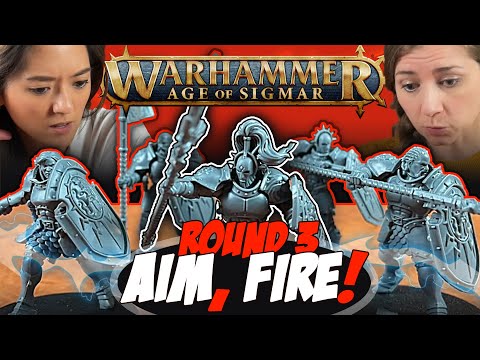
What truly distinguishes Age of Sigmar in players' descriptions is its role as a comprehensive hobby ecosystem. Painting, building, and collecting models feel integral to the experience, not ancillary to it. The Citadel miniatures receive consistent praise for their sculpt quality and expressive character design, making time spent with paintbrush and glue rewarding in itself. Players frequently describe the satisfaction of developing their own color schemes, basing philosophy, and visual interpretation of their chosen faction, turning each army into a personal creative project alongside the competitive or narrative gameplay experience.
Narrative Play and Campaign Systems
The game's Path to Glory narrative system and campaign Battle Packs create a framework where armies develop stories across multiple battles. Players describe immense satisfaction in playing narrative scenarios that build upon previous encounters, allowing casualties to carry weight beyond mechanical impact. The setting's deep lore, supported by novels and army codices, gives context and character to otherwise abstract battles. This narrative layer attracts players who might otherwise find pure competitive wargaming isolating or mechanically sterile.
What Makes Warhammer Age of Sigmar Stand Out
The Balancing Act Between Casual and Competitive Play
Age of Sigmar successfully accommodates multiple playstyles simultaneously. The same rules support tournament play, casual gaming with friends, and solo narrative campaigns. While competitive play has developed recognized meta strategies, the game's structure supports choosing different build philosophies based on how you want to play. Narrative-focused armies can select thematic artifacts and command abilities that competitive players might overlook, making suboptimal choices feel like narrative decisions rather than handicaps.
Accessibility Through Rich Setting and Character
The Mortal Realms setting provides extraordinary visual richness and thematic diversity. Unlike traditional medieval fantasy, the eight Mortal Realms each have distinct visual and thematic identities, allowing players to find armies that genuinely resonate with their interests. From the gothic horror of Shyish to the industrial order of Chamon, faction choice becomes a genuine expression of preference. This diversity has historically encouraged newcomers who might otherwise find wargaming unapproachable to discover an army that speaks to them directly.
Potential Drawbacks
Competitive Meta Narrowing
In third edition's early seasons, competitive tournaments saw dominant strategies emerge that reduced army diversity. Giant-heavy lists and other specialized builds crowded out varied roster construction in competitive play, creating a situation where tournament attendees faced similar army builds repeatedly. While the game's seasonal balance adjustments aim to address this, the gap between narrative and competitive recommendations has grown noticeable enough that players choosing to play competitively may feel constrained compared to narrative-focused players with broader strategic options.
Model Availability and Sculpt Age Disparity
Games Workshop has retired many older Warhammer Age of Sigmar models as third edition launched, leaving some factions with extremely dated sculpts while newer releases dominate. While the company has created free digital war scrolls for retired units, allowing them to remain playable in casual games through Warhammer Legends, the availability and visual disparity can frustrate collectors. Some models essential to certain armies remain in production but feel noticeably older compared to recent releases, creating visual inconsistency across rosters and pressure to continuously update collections.
If You Enjoy Warhammer Age of Sigmar
Players drawn to Age of Sigmar's narrative and hobby-first approach frequently gravitate toward Warhammer Age of Sigmar: Soulbound, the RPG set in the same Mortal Realms. It provides deeper character development and roleplay opportunity within the same world reviewers love. For those interested in the tabletop miniatures experience but preferring smaller scale skirmishes, Kill Team and Necromunda deliver similar Games Workshop polish with faster gameplay. Players valuing the hobby ecosystem should also consider Warhammer: The Old World, which serves a similar role in classic fantasy while offering different mechanical approaches. Finally, those who appreciate the faction diversity and aesthetic identity of Age of Sigmar might explore other miniatures games like Infinity or Malifaux, which offer distinct visual factions with deep model design philosophies.
What Reviewers Are Saying
"We're finally playing our first big game of age of sigmar we're going to take everything we've learned so far and try to properly implement it in our first game but because we're learning we don't always get it 100 right so new players of any game can expect to make mistakes and that's totally okay."
— Watch It Played
"There's a lot of smartness in the design of the core game and I really like all that stuff...there's just a lot of cool fun things to play with in that universe and like I said I like the path to glory narrative stuff and all that's things."
— Drive Thru Games
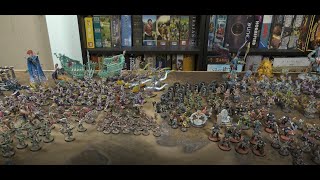
"I really enjoy the hobby side of the game you can see yeah you can see it that's all ages sigmar stuff over there I really enjoy that that to me is part of the game I like that I like most of the novels and stuff that I've read in the universe."
— Drive Thru Games