














Tianxia Deep Dive
What the Community Thinks About Tianxia
Tianxia is a worker placement game from BND set in the Warring States period of ancient China. It was designed by Antonio Petrelli with Daniele Tacini. Reviewers generally agree that it is a sharp, demanding Euro with strong production and a tight, interlocking set of actions. The disagreements center on how much of the game's tension comes from the rules and how much comes from the non-player opponents that fill the table when fewer people play.
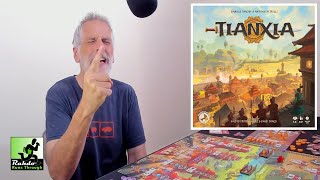
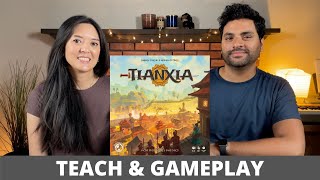
The Dice Tower's The Dice Tower placed Tianxia in its top ten of 2025 and framed defense against the northern invaders as the element that separates it from other Euros. Board Gaming Ramblings scored it 7.5 and praised its action selection, while cautioning that the automated opponent in the two-player game feels clunky. 3 Minute Board Games described it as a game with a lot happening on the board and only a dozen real actions over the course of play. Rahdo Runs Through offered a full solo playthrough and a detailed walkthrough of the game's pressure points. In its June 2026 roundup, Rahdo Runs Through praised the design and production but placed Tianxia at number 13 because of the luck inherent in the neutral player system.
Core Mechanics That Define Tianxia
Worker Placement
Each player has three worker discs per round across four rounds, which means roughly twelve meaningful actions for the whole game. Those actions take place in several zones. Placing a disc in a region costs a coin if another player is already there, and the region may offer a converter, such as rice into silk. Port regions let a player ship finished goods to passing boats, and building spaces let a player place a governor by paying the required wood. The walls, towers, and troop actions sit alongside these, so each placement can serve more than one goal. 3 Minute Board Games noted that the game is constantly pulling players in different directions because walls, shipping, and governors all compete for the same few actions.
Barges add a smaller layer to this system. Placing a worker on a barge costs gold, displaces the worker already there, and grants the matching resource. Workers who are pushed off a barge become merchants, which unlock new powers later in the game. Rahdo Runs Through described these barge turns as tiny actions that often consume an entire turn, which is one of the game's more debated design choices.
Resource Management
Tianxia runs on gold, three raw resources, and three types of finished goods. Reviewers describe the economy as deliberately tight. 3 Minute Board Games warned that players will never have enough resources or gold to do everything they want, so it is risky to overspend on any single thing. Rahdo Runs Through showed how a single coin can be the difference between saving a governor and losing one, and how the payoff for a large shipment can feel very rewarding. The 3 Minute Board Games review singled out the feeling of delivering a big shipment to a boat and collecting a stack of rewards, then immediately spending that wealth on the next priority.
The Tianxia Experience
Constant Pressure and Scarcity
Tianxia rarely lets a player feel comfortable. Rahdo Runs Through described turns where the only option is to spend an entire action on a single coin or stone because that small step protects a governor from invaders. Each round, the Nomad invasion cards push forward, and the defense a player builds may not hold. Rahdo Runs Through observed that a player can work hard all round and still see a house destroyed by the end of the round, which makes the pressure feel personal even in a multiplayer game.
Brain-Heavy Decision Making
Board Gaming Ramblings summed up the core feeling with a short remark that the game gives the player "the brain thing." The reviewer enjoyed the action selection and the planning required to line up multiple turns. Rahdo Runs Through described a similar experience in which each action must be sequenced against upcoming invasions, the outcome of other players' placements, and the objectives a player is chasing. The result is a game that rewards careful planning and punishes players who have to abandon a line of play.
What Makes Tianxia Stand Out
Secret Objective Cards
3 Minute Board Games named the secret objective cards as the best part of the game. Players can discard an objective at any time for resources, which can be more valuable than its victory points in a tight game. Because the objectives are hidden, the final standings only become clear once the cards are revealed, which keeps every player in contention until the end.
Defense Woven Into Worker Placement
The defense of the Great Wall is one of the most praised parts of Tianxia. Players earn points for contributing to the defense whether or not the invaders are stopped, and the player who contributes the most earns the largest bonus. Rahdo Runs Through explained that a player can gain a few points just for sending a single soldier, which encourages cooperation even in a competitive setting. The Dice Tower highlighted the same tension, describing the defense as a cooperative element inside a competitive game.
Potential Drawbacks
Luck From the Neutral Player
The most consistent criticism comes from Rahdo Runs Through, which found that the neutral player in the two-player game can block key actions in ways that are hard to predict. The same reviewer noted that the solo mode uses a more predictable version of the neutral player, and wished the solo rules applied to two-player games as well. The reviewer's ranking reflects the official rules, which Rahdo considered more luck-driven than the design deserves.
The Lion Collecting Minigame
3 Minute Board Games argued that the lion collecting minigame, which awards points for each unique lion claimed from tracks and regions, could have been cut without anyone noticing. The reviewer also felt the board can make the game look more sprawling than the twelve-action optimization it actually is. Rahdo Runs Through raised a related concern that barge turns feel anemic when they consume a whole turn by themselves.
If You Enjoy Tianxia
Players who enjoy the action selection and tight planning of Tianxia may find similar satisfaction in Tileto, which 3 Minute Board Games noted comes from the same designer. Players who want a smaller and tighter action selection game can try The White Castle, which 3 Minute Board Games recommended as a more focused alternative. Players who like the way the Great Wall defense ties individual scoring to a shared threat may also enjoy other worker placement games built around a cooperative deadline the group must meet even while competing for points.
What Reviewers Are Saying
"I also feel that people may look at the board and think it's something more than a 12 action optimization game. It looks more sprawling and epic than it plays."
— 3 Minute Board Games
"Some people mistakenly think this is a semi-cooperative game. It is not. Everybody's in for themselves. There's no way that the game can beat us all."
— Rahdo Runs Through
"The defense of China is a cooperative piece of a competitive game."
— The Dice Tower