





Message in a Bottle Deep Dive
What the Community Thinks About Message in a Bottle
Message in a Bottle arrives with a striking concept: a word-building party game wrapped in a literal bottle component. Reviewers embrace what works about it, yet expose genuine friction points that hold the game back. Tabletop Tokki praises it as a "fun little activity word game" with appealing party-game energy, but notes the plastic bottle's fatal design flaw: the dice become distorted and obscured based on viewing angle, forcing players to abandon the novelty and roll dice on the table instead. Conversely, Our Family Plays Games presents a starkly divided response. One video celebrates the game's speed and social word-building vibe, while another decries it as "frustrating" and "stupid," citing unclear victory conditions, fragile component visibility, and the nearly impossible task of forming valid words from four random letters under time pressure. The game promises accessible quick fun but often delivers anxiety rather than joy.
Core Mechanics That Define Message in a Bottle
Word Building
At its heart, Message in a Bottle asks players to form valid words using all four letters that emerge from the bottle. Tabletop Tokki observes that this is "harder than you would think, especially with the pressure of the time." The mechanic is clean in concept but unforgiving in execution; reviewers note the vocabulary ceiling is steep, and the random letter combinations rarely yield obvious words. The speed element amplifies the cognitive load, turning a simple premise into genuine mental strain for many players.
Speed and Turn Resolution
The game operates as a race: whoever first calls out a valid word using all the letters wins the round and earns a token. This speed-based resolution creates the energetic party-game energy some reviewers praise. However, the same mechanic breeds frustration when players struggle to find any valid word at all within the time window, or when they form words only to discover peer disagreement about validity. The "first to call it out" rule means confidence and quick thinking matter as much as vocabulary depth.
The Message in a Bottle Experience
Energetic Social Word-Game Fun
When the bottle mechanism works as intended and letter combinations cooperate, reviewers describe a lively, inclusive party atmosphere. Tabletop Tokki finds the game to be "a fun little activity word game" with genuine appeal for casual gatherings. The bottle component itself generates novelty and aesthetic charm, drawing players in with the promise of a unique physical interaction. For groups comfortable with word games and confident in their vocabulary, the timed competition can create moments of genuine playfulness and quick-firing creative thinking.
Frustration from Friction and Unclear Expectations
The darker reality emerges for reviewers who encounter the game's design and rule-clarity problems. Our Family Plays Games calls it "stupid" and "frustrating," highlighting rules so unclear that players lose faith in how to score or what constitutes a win. The bottle's optical illusions make player frustration worse: nobody can reliably see what letters are actually showing, so calling out words feels arbitrary. Combine that with the arbitrary difficulty of random letter combinations, and the game becomes a losing battle for inclusive fun. For families or casual players, the cognitive load and component failures drain the social energy that should define a party game.
What Makes Message in a Bottle Stand Out
The Bottle Component and Physical Novelty
Message in a Bottle's most distinctive feature is also its most vulnerable: the clear plastic bottle that serves as both die-shaker and visual display. Tabletop Tokki speaks warmly about this element, appreciating the novelty of "shaking it up" as a core interaction. The bottle generates immediate table presence and appeals to players seeking games with memorable physical components. The dice-inside-bottle concept feels fresh, and the tactile shake-and-reveal action would be genuinely fun if the engineering supported it. Unfortunately, the angle-dependent distortion undercuts that promise, forcing players to use traditional dice rolls and losing the game's signature gimmick.
Lightweight Accessibility and Party-Game Speed
Message in a Bottle positions itself as a quick-play word game for 2 to 6 players in 10 to 15 minutes. This lean profile appeals to reviewers seeking efficient social games. Tabletop Tokki appreciates the speed and light weight: no setup burden, fast turns, and a game that doesn't demand hours of table time. For players accustomed to heavier games, the accessibility is refreshing. The core rule is simple enough for children to grasp: make a word from four letters and say it first. The execution is what stumbles.
Potential Drawbacks
Component Design Failures and Visibility Issues
The plastic bottle is the game's literal centerpiece, yet it fundamentally fails at its job. Tabletop Tokki directly observes that the bottle "distorted or obscured the dice" based on player perspective and angle. "Unfortunately, that meant we just had to take the dice out and roll them on the table, which was not nearly as fun, but was a lot more functional." The component that should delight becomes an obstacle, forcing workarounds that strip away the game's main point of differentiation. For a game whose entire gimmick rests on the bottle mechanic, this is a critical failure.
Arbitrary Word Difficulty and Unclear Rules
Our Family Plays Games zeroes in on a deeper problem: the game asks players to form words from four random letters, and the combinations are often simply not compatible with common vocabulary. One reviewer calls it "impossible" and claims "I'm not going to come even close to a word," while another adds that the rules around valid words and victory conditions are "unclear." When letter combinations yield no obvious words, the timer becomes a punishment rather than a mechanism. When rules are ambiguous, players argue about validity instead of celebrating solutions. The game's core mechanic, finding a word that uses all four letters, becomes less a creative challenge and more a frustration wall.
If You Enjoy Message in a Bottle
Reviewers suggest word-building games like Codenames and Word Slam as alternatives that offer similar social energy with clearer rules and more satisfying payoffs. Codenames in particular separates the vocabulary challenge from the speed component, allowing teams to cooperate while the clue-giver stays focused on cryptic language rather than letter combinations. Word Slam uses a different mechanic entirely but preserves that party-game enthusiasm reviewers appreciate in Message in a Bottle's best moments. For players drawn to the lightweight, timed energy of the game, exploring established word party games with better-tested rules and components may scratch that itch more reliably.
What Reviewers Are Saying
"Message in a Bottle is a word building game with a speed element. You roll four dice and try to make a word that uses all of the different letters, harder than you would think, especially with the pressure of the time. One of the things that was kind of a letdown were the components. The game comes in a clear plastic bottle and you're supposed to shake it up and then put it on the table to show what the four letters are. But based on what angle you're at, it kind of distorted or obscured the dice that were in there. Unfortunately, that meant we just had to take the dice out and roll them on the table, which was not nearly as fun, but was a lot more functional."
— Tabletop Tokki
"That game is so frustrating. It is so frustrating. Frustrating. I mean, it's asking you, it's giving you four dice with letters on it and it's telling you find the a word that has all four dice as four words in it. Letters. Letters. It's impossible. I'm not, I don't, I'm not, I don't have that much of a vocabulary. It is crazy. I would never, I would never win that game. I won't even come close to a word."
— Our Family Plays Games
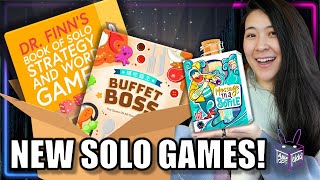
"Now, that game is very unique in its look. It's a cute little clear bottle with a cork and you've got a little scroll thing in it, and you've got your little dice with letters on it, and you got your little gems. And when you see it, you're like, Oh, wow. This game is so cute. It's so unique. Let's play it."
— Our Family Plays Games