








Lunar Skyline Deep Dive
What the Community Thinks About Lunar Skyline
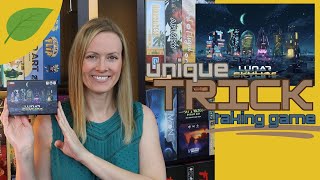
Reviewers largely agree that Lunar Skyline, the trick-taking card game from Dead Alive Games, feels fresh in a genre many players thought was settled. Kimberly at Tabletop Tolson first covered a pre-production copy and says they could not change a thing about it, while a later video calls it their new favorite card game. Brains On Games, hosted by Dr. Brian McDonald, frames the game as a follow-up to Lunar Rush from the same publisher and places its complexity just above a light game. BoardGameGeek highlights the beautiful cards and the way the game rewards careful reading of its icons. The Gen Con coverage on Rolling Dice & Taking Names reports that the game was better than the hosts expected after a table session, though they also found it demanding.
Where opinions diverge is on how heavy the thinking becomes for casual players. Enthusiasts describe a tight, rewarding puzzle, while more cautious voices worry that the bidding and double-suit logic may overwhelm families and newcomers. Pair Of Dice Paradise's buyer guide also singles out the design as a clever take on the genre, describing it as trick-taking with more twists than a snake on a roller coaster.
Core Mechanics That Define Lunar Skyline
Trick-Taking
Trick-taking sits at the heart of Lunar Skyline, but reviewers stress how much the two-suit card design changes the usual rules. Each card carries two symbols, and players hold twelve cards at the start of a round. Before play begins, every player secretly selects one card from their hand as a bid card and reveals it simultaneously, which sets the number of tricks they aim to win. The player with the highest bid leads first, and everyone must follow the led card using either of its symbols if they can. Kimberly at Tabletop Tolson explains that the highest number wins the trick, and that a later card of equal value beats an earlier one. Aces have a single symbol and can be played high or low, though a led Ace must be low. Brains On Games notes that the game has no trump suit, so the result depends on the numbers and symbols that happen to be in play.
Designer Charlie McCarron created the game, and Dead Alive Games published it. The double-suit structure is the feature reviewers most often name when explaining why the game feels different from other trick-takers.
Compound Scoring
Reviewers repeatedly describe the scoring as layered. Points come from several places at once: each trick that contains a symbol matching the bid card earns a point for that symbol, completing the right number of tricks lets a player claim a contract, and buildings added to the player's skyline are worth bonus points at the end based on how many different ones they hold. Smuggled cards count as tricks for some contracts, and bonus cards become available to the first players who meet their conditions. Overbidding costs two points for each trick above the bid, so the best outcome is usually a precise landing on the number a player predicted. Kimberly at Tabletop Tolson describes the result as a sweet spot that players aim for across rounds, and the hosts recommend playing three rounds and averaging the totals so that one bad round does not decide the game.
The Lunar Skyline Experience
Tense Predictive Tightrope
Playing Lunar Skyline feels like walking a narrow line between ambition and restraint. Because the bid is hidden until everyone reveals at once, players must estimate how many tricks their hand will win before the other cards come out. Brains On Games describes the tension well, noting that players must decide not only how many tricks to aim for but how quickly they can win them to race rivals for a contract. Rolling Dice & Taking Names calls the game thinky, and that quality is part of the appeal for many reviewers. The pressure builds as the cards run out and each player must decide whether to spend a card to force a win, shed an unwanted suit, or hold back and accept a smaller result.
Snappy, Surprising Delight
Despite the strategic depth, reviewers describe the table feel as quick and playful. Kimberly at Tabletop Tolson, in a holiday party video, calls the game really fast and fun and says it is clever in a way few trick-takers manage. Hands move quickly, and a typical game runs about fifteen to thirty minutes. Surprises come from the unusual rules: a card that cannot follow suit becomes a trick for its owner, a tie can be broken by the most recent play, and an Ace can swing a hand from low to high at the right moment. BoardGameGeek adds that the game produces moments where players wonder how an opponent is winning, a sensation the reviewer found enjoyable rather than frustrating.
What Makes Lunar Skyline Stand Out
Two Suits on Every Card
The most consistently praised feature is the way each card combines two symbols, which turns the familiar follow-suit rule into a puzzle. Kimberly at Tabletop Tolson argues that this icon overlap gives the game its unique character, and that a player keeps a reference card in front of them to track which symbol pairs appear on each color. Brains On Games observes that because every card carries two suits, shedding a suit is much harder than in a traditional trick-taker, which forces players into interesting choices. The result is a trick-taking game where the question is never simply whether to follow suit, but which of two symbols to match and what that match means for the points.
Smuggling Off-Suit Cards
Smuggling is the feature reviewers single out as genuinely new. When a player cannot follow the led card, they may play any card and place it sideways in their resource area, where it counts as a trick. Kimberly at Tabletop Tolson says they have never seen anything like it in a trick-taking game, and BoardGameGeek notes that the design makes it harder than expected to avoid having cards that cannot be played. Brains On Games explains that smuggled cards often force players over their bid, which makes the mechanic both a tool and a trap. Players who learn to use smuggling deliberately gain access to scoring they could not otherwise reach.
Potential Drawbacks
A Steep Early Learning Curve
Several reviewers warn that the game asks a lot of new players. Rolling Dice & Taking Names reports that their first session was extremely demanding, and they still felt unsure of the best strategy after three rounds. Brains On Games rates the game as medium complexity and notes that it takes time to learn how to predict how many tricks a hand will win. Both sources suggest that experienced trick-takers will adapt quickly, while families or casual card players may need several sessions before the decisions feel natural. The hosts of Rolling Dice & Taking Names also worry that the game might be too much for players who want a simple card night.
Bidding and Iconography May Not Suit Everyone
Some reviewers note that the bidding system is not for every trick-taking fan. Brains On Games observes that players who prefer straightforward trick-takers may dislike committing to a hidden bid, though the host personally enjoys the mechanic. BoardGameGeek reports that the icons become easy to read after one game, but the reviewer was not sure the design is fully color-blind friendly because each card relies on multiple symbols. Brains On Games also notes that their review copy was a prototype without a score track, so the group used poker chips to record points. Those details are not flaws in the finished product, but they suggest that the presentation of the final game will matter for accessibility and table flow.
If You Enjoy Lunar Skyline
Players who enjoy Lunar Skyline's two-suit trick-taking will find a different kind of puzzle in The Crew. Kimberly at Tabletop Tolson credits The Crew with introducing them to cooperative trick-taking, and the two games share the focus on reading the table through the cards in your hand.
Players who appreciate the hidden bidding and the way bids shape scoring should look at Lunar Rush from Dead Alive Games. Brains On Games describes it as a game where players spend victory points to determine turn order, a resource tension that echoes Lunar Skyline's choice of which card to commit as a bid.
For a traditional baseline, Spades offers the partnership trick-taking that many reviewers grew up with. Kimberly at Tabletop Tolson recalls playing Spades with family, and the comparison makes Lunar Skyline's double suits and smuggling rules easier to appreciate as departures from a familiar structure.
What Reviewers Are Saying
"It not only has dynamic trick taking at the heart of this game, it also has a unique take on trick taking, the way that the cards are essentially made up, which is the suits and the icons that are on the cards in addition to the numbers."
— Kimberly, Tabletop Tolson
"I really do like the bidding mechanism in most trick takers, but this one is so much more strategic. It matters so much more because you're not just determining whether or not you're going to earn points, because you can earn points if you don't make it to your bid."
— Brian McDonald, Brains On Games
"Y'all, it's thinky. It is super thinky. It took us three rounds, and I still don't know the strategy."
— Rolling Dice & Taking Names