






















Lunar Rush Deep Dive
What the Community Thinks About Lunar Rush
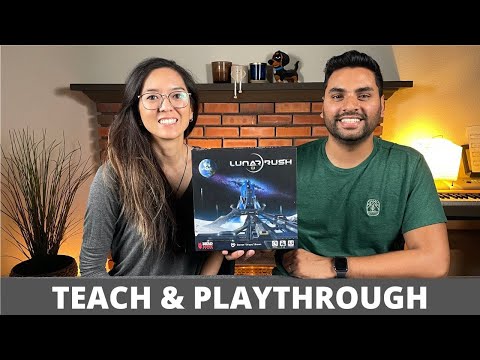
Reviewers describe Lunar Rush as a hidden gem that went under the radar despite its sophisticated design and engaging gameplay. The consensus is that this Steven Skippy Brown design from Dead Alive Games deserves far more attention than it receives. While the game operates as a pure economic engine with a space-mining theme, reviewers consistently praise its execution: the simultaneous-play mechanics keep energy high, the bidding system creates meaningful tension, and the strategic depth rewards forward planning. Some reviewers found themselves championing the game despite not being immediately drawn to it, noting it as a "slow burn" appreciation that grew stronger over repeated plays. Before You Play and Hungry Gamer both highlighted the game's impressive speed despite its apparent complexity, while Brains on Games called it his favorite game of 2023 and praised the asymmetric expansion as bringing even more replayability and strategic variety to the base design.
Core Mechanics That Define Lunar Rush
Bidding for Initiative Using Victory Points
At the start of each round, players bid using numbered cards (one through five) to determine turn order, but the twist is that they are bidding their own victory points. The highest bidder spends the most points to go first and claim the best rocket routes to and from the Moon, while lower bidders spend less but act later. This creates immediate strategic tension: spending victory points to gain advantage now means losing points from your final score. The multiplier system in later rounds amplifies the cost, making late-game position choices even more painful. Reviewers noted that what makes this mechanic particularly clever is that there is value in being the low bidder. Everyone gets something, but the order matters significantly for which resources you can claim.
Simultaneous Play Across Multiple Phases
Once players have claimed their routes, most actions occur simultaneously. Workers are placed on the Moon base at the same time; resources are produced in parallel; ships are loaded without waiting for others. This design choice keeps the game flowing at an impressive pace, with reviewers noting that even at four players, teaching included, the game completes in under 90 minutes. The simultaneous structure means that the interaction comes not from turn order but from the consequences of collective shipping and selling: when multiple players ship goods to Earth in the same round, they flood the market, driving prices down. Every player must anticipate not just their own production chain but how the actions of others will ripple through the economy.
The Lunar Rush Experience
Economic Tension and Market Manipulation
The game feels like a stock market simulator wrapped in a space theme. Players manage the price of four different resources (ore, shards, bars, and crystals) through their selling decisions. Each resource sold moves a price tracker down; the more common the commodity becomes, the less it's worth. Reviewers described the satisfaction of timing your sales: should you rush your goods to market early to lock in high prices, or wait and risk someone else flooding the market before you? The variable market boards mean the economic curves shift by game, forcing different strategies each session.
Intense Forward Planning and Strategic Depth
The game demands players think multiple turns ahead. Sending resources up to the Moon on a slow route means they won't arrive for three turns, but when they do, you'll have a large shipment to process. This creates a layered strategy: what do I need in three turns? What upgrades will allow me to process it? What will the market look like when it finally lands? Reviewers found this rewarding; the game is described as having substantial decision weight, where early choices compound into late-game advantages. The almost complete absence of luck (only one die roll possible) means experienced players have a clear edge, but the challenge system helps newer players compete.
What Makes Lunar Rush Stand Out
Elegant Route-Drafting System with Speed-Payload Tradeoffs
Rather than paying resources to ship goods (as in most pickup-and-deliver games), players choose between three route speeds: fast delivers immediately but carries only two items; medium takes a turn and carries five; slow takes two turns but carries nine. This simple framework generates endless strategic tension. Do you take the fast route to hit market prices before they drop, or the slow route to move volume and accept lower prices? The tradeoff appears simple but compounds across seven rounds and multiple ships, creating a signature tension that reviewers consistently singled out as fun and clever.
The Speed and Elegance of Simultaneous Play
Many euro games feel like solitary puzzles played in parallel; players barely interact until final scoring. Lunar Rush achieves meaningful interaction through its market: every action you take affects prices, which affects what other players can earn. Yet the simultaneous phases keep turns moving fast. Reviewers emphasized that this is rare—most strategic games require extensive downtime between turns. Here, downtime is minimized without sacrificing depth. The game manages to feel both economically rich and briskly paced, which is harder to achieve than the stark reviews suggest.
Potential Drawbacks
Almost No Randomness Favors Experienced Players
With nearly no luck in the design, there is essentially one roll (for a rare tie-breaker situation). This means the first few plays carry a learning curve; experienced players will have a substantial advantage over newcomers. One reviewer noted that while a "beginner" card and challenge cards help level the field, first-time players should expect to be outmaneuvered by veterans who understand the economic curves and upgrade timing. This is a feature for some gamers and a barrier for others.
Requires Commitment to the Moon Wonders Module for Long-Term Engagement
Several reviewers noted that without the Moon Wonders expansion module (which adds a card-drafting sub-game for late-game bonuses), the base game can feel like players fall into a routine strategy each turn. The wonders force mid-game pivots and demand portfolio diversity, which keeps late-game decisions fresh. While the game is perfectly playable without it, some felt the base design benefits significantly from the optional module to prevent strategy staleness in repeated plays.
If You Enjoy Lunar Rush
Players who enjoy Lunar Rush's bidding mechanism will find similar satisfaction in Speculation, another Reiner Knizia design where stock market manipulation and economic tension drive the game. Those who appreciate the simultaneous resource-management system and the engine-building aspect—gradually upgrading your Moon base to produce more valuable goods—will enjoy Splendor or Century: Golem Edition, which share the satisfying progression of building production engines. For fans of the shipping and logistics puzzle combined with market forces, Food Chain Magnate offers a far heavier economic simulation with similar themes of managing supply lines and market prices.
What Reviewers Are Saying
"Everyone's going to get something in the end, so there is actually value to being the low bidder in some cases, and I think it's just a very fun part of the game."
— Hungry Gamer
"This game is fast, you're going to be playing this game in under an hour once people know what you're doing, even at max player count, and that to me is killer."
— Hungry Gamer
"There's a lot of great choices and decision-making to be made in it, and I think there's a lot of value there and usually you're not going to be able to just use the stuff you're already good at making to build it, so it's really a great late-game shift that is being thrown at you."
— Game Night Picks - Pair Of Dice Paradise