
Game Info
Year
Players
2-4
Age
8+
Playtime
60 min
Publisher
FGAFGCB
Collection
Ratings
Creator Score
Mechanic profile
Waiting on more creator content
Vibe profile
Waiting on more creator content
Description
No description available.
Featured Videos

Ask a Rules Question
Images

GID0447199.jpg

GID0447199_thumb.jpg
All mentions
Browse transcript mentions, sentiments, pros/cons, mechanics, topics, quotes, and references.
Total mentions: 2
This page: 2
Sentiment:
pos 0 ·
mix 2 ·
neu 0 ·
neg 0
Showing 1–2 of 2
Video O1KleEMFzME
Review at 0:03 sentiment: mixed
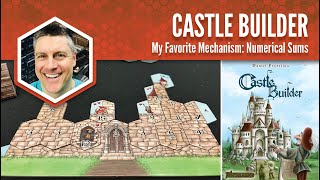
Click to watch at 0:03 · YouTube ↗
Overall sentiment (raw)
mixed
Pros
- Neat concept
- Very simple mathematic concept
- Clever mechanism
- Satisfying to build up
- Advanced rules work just fine
Cons
- Basic game becomes impossible to play due to rules
- Had to stop playing due to lack of options in the basic game
Thematic elements
- Building a castle
Comparison games
none
Mechanics (from transcript analysis)
- Hand Management — Players have a hand of tiles and can discard tiles to modify the number required for placement.
- Rule Modification — The core rule of tile placement can be modified by check marks on tiles or by discarding tiles.
- Set Collection — Players collect tiles with numbers on them.
- Tile Placement — The game is a tile placement game where tiles are placed between two other tiles.
Video topics + discussion points
No key topics recorded for this video.
Quotes (from this video)
- Really clever mechanism. I like the this idea of building up. Really satisfying.
- we found halfway through the game, two of us in a four-player game, based on the remaining tiles, it was impossible for us to place a tile based on that rule.
- Castle Builder, neat concept, very simple mathematic concept, very odd that the basic game uh becomes impossible to play based on the rules that we understood.
References (from this video)
No references stored for this video.
Video lB5vtQe4V4o
Board Game Dad Review at 0:00 sentiment: mixed
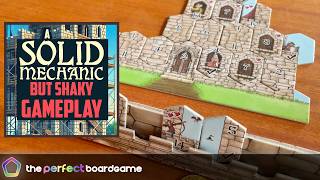
Click to watch at 0:00 · YouTube ↗
Overall sentiment (raw)
mixed
Pros
- Innovative core mechanic that requires building on a scaffold of values to form valid sums, creating a distinctive puzzle feel
- Accessible and family-friendly presentation that reinforces basic arithmetic and numerical literacy in a playful context
- Short round structure and clear visual cues help new players grasp objectives quickly
- The concept encourages experimentation with different tile shapes and layouts, offering varied play experiences
Cons
- Track movement and coin/trophy incentives can distract from the primary objective of castle building and can feel orthogonal to the core puzzle
- Rack management and tile draw randomness can create a sense of luck influencing outcomes more than strategic choices
- Stealing or competitive bonuses tied to coins can lead to frustration if a player is unlucky with draws or rack contents
- Some rules interactions, such as optional discard adjustments, feel uneven between players or outside the main mechanic focus
- The balance between elegance of the sum mechanic and the extraneous track/market elements sometimes tilts toward filler rather than pure castle construction
Thematic elements
- architecture, numeracy, spatial reasoning, and light competitive feedback
- castle-building competition with a medieval-fantasy flavor, emphasizing stacking and architectural layout
- procedural puzzle with a scoring track and readable objectives
Comparison games
Mechanics (from transcript analysis)
- air restriction — tiles cannot be placed so that air directly supports a tile beneath; air must be avoided unless supported by a valid sum or by a special check mark tile
- gem tokens and bonuses — certain placements grant gems that provide extra movement on the track or grant incidental benefits, such as taking tiles from opponents or influencing the market of available tiles
- market and coin dynamics — coins and certain face-up market tiles offer strategic choices, affecting both the active player and others by shifting priorities or granting advantages
- Scoring track advancement — points are earned by placing tiles on higher floors; advancement on a track yields potential bonuses and triggers additional effects such as gem tokens
- sum-based placement — each placed tile must equal the sum of the two tiles directly beneath it, creating a scaffold of numeric relationships that must be respected as the structure grows
- Tile Placement — players take turns either drawing two tiles to add to their rack or placing a tile from their rack onto their personal board, with placement restricted by the underlying sums and air support rules
- Track Advancement — points are earned by placing tiles on higher floors; advancement on a track yields potential bonuses and triggers additional effects such as gem tokens
- variable starting options — optional starting tiles such as princess or prince tiles are introduced to mitigate early rough starts and provide a smoother introduction to the sums mechanic
Video topics + discussion points
No key topics recorded for this video.
Quotes (from this video)
- Castle Builder is really a rather simple game
- I absolutely love the core mechanic of this game
- the core mechanic of building on top of sums that will give you sums
- I wish the game was more Castle Builder and less other stuff
- the track movement is a real distraction for me
- you can discard a tile from your rack in order to make the sum work out
- there are so many cool objectives that could drive gameplay
- it's a game that's flawed but holds potential
References (from this video)
No references stored for this video.
Transcript Navigation
Showing 1–2 of 2