






Umbrella Deep Dive
What the Community Thinks About Umbrella
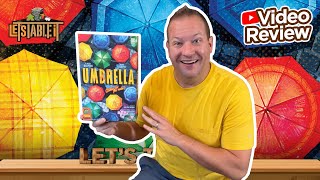
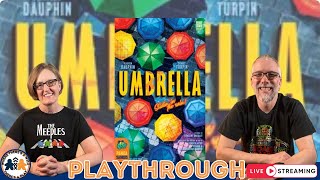
Umbrella, from Pandasaurus Games, is a quick tile-sliding puzzle that reviewers like without quite raving about. The theme is umbrellas seen from above as people cross the street, and you slide them around a 4x4 grid to match patterns. Let's Table It says they like it "probably more than" others do and generally have good things to say about it. The Board Game Garden, whose copy was sent by Pandasaurus, calls it "a wonderful puzzly game" but admits there are other puzzly games they enjoy more. Where There's A Wilz, There's a Play covered it several times and calls it one of their weeknight games. Cardboard Crew put it on a favorites list and really enjoyed it. Reviewers disagree about how much the players actually interact.
Core Mechanics That Define Umbrella
Pattern Building
Each player has a 4x4 grid of umbrellas and a set of patterns to complete. Where There's A Wilz explains the goal simply: to make a pattern, you need to slide the umbrellas around until they match it somehow. Completing a pattern scores it, and Tantrum House notes that the scoring boards come in levels one through four, double-sided, with different ways to score, so you can start simple and add complexity later. Where There's A Wilz found that the game rewards planning, describing always thinking two or three steps ahead about which umbrella to move where.
Tile Sliding and the Waiting Areas
The sliding is where Umbrella gets clever. Tantrum House explains the four waiting areas: a center one everybody shares, a personal one for each player, and ones between each pair of neighbors, which only the players on either side can use. On your turn you take an umbrella from a waiting area and slide it into your grid, and the umbrella pushed out the other side goes into a waiting area. The Board Game Garden calls it "a Sliding Puzzle," and Let's Table It points out you have more control over your personal zone, where you can plan with the tokens you keep there. Clearing that zone is rewarded, because holding umbrellas there just stalls the game.
The Umbrella Experience
Quick, Light Puzzle Play
Umbrella is fast. The box says 30 minutes, but Where There's A Wilz says their two-player games took probably 10 to 15, and a later playthrough wrapped up in about 15. They call it a weeknight game: easy to get out, easy to play, easy to score, and it "takes a little bit of thinking on your part, but not a whole lot," so it won't drain you after an exhausting day. For a self-described non-gamer, it was quick to pick up, and the second game was much easier than the first.
A Picture-Perfect Pattern
Cardboard Crew connects the puzzle to the theme: it reminds them of an aerial view of crosswalks full of people holding umbrellas, and playing feels like trying to take a picture of the perfect pattern at the right time. Tantrum House finds the art, by Vincent Dutrait, fun to look at and very colorful, while Where There's A Wilz calls the artwork very minimal but likes that each color is very identifiable and that the tokens are color blind friendly, with the red ones marked by a circle. They and Let's Table It also point out the dual-layer boards, which keep the umbrellas and score tracker in place as you slide.
What Makes Umbrella Stand Out
Interaction in a Puzzle Game
The Board Game Garden highlights something unusual for the genre: there is a lot of player interaction, which is not something you often see in puzzly games. Most puzzle games only interact through drafting something another player wanted, but in Umbrella the spaces you slide from sit between you and your neighbors, so you are sharing them with the players to your left and right. Let's Table It likes that interaction too, and notes that clearing your personal zone also makes more umbrellas available for everyone.
A Clever Movement Puzzle
What stays with Where There's A Wilz is the movement itself: take an umbrella from one side and it pushes the row one way, take it from another and it goes up or down, and the fun is working out where you can move things to get each umbrella into the right spot. Cardboard Crew sums up the feel as a classic Rush Hour sliding puzzle "slammed into a multiplayer pattern builder."
Potential Drawbacks
Spatial Reasoning Isn't for Everyone
Where There's A Wilz's only real problem with the game is spatial reasoning. One of the hosts is not a spatial person and warns that it may be a problem for players who struggle with spatial puzzles. They add some encouragement: the more they play spatial games, the better they get, and one of them was soon planning several moves ahead. Still, players who struggle to picture how a slide will shift a whole row may find the first games frustrating.
Mostly Multiplayer Solitaire
Not everyone finds the interaction as strong as The Board Game Garden does. Let's Table It describes Umbrella as mostly "a multiplayer solitaire game with minimal player interaction," and says you might like it if you are okay with that. The shared waiting areas give you some control over what your neighbors can take, but the game is still mostly about your own grid. Where There's A Wilz also had not yet tried the solo mode, so how well it works alone is still an open question from their coverage.
If You Enjoy Umbrella
Let's Table It says Umbrella has the simple rules and feel of Azul: mostly your own puzzle, with a little interaction around the edges. The Board Game Garden puts it in the same family as Calico and Cascadia, puzzly games that work well solo and can also be played multiplayer. For the sliding itself, Cardboard Crew's comparison is the classic Rush Hour.
What Reviewers Are Saying
"It has some more of those simple rules, kind of like an Azul or a Sakara type feel, which is mostly the fact that you are playing kind of a multiplayer solitaire game with minimal player interaction. If you're okay with that, then you might like Umbrella, and yes, I am okay with that, and that's why I generally have good things to say about this game."
— Let's Table It
"I think it's the movement of the tiles or the tokens is really clever. Just okay, you take it from here, goes that way, take it from there, or up or up and down, and just trying to figure out okay, where can I move this to get this in the right spot."
— Where There's A Wilz, There's a Play
"It's very similar to that. Just imagine you're trying to now take a picture of like the perfect pattern and at the right time, and that's basically what that game gives me. It's almost as if like it was a Rush Hour, like one of like classic Rush Hour, slammed into a multiplayer pattern builder."
— Cardboard Crew