









Trench Crusade Deep Dive
What the Community Thinks About Trench Crusade
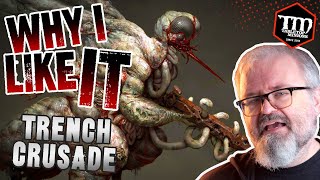
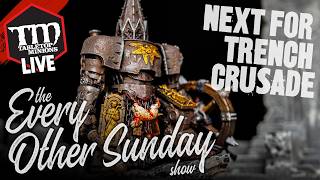
Trench Crusade has impressed Adam from Tabletop Minions, who has covered the game repeatedly and plays it regularly. The game hits a sweet spot for him: it combines solid mechanics, accessible rules, and a grimdark atmosphere that resonates with wargamers seeking something different from the mainstream. Despite being in active playtesting, the game has earned genuine enthusiasm. Adam notes that when discussing this game, certain details deserve clarification, particularly the decision to support miniature-agnostic play officially, which sets it apart from competitors who require proprietary models at tournaments. The free PDF rules, backed by a permanent commitment from the publisher, further reduce the barrier to entry. Trench Crusade impresses largely because of what it refuses to demand, not what it forces upon players.
Core Mechanics That Define Trench Crusade
2d6 Attack Resolution
Every attack in Trench Crusade, whether melee or ranged, resolves using the same streamlined system: roll two d6, compare the result to a target number (typically 7), and resolve the outcome. A roll of 2–6 is a failure; 7–11 is a success; 12 is a critical success. What makes this elegant is the modifier system. Range, cover, elevated positions, and special unit rules adjust the difficulty, but the core mechanic never changes. This simplicity means players remember the rules quickly, but the nuance comes from position and how each unit's special abilities modify that base mechanic. No complex statlines to parse, no card interactions to track, just positioning, dice, and modifiers that make tactical play matter.
Blood Marker Damage System
Instead of tracking hit points, Trench Crusade uses blood markers. When a unit is hit, it accumulates markers rather than taking immediate damage. What makes this system unique is that blood markers are a resource your opponent can spend. They can choose to spend one or more blood markers on a target to add extra dice to their next attack against that unit, allowing them to pick the two best dice from their pool. This transforms damage from a passive stat into an active tactical choice: do you spend resources now to finish a weakened enemy, or preserve them for later? It creates meaningful decision trees in moments that many games automate, encouraging players to think several turns ahead about economy and positioning.
The Trench Crusade Experience
Grimdark Supernatural Warfare
Trench Crusade places players in an alternate-history 1914 where the Crusades never ended. Templars discovered demonic artifacts in Jerusalem, and now, 800 years later, the conflict continues with actual supernatural forces on both sides. The lore is accessible, free lore primers exist on the website, but the atmosphere permeates every game. Whether fielding Church forces, Heretic Legions, or other factions, players exist in a world where grimdark aesthetics and historical weaponry collide with cosmic horror. The visceral appeal lies in the setting's refusal to be purely fantastical or purely historical; it's the blend that makes it compelling.
Campaign Progression and Warband Building
One-off games work fine with roughly 10 models per side, but Trench Crusade rewards campaign play. Warbands can grow to 20–25 models as players invest in faction-specific rosters. Each warband feels distinct because units have specialized roles: some excel at melee, others at shooting, and support roles exist alongside damage dealers. Building a warband is not overwhelming, most factions offer fewer than 10 unique models to choose from, but the growth curve from a small skirmish force to a developed roster creates a sense of investment and progression that keeps players returning.
What Makes Trench Crusade Stand Out
Miniature-Agnostic by Design
Archon Studio explicitly declares Trench Crusade miniature-agnostic and backs that promise. At official tournaments, players can use whatever models they want, as long as bases match specifications. This is not tolerance; it is policy. Most games selling proprietary miniatures require those exact models in organized play. Trench Crusade inverts that: the company sells official STL files for 3D printing and plans plastic kits, but players using Warhammer 40K proxies, historical minis, or kitbashed creations face no official penalty. This design choice democratizes entry and honors the DIY aesthetic that wargaming communities value.
Free Rules, Forever
The complete PDF rules are available for free on the Trench Crusade website, and the publisher commits that they always will be. Archon Studio is producing a hardcover book for Kickstarter backers and plans softcover print-on-demand editions, but the core rules PDF is not a loss leader or limited-time offer, it is permanent product strategy. Combined with the miniature-agnostic stance, this removes nearly every financial and mechanical barrier to trying the game. A potential player can download the rules, assemble a force using whatever minis they own, and play immediately at zero cost beyond what they already possess.
Potential Drawbacks
Dice Variance and Skill Expression
Some players feel that Trench Crusade relies heavily on dice rolls. Every attack requires a roll; every effect that would feel automatic in other games involves a chance of failure. This creates variance, luck can eliminate a unit in a single turn, and positioning alone does not guarantee success. Players who prefer skill-expressive games with minimal randomness may find the dice dependency frustrating. The blood marker economy helps mitigate this by giving players tactical choices, but the baseline randomness is higher than games like Infinity or some historical miniatures rules, where actions often succeed unless circumstances explicitly prevent them.
Active Playtesting and Rules Clarity
Trench Crusade is still technically in playtesting phase despite being in retail. This means rules wording occasionally raises questions about intent. Adam noted specific instances where the phrasing could be clearer or where modifiers interact in ways that feel ambiguous. The community and designers work these out collaboratively, which builds engagement but also means new players might encounter edge cases where the intent is not immediately obvious. This is not a critical flaw, most wargames go through this phase, but players seeking a fully mature ruleset should know the game is still evolving.
If You Enjoy Trench Crusade
Players drawn to Trench Crusade often share an interest in miniature-agnostic play and streamlined activation mechanics. Warhammer 40,000 shares the grimdark aesthetic and deep faction lore, though its rules are significantly more complex and less miniature-agnostic in practice. Mordheim, the classic Games Workshop skirmish game that influenced many modern indie designs, offers similar campaign play and warband building but with dated rules. Space Station Zero, another indie skirmish game, embraces similar accessibility and miniature-agnostic philosophy. Gaslands delivers the indie skirmish experience with vehicular combat and streamlined mechanics, appealing to players who value fast, narrative-driven gameplay. BattleTech offers mech-scale skirmish play at a smaller scale, though with denser rules, it appeals to players who love Trench Crusade's grimdark appeal but prefer science fiction settings and more granular mechanical depth.
What Reviewers Are Saying
"The rules are very easy to pick up because the mechanic for attacking, whether for melee or for ranged attack, is very streamlined. Every action that requires a roll, including ranged and melee attacks, comes down to a 2d6."
— Adam, Tabletop Minions
"I don't know if trenches are a necessity for sure. I mean, a lot of people obviously that are playing Trench Crusade are playing with trenches, but in the rules, there's not really like, oh, but if you're in a trench, you're golden."
— Adam, Tabletop Minions
"We played a game and we enjoyed it. There were some questions we had and stuff like that, but that's always the case with a game that's still kind of technically in playtesting right now. There are just little things that you would read and go, are they wording it the way that I would think?"
— Adam, Tabletop Minions