Game Info
Year
2026
Players
5
Age
14+
Playtime
300 min
Complexity
4.5/5
Collection
Ratings
Creator Score
Mechanic profile
Not enough video data yet
Vibe profile
Not enough video data yet
Description
Complex game depicting warring city-states of Renaissance Italy with blind bidding for mercenary captains and florins-based economy
Ask a Rules Question
Images

GID0452194.jpg

GID0452194_thumb.jpg
All mentions
Browse transcript mentions, sentiments, pros/cons, mechanics, topics, quotes, and references.
Total mentions: 7
This page: 7
Sentiment:
pos 6 ·
mix 0 ·
neu 0 ·
neg 0
Showing 1–7 of 7
Video KTioQuNpnUE
Zilla Blitz Other at 16:21 sentiment: positive
video_pk 101849 · mention_pk 288431
Click to watch at 16:21 · YouTube ↗
Overall sentiment (raw)
positive
Pros
- Fourth game in a series following Here I Stand, Virgin Queen, and Tanto Monta.
- Covers military, economic, political, cultural, and religious elements.
- Map of Italy is the playground.
- Designed for 5 players, with scenarios for fewer.
- Includes an RPG element where players advise rulers.
- External forces can impact gameplay.
- Universally enjoyed by players who have tried it at conventions.
Cons
- Not recommended as a solitaire game at this moment due to a relatively low solitaire rating.
Thematic elements
- Rivalry between Italian city-states during the Renaissance
- Italy, 1494 to 1527
- RPG element where players act as advisors to rulers.
Comparison games
- Here I Stand
- Virgin Queen
- Tanto Monta
- Crusader Kings 3
Mechanics (from transcript analysis)
- Area Control — Map of Italy is the playground, implying control over regions or states.
- multi-player interaction — Designed for 5 players, focusing on interaction between factions.
- Political/Economic/Military simulation — Integrates multiple facets of running a city-state.
Video topics + discussion points
No key topics recorded for this video.
Quotes (from this video)
- This is the first game in Vulko's new recon series.
- The Recon series is a fresh new look at hidden information and hidden movement in wargaming, board wargaming, which has always been a traditional weak spot of the genre.
- This was really the last harrah of cavalry.
- World War I combat is notoriously static, right? batting battering against each other in trenches oftent times, but in this battle in particular was noted for its fluid combat.
- So, this game here is a way for me to take a look at this and play this type of information that I've learned and taking a look at the tactical elements of World War I.
- And once you know how to play one game in the series, you're 85% of the way there to to learning the other games in the series.
- This game has gotten over 1,800 pre-orders, which is a lot for GMT games.
- So, if you're familiar with that game, you'll be familiar with how you'll be you're well on your way to understanding how to play and what Germany 45 and Russia 41 are all about.
- The model,
- this one, the Mariana's campaign with all three games in one box, looks like an amazing idea.
- This is such a great idea. I hope it becomes a reality.
- This is a strategic level look at the Pacific Theater in World War II.
- So, very much a strategic game.
- So, we're going to have a beautiful game about the Pacific Theater.
- The only requirement is that you have a Noble Knight account.
- All you have to do is post a comment down below that talks about the game you're playing now or the last game that was on your table.
References (from this video)
No references stored for this video.
Video xmrrumEnMho
Beyond Solitaire Interview at 0:51 sentiment: positive
video_pk 81532 · mention_pk 202993
Click to watch at 0:51 · YouTube ↗
Overall sentiment (raw)
positive
Pros
- Offers a strong sandbox of agency with meaningful strategic choices for players
- Rich Machiavellian flavor with historical inspiration and backstory
- Espionage and war dynamics are more varied and interactive than in earlier games
- Parallel Florin economy and patronage system add depth and variety
- Variable impulse order and devious diplomacy create tense, dynamic play
- Patronage and ruler mechanics provide varied replayability and characterful moments
Cons
- Likely to be a hefty, long commitment; described as an all-day game
- Complex rules and numerous interacting systems may be challenging for new players
- Under active development and testing; some features may shift before final release
Thematic elements
- politics, economics, conquest, and Machiavellian backstabbing
- Renaissance Italy during the Italian wars, 1494 to 1527
- Machiavellian, backstabby political intrigue with emphasis on strategy and agency
Comparison games
- Here I Stand
- Virgin Queen
- Republic of Rome
- World in Flames
Mechanics (from transcript analysis)
- CP economy (macro-level social and political capital) — Represents the overarching capital used for political actions at a high level
- Doomsday/Italian Ver 2 track and collective defeat — A doomsday track exists where great powers gain keys and objectives; when the track bottoms out at zero, all players lose; blame is assigned to a scapegoat at the table
- Espionage — Espionage is available from turn one and includes actions such as fermenting rebellion, suborning mercenary captains, and sabotaging fortifications; espionage has meaningful impact and can affect allies as well
- Event cards and declaration of war — Event cards can allow on-the-fly declarations of war; espionage success can enable pretexts to go to war; there are multiple ways to declare war beyond standard procedures
- Florin economy (parallel economy to CP economy) — Florins are used to hire mercenaries and captains, and for other nefarious actions; it functions as a separate economy that coexists with the CP economy
- Government systems and lawgiving — Six different government types; lawgiving is used to influence dominion governments; reflects Machiavellian politics and governance concepts
- Impulse order (variable order) — Impulse order can be bid and changed each turn, altering who acts first; Venice is typically at the top at the start, with the option to bid to adjust the order
- Mercenaries and mercenary captains — There is a pool of mercenaries; captains are drawn from this pool and are bid on with hidden florins; the high bid secures the captain who then collects the payment regardless; captains have Battle Rating (BR), Command Rating (CR), vulnerabilities, and special abilities; some captains are affiliated with powers and may stand down from battles
- Papal conclave — Death of a pope triggers a conclave where other powers can spend resources to influence the next pope; pope selection affects gameplay and has strategic implications
- Patronage system — Three tracks of patrons (artists, scientists, humanists) with 10 figures in each category; players sponsor figures to gain abilities or benefits; figures rollout gradually (two of each type per turn), up to a total of 30 figures
- Ruler dynamics — There are 26 rulers across five powers; rulers can change via map-driven conditions and papal conclaves; some rulers have special vulnerabilities and administrative limitations
- Sabotage fortifications — Players can sabotage fortifications to undermine defended spaces; this can strip spaces of fortified status in ways other than siege
- Unique Player Powers — There are 26 rulers across five powers; rulers can change via map-driven conditions and papal conclaves; some rulers have special vulnerabilities and administrative limitations
Video topics + discussion points
No key topics recorded for this video.
Quotes (from this video)
- God Will Not Do Everything
- Are you willing to stake everything on your next big move?
- The sandbox kind of feel I think is important
References (from this video)
No references stored for this video.
Video 0cOqWSZgHaw
Beyond Solitaire Discussion at 15:16 sentiment: positive
video_pk 81104 · mention_pk 199620
Click to watch at 15:16 · YouTube ↗
Overall sentiment (raw)
positive
Pros
- Engaging subject matter (Renaissance scholar)
- Potentially less complex than perceived
Cons
none
Thematic elements
- Renaissance
Comparison games
- Here I Stand series
- Virgin Queen
Mechanics (from transcript analysis)
Mechanics unknown.
Video topics + discussion points
No key topics recorded for this video.
Quotes (from this video)
- We're not trying to simulate a battle or simulate. We're trying to evoke feelings, right? And we're trying to communicate key points.
- If you're too accurate, you lose the vibe. And if you're very viby and you're going for that authentic feeling, then you can't have too much chrome on it.
- The dangerous part is the video does a really good job... it just gets off the rails and starts to hallucinate when it jumped from the unit being deployed to the UK...
- We have officially reached the point where there's just stuff out there that is slop and you have to follow up.
- I feel like the artists we've worked with have also impacted our design like mechanically even on the when graphic starts to get done.
- the game doesn't exist without all of those people, right?
- I never get to play my favorite games often and I certainly don't get to play my favorite games a lot.
References (from this video)
No references stored for this video.
Video 8sdAxxZhZ1M
Beyond Solitaire Analysis at 0:15 sentiment: positive
video_pk 80175 · mention_pk 194688
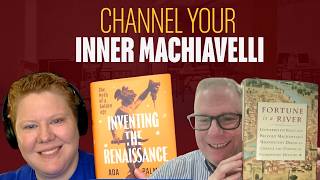
Click to watch at 0:15 · YouTube ↗
Overall sentiment (raw)
positive
Pros
- Reflects rich historical and political themes.
- Incorporates Machiavellian ideas about governance and fragility.
- Has a focus on more than just military conflict.
- Features female captains and patronage systems.
Cons
none
Thematic elements
- The Italian Wars and Machiavellian politics
- 1494 to 1527 era of the Italian Wars
Comparison games
none
Mechanics (from transcript analysis)
- Lawgiving — Mentioned as a core element, celebrating figures who establish institutions for the survival of their people or state.
- Military Leadership — Features figures like Caterina Sforza as important potential military leaders, skilled in defending sieges.
- patronage — Players can patronize figures like Caterina Sforza to gain expertise, such as on poisons.
- Political Traditions — The game incorporates the idea that governments can change, even city to city, reflecting Machiavellian thoughts on fragility and change.
Video topics + discussion points
No key topics recorded for this video.
Quotes (from this video)
- When evening has come I return to my house and go into my study. At the door, I take off my clothes of the day covered with mud and meer, and I put on my regal and courtly garments, and decently reclothed, I enter the ancient courts of ancient men, where, received by them lovingly, I feed on the food that alone is mine, and that I was born for. And there I am not ashamed to speak with them, and ask them the reason for their actions. And they, in their humanity, reply to me. And for the space of four hours, I feel no boredom. I forget every pain. I do not fear poverty. Death does not frighten me. I deliver myself entirely to them.
- Don't be so gloomy. After all, it's not that awful. You know what the fellow said in Italy for 30 years under the Borges? They had warfare, terror, murder, and bloodshed. But they produced Michelangelo, Leonardo da Vinci, and the Renaissance. In Switzerland, they had brotherly love. They had 500 years of democracy and peace. And what did that produce? The cuckoo clock.
- But he is definitely using a kind of rape image almost to say here's what you have to do to beat fortune down and make sure you win not her.
- Basically, um, my, uh, I think this it's probably apocryphal, right? Like the the actual dream part, but allegedly Makavelli had a dream and he dreamed that basically heaven is super boring because all of the people who actually had the nerve to do anything in life, such as statesmen and politicians end up in hell.
- So, when evening has come I return to my house and go into my study. At the door, I take off my clothes of the day covered with mud and meer, and I put on my regal and courtly garments, and decently reclothed, I enter the ancient courts of ancient men, where, received by them lovingly, I feed on the food that alone is mine, and that I was born for. And there I am not ashamed to speak with them, and ask them the reason for their actions. And they, in their humanity, reply to me. And for the space of four hours, I feel no boredom. I forget every pain. I do not fear poverty. Death does not frighten me. I deliver myself entirely to them.
References (from this video)
No references stored for this video.
Video TRFYOPnoJCw
Beyond Solitaire Analysis at 8:06
video_pk 80103 · mention_pk 194375

Click to watch at 8:06 · YouTube ↗
Pros
none
Cons
none
Thematic elements
- Italian Wars
Comparison games
none
Mechanics (from transcript analysis)
Mechanics unknown.
Video topics + discussion points
No key topics recorded for this video.
Quotes (from this video)
- What you want to see is a game that has a specific tension point or story beat that is determined to show you above all the other ones.
- The driving feeling or tension that you're trying to create in your game and that can be a semantic tension or it could be a mechanical tension.
- The tightness of time and like the sort of panic about running out of it is a key aspect of the way the game feels when you play it, because that was part of our thesis for playing the game.
- The feeling that it's trying to capture is being young, going downhill, you don't have an engine, gravity's pulling you faster and faster and faster.
- What I like about Jungo is figuring out when to ditch cards versus pick them up and take them into my hand, how big of a combo do I need to make before I can go for broke and try to clear my hand out and win the game.
- Is it fun? has never been like what I was looking for as somebody who's talking about games.
- When I'm thinking about a game, I want to be able to assess it not just based on like whether I like it, but on what it's trying to say.
- The point of the game is to communicate about the miracle of everybody on that expedition surviving, and also to kind of show some of the depressing and difficult aspects of being in Antarctica waiting for rescue.
- Your game needs a thesis statement not because you have to make a big highfalutin argument.
- So, get in touch with your inner high schooler, I guess. And uh start thinking about that game thesis.
References (from this video)
No references stored for this video.
Video JelDTpfFKVM
Analysis at 4:20 sentiment: positive
video_pk 79407 · mention_pk 192813

Click to watch at 4:20 · YouTube ↗
Overall sentiment (raw)
positive
Pros
- Super accurate in terms of a lot of the people, places, and facts
- Mimics some of the nasty political decisions and betrayals
- Includes factual accuracy where possible
Cons
- Some aspects cannot be fully accurate due to the limitations of a board game
- Cannot put everything in a board game
Thematic elements
- Machiavellian political theories
- Italian Renaissance
Comparison games
none
Mechanics (from transcript analysis)
- Papal conclaves — Game events that influence the papacy and leadership, adding a layer of strategic decision-making.
- Political decision making — Mechanics that involve making difficult political choices and betrayals.
- Simplified combat — A streamlined approach to representing battles, necessary for game design.
Video topics + discussion points
No key topics recorded for this video.
Quotes (from this video)
- accuracy means that something is factually true to the time.
- Authenticity on the other hand is different because things can feel authentic without being accurate and sometimes even accurate facts don't create an authentic feel.
- Authenticity is much more about the vibe of the game and whether something feels historical, whether it feels like if it's of its time.
- Night Witches is is not an entirely historically accurate game. We had to change things about the way that Night Witches did their sorties in order to make it more fun as a game.
- So, even though Queen of Spies is not based on real history, it is because we are bringing actual historical information to bear in the creation of our work.
- And, you know, the authenticity aspect of it comes from our attempt to create feelings of pressure and stress and shortness of time and the danger of having an operative captured.
- So, the game is super accurate in terms of a lot of the people and places and facts and cards that come up. Um it's authentic in the sense that it is mimicking some of the the nasty political decisions that you had to make and some of the betrayals that are available to you that real historical people did take advantage of.
- failing to define whether you're looking for accuracy or authenticity in a game and like what that entails for you leads to a surprising number of problems, misinterpretations, or to me just interesting things to talk about.
- So why are people perceiving it as inauthentic and therefore claiming that it's inaccurate.
- their ideas about authenticity and why those games feel real to people isn't so much their factual reality, but it's their the fact that they're based in our pop culture.
- And so, you know, you can look for facts. So, factual accuracy is one thing. But when you play a game, what makes it feel real to you? What makes it feel authentic to you?
- how much of that is based in historical factual accuracy, and how much is based on your expectations that you have of that game, um as somebody who's living now and who is part of our culture the way it is now.
References (from this video)
No references stored for this video.
Video XffhcE8WWgU
Beyond Solitaire Discussion at 3:53 sentiment: positive
video_pk 9161 · mention_pk 26998

Click to watch at 3:53 · YouTube ↗
Overall sentiment (raw)
positive
Pros
- historic angle with political/economic depth
- alternative to religious content in the Here I Stand lineage
Cons
none
Thematic elements
- political power and mercenary economics
- Italian wars; political maneuvering
- Here I Stand-style framework
Comparison games
- Here I Stand
Mechanics (from transcript analysis)
- Auction / Bidding — a Florin-based economy that drives mercenary bidding
- economic bidding — a Florin-based economy that drives mercenary bidding
- Influence Points — political maneuvering woven into the gameplay
- political influence — political maneuvering woven into the gameplay
Video topics + discussion points
No key topics recorded for this video.
Quotes (from this video)
- we are going to see what other goodies we can fit in there.
- Queen of Spies is a solo game that I did with David Thompson, uh, about running a spy ring in World War I.
- Night Witches is in print at the factory. And I've been waiting to share it with the world for a long time.
- The game is literally about traveling around the country and trying to see as many bird species as possible.
- I want to recommit to my YouTube channel and we'll kind of see what that looks like.
References (from this video)
No references stored for this video.
Transcript Navigation
Showing 1–7 of 7