










Quicksand Deep Dive
What the Community Thinks About Quicksand
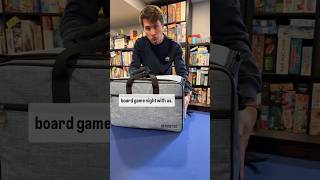
Quicksand has earned genuine enthusiasm across the board gaming community, particularly from reviewers who appreciate lightweight cooperative experiences. The consensus is clear: this is not the panic-inducing real-time game its rules might suggest. CA Couple describes it as initially intimidating but ultimately refreshing, noting that "the expectations of the game were exceeded in my head." Multiple reviewers highlight Quicksand's unique position as a quick cooperative game that bridges party games and light strategy, filling a genuine gap for groups looking for accessible yet engaging social play. Chairman of the Board awarded it Co-op Game of the Year in 2024, calling it "a nice real-time game frantic as you're flipping these sand timers over." The main point of friction is not the rules or theme, but the social dynamics of real-time cooperative play, which some players find stressful while others find exhilarating.
Core Mechanics That Define Quicksand
Real-Time Clock Pressure
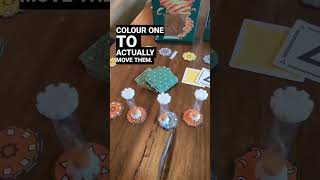
Real-time games create immediate cognitive load, and Quicksand from Horrible Guild manages this pressure through sand timers as both mechanics and metaphor. Players must move sand timers across a track of gear tiles before time runs out. What makes this clever rather than chaotic is the built-in pacing discovery: you do not actually want to rush. As Chairman of the Board explains, if players flip timers too quickly, the sand runs out faster, creating a self-correcting rhythm. You must sometimes "wait for the sand to filter through then take your action, flip them both over at the same time." This means the optimal play often involves pause and observation, not frenzy.
Cooperative Card Play with Physical Constraint
On your turn, you play a single card from your hand of three. Each card bears a color and a shape. When played, every sand timer matching that color or shape advances one space forward. The catch is that you cannot choose individual timers to move; all matching timers must advance simultaneously. This creates genuine strategic tension between wanting to push timers toward the goal line and not crushing other players with sand running out. Wild cards let you recover lost timers and offer limited agency. The simplicity of this rule set is intentional and essential, allowing players to think about their choices while keeping the turn structure flowing fast enough to feel pressured.
The Quicksand Experience
Frantic Shared Tension
Multiple reviewers describe a sensation of manageable chaos. The game feels genuinely urgent without descending into pure stress. Meeple University's demo experience captured this dynamic: "yeah it's really good" was their conclusion after watching sand timers advance across a track in real time. The frantic energy emerges not from complex rules but from the visible clock of the timers themselves. Watching sand run down is a pressure mechanism that needs no explanation. Everyone at the table experiences it simultaneously, creating shared urgency rather than isolated personal pressure.
Moments of Unexpected Joy
The silent variant reveals Quicksand's secondary appeal: the game can become almost meditative. CA Couple tried a level where no communication is allowed and found: "I remember playing like the silence version I thought we would do terrible but we did phenomenally well, and there was like giggles happening and everything too, just making meaningful eye contact, it was wonderful." This suggests the game's real depth lies not in its mechanics but in the social negotiation and non-verbal coordination it enables. The timer creates a shared object of focus that bonds the table in ways many games do not.
What Makes Quicksand Stand Out
A Scalable Difficulty Architecture
With 21+ difficulty levels, Quicksand functions as a progression system rather than a single game. Later levels introduce new rules: silent play variants, discard tokens that freeze timers, and variants where the entire table must communicate every action. CA Couple highlights this as essential design: "there's over 21 different levels that you can play, and not only do the timers vary in each of the levels and the path vary, there's also additional rules that are thrown in some of the levels." This transforms what could be a gimmick into a campaign-like experience where groups can challenge themselves incrementally.
Accessibility Without Condescension
Quicksand solves a real problem: there are not many cooperative games that new players and veterans can sit down to in ten minutes. Most cooperative games are either substantial campaigns or heavy strategy games. CA Couple sees this as Quicksand's true innovation: "this kind of fits that perfect niche of a quick cooperative game you can get warmed up with everybody that's a little bit up from a party game." The game is genuinely light yet has enough depth that experienced players will find the later levels challenging. It plays with one to seven players without requiring separate rule sets, and individual rounds play in roughly five minutes.
Potential Drawbacks
Cooperative Social Pressure
The same real-time structure that creates tension can become painful for some players. CA Couple notes: "Cooperative game there is a lot of pressure on each person. So sometimes when you look at your cards and you don't have something you want to play and you kind of get stuck for a moment you can really be a detriment to your team." If a player draws cards that do not match any active timer, they must play one anyway and do nothing, wasting a turn. In a group of anxious optimizers, this can create blame dynamics. For players who freeze under pressure or fear making mistakes, Quicksand's clock might feel punishing rather than playful.
Real-Time Games Require the Right Moment
Chairman of the Board articulates this candidly: "I do have to be in the right mood to play it, but the gameplay is very quick." This is not a game to pull out when the table is fatigued or when players are in contemplative mode. The real-time pressure demands that everyone show up with energy and readiness to make quick decisions. If your group gravitates toward longer, more deliberate games, Quicksand will sit on the shelf unless a game night has the right social energy. The game knows what it is and does not pretend to offer calm strategic depth.
If You Enjoy Quicksand
Quicksand shares DNA with Kites, which reviewers mention explicitly: both are real-time cooperative games with simple rules and genuine tension. Kites offers a two-player only experience with slightly more complex card interaction, while Quicksand scales to seven and keeps rules minimal. Kitchen Rush is a thematic cousin in the real-time space, though it adds more production elements (a kitchen timer physically burning down, worker placement). If you loved Quicksand's escalating difficulty system, seek out games with level-based progression like Space Base or Unlock, which also offer that campaign feeling in shorter play windows. For the core appeal of shared real-time pressure with light rules, few games execute this as cleanly as Quicksand.
What Reviewers Are Saying
"I think that this game looks scary because it's real time on it but realistically it's not as daunting as it seems, and for that reason I think the expectations of the game were exceeded in my head and I really enjoyed playing it."
— CA Couple
"The winner of the Cooperative Game goes to Quicksand, a nice real-time game, frantic as you're flipping these sand timers over, trying to progress through these different missions."
— Chairman of the Board
"I remember playing like the silence version, I thought we would do terrible but we did phenomenally well. There was like giggles happening and everything too, just making meaningful eye contact. It was wonderful."
— CA Couple