









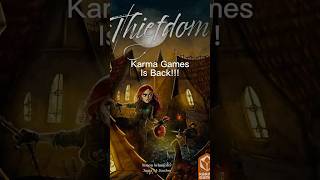
Thiefdom Deep Dive
What the Community Thinks About Thiefdom
Thiefdom has sparked genuine enthusiasm among board game reviewers, though opinions diverge on whether it fully delivers. The game lands squarely in the mixed-to-positive range: critics consistently praise its thematic execution and mechanical cleverness while expressing frustration with pacing and player engagement. Board Gaming Ramblings called it a "pretty unique" design with high variability and strong replayability. Tom Vasel from The Dice Tower gave it a 6 out of 10, appreciating the core ideas but concluding the theme cannot quite carry the game's length. Rahdo Runs Through noted that the stealth-game nostalgia is executed with "high thematic execution" but flagged excessive swinginess in competitive play. The consensus: Thiefdom succeeds as a thematic, mechanically rich pickup and deliver game, but its length and playstyle create friction with certain player groups.
Core Mechanics That Define Thiefdom
Pick-Up and Deliver with Thief Economics
At its heart, Thiefdom is a pickup and deliver game, but designers Juma Aljuju and Simon Schmieder (Karma Games) frame it through theft rather than commerce. Players move their three thieves around a medieval city board, collecting stolen goods from nobles, merchants, and the caravan, then transporting those items to fences and the black market to score points. Tom Vasel observed that "it is a pick up and deliver even if you're picking up stolen goods and delivering them," capturing how the familiar framework becomes thematic. The equipment system adds texture: players can acquire grappling hooks, sacks, and fishing poles that expand what thieves can carry and how far they can reach. One reviewer noted the fishing pole as particularly clever, letting players rob the caravan from a building instead of standing adjacent to it. The six-round structure creates urgency around setup variation, since the placement of buildings and fast-travel catacombs changes every game.
Guard Manipulation and Line of Sight
What elevates Thiefdom beyond standard pickup and deliver is its guard system. Each round, players control different guards and nobles through card draws, moving them around the board where they rotate to face a specific direction. Thieves caught in a guard's line of sight get arrested, lose stolen goods, and return to their hideout. This mechanic turns the shared control system into emergent drama. Jamie from Stonemire Games highlighted the sneaky payoff: "it really felt like I was sneaking up on these guards, which I think is tough to pull off because at any given time on this board, the guard is looking a specific direction. I can saunter up behind the guard or next to the guard and I can steal their badge." Beyond blocking, players can strategically move guards toward opponents' thieves, creating take-that moments. Board Gaming Ramblings noted the game "can be mean" with blocking tactics, though some groups play cooperatively to avoid confrontation. The tension between planning and tactical adaptation runs deep: players pre-program their four action tokens (three for thieves, one for guards) but can shift priorities mid-round as the board state evolves.
The Thiefdom Experience
Heist Movie Moments
Thiefdom captures the fantasy of orchestrating a steal. The leapfrog mechanism, where one thief can jump over another of the same type to move further, enables a thematically resonant moment: passing items hand-to-hand across the board to reach a distant fence. Jamie described this as evoking "a heist movie where I have handed something off or where a character hands something off discreetly to another character." The catacombs system (fast-travel tunnels) and the variable board layout reinforce the sense of navigating an unfamiliar city and finding escape routes. Reviewers who had played stealth video games (Thief, Tenchu, Metal Gear Solid) felt a nostalgic resonance with the sneaking-around-guards fantasy. Rahdo Runs Through, a designer with extensive video game background, called out the "nostalgic feel for stealth-game fans" and noted the game "promised and delivered to capture that feel in cardboard form." The sandbox vocabulary used by Karma Games (and echoed by reviewers) refers not to a literal sandbox theme but to the freedom to pursue multiple theft paths and interact with other players dynamically.
Analysis Paralysis and Downtime
The flip side of Thiefdom's thematic richness is its pacing. The planning phase can drag: with three thieves to move, guards to position, equipment to acquire, and opponents to anticipate, some players spend significant time optimizing their four action tokens. Board Gaming Ramblings identified this explicitly as "a lot of AP possibilities in this game." At three players, the game can stretch toward two hours, and Tom Vasel noted that even the box claim of 30 minutes per player often balloons to three hours in practice. The downtime compounds when groups play slowly or engage in blocking tactics. Reviewers who prefer snappy turn order or who play with optimizers found this frustrating; those playing cooperatively or with flexible groups absorbed the pacing more easily. The first playthrough compounds the issue: nothing feels optimal, since thief activation timelines are opaque until players learn the game's rhythm.
What Makes Thiefdom Stand Out
Unique Thief Guild Setting and Equipment Progression
Thiefdom occupies a rare niche: a thematically rich pickup and deliver game where the setting and goal (building a thief guild by accumulating wealth and reputation) drive engagement. Most pickup and deliver games abstract their setting or lack thematic bite. Here, the equipment and friends system (allies players recruit at taverns) reward specialization and character building. Each thief can be upgraded with different tools, creating loadout variety across playthroughs. The friends system adds passive abilities and final-round scoring bonuses. This progression loop encourages players to invest in their guild rather than treat the game as a pure spatial optimization puzzle. Reviewers consistently highlighted how the theme "does not feel pasted on," with mechanics like guard line of sight and the leapfrog item pass reinforcing the heist fantasy.
Sandbox Variability and Replayability
The board is constructed from randomized tiles, and the placement of hideouts, buildings, catacombs, and merchant starting positions shifts every game. The rotation of which nobles and guards players control each round creates strategic unpredictability. Board Gaming Ramblings emphasized: "I really like how the game feels a little different from time to time depending on how the map is set up," noting that catacombs near each other change movement calculus drastically compared to catacombs spread across the board. The six-night structure (rounds) and two refresh points (rounds 3 and 5) mean that equipment and contract availability also varies. This variability is intentional and generous: the game resists falling into a solved state even after multiple plays, a quality that appeals to replayable-game enthusiasts.
Potential Drawbacks
Game Length and Player Count Scaling
The single most consistent criticism across reviewers is length. Tom Vasel, Rahdo, and multiple other reviewers all noted that two to three hours is common even with experienced players, and the game drags in larger groups. The turn structure (simultaneous action selection followed by sequential resolution) means all four players sit through every other player's turn. Rahdo Runs Through highlighted a secondary concern: in two-player mode, "there can be too much swing and interaction leading to frustration." The small player count concentrates take-that mechanics and player interaction, which some groups experience as harassment rather than fun. Solo mode exists (rolling a die to move guards) but removes the core interactive tension. Reviewers in love with the game suggested it plays best at three players with a group unafraid of conflict; those who prefer shorter games or predictability should manage expectations.
Theme Outpaced by Length
Despite strong thematic execution, the game's length tests player commitment to the fantasy. Tom Vasel's core complaint was that "the theme is not strong enough to carry the game that long." The stealth-game nostalgia and heist-movie moments are concentrated in planning and the occasional dramatic moment (stealing a guard's badge, narrowly escaping). The middle game becomes a slog of moving tokens around the board and calculating efficient paths. Reviewers who played solo noted it felt less like a heist film and more like a pure spatial puzzle, stripping away the interactive drama that justifies the time investment. Groups should ask whether they are here to play a clever optimization puzzle (in which case, shorten it), or whether the heist moments are worth sitting through pacing valleys for.
If You Enjoy Thiefdom
Players drawn to Thiefdom typically enjoy pickup and deliver games with interactive twists and thematic settings. Those who loved Istanbul will recognize the loop of collecting and fencing goods, though Thiefdom adds guards, shared NPC control, and longer campaigns. Fans of Burgle Bros (a cooperative heist game with guards and line of sight) will find kinship in the stealth mechanics, though Thiefdom offers competition and equipment progression. The game sits between the clever spatial reasoning of Outer Rim and the thematic immersion of heist-themed euros like Caledonia (from the same publisher). For those nostalgic about stealth games, Thiefdom captures the atmosphere better than most modern board games. If you prefer tight, short games over sandbox variability, or if you dislike downtime and player-versus-player blocking, Western Legends or lighter pickup and deliver games like SIA may scratch the itch without the pacing toll. The key question: does your group value thematic immersion and interaction enough to invest 2-3 hours?
What Reviewers Are Saying
"It really felt like I was sneaking up on these guards, which I think is tough to pull off because at any given time on this board, the guard is looking a specific direction. I can saunter up behind the guard or next to the guard and I can steal their badge."
— Stonemire Games
"I really like how the game feels a little different from time to time depending on how the map is set up. You have catacombs that you can travel and fast travel, and the last time we played all of those were really close to each other so that made it really hard to travel to the other side."
— Board Gaming Ramblings
"It's a clever idea though. I think the game does something different. It is a pick up and deliver even if you're picking up stolen goods and delivering them."
— The Dice Tower