






The Presence Deep Dive
What the Community Thinks About The Presence
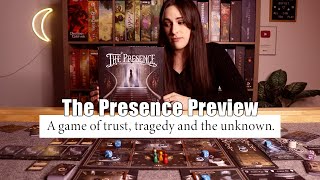
The Presence has generated consistently positive reactions from the board gaming community. Reviewers across multiple channels describe it as a fresh take on asymmetric cooperative play set in a Victorian-era mansion. The game's core appeal is its ambiguous premise: players work together as visitors trying to uncover secrets, but the spirit controlling the game may be helping or hindering them. Nobody at the table knows for certain which way the spirit leans until its script flips. That uncertainty creates a unique tension that resonates with reviewers who appreciate games with thematic depth and mechanical innovation.
Brian Drake of The Dice Tower called the ghost mechanics really well thought out, and Hungry Gamer, who covered the game after designer Sam reached out and admits semi-co-ops are not usually their thing, came away with a great first impression. Much of the coverage is early: The Board Game Garden's preview was sponsored by publisher Purple Lantern Games and shows prototype components that were still subject to change.
Core Mechanics That Define The Presence
Deduction
Deduction lies at the heart of The Presence's visitor experience. Players move through a Victorian mansion uncovering clues about the spirit's traumatic past. Each of the four secrets has a symbol, and clue cards in the deck carry these same symbols in varying quantities. By tracking which symbols appear frequently or rarely in the clues they discover, visitors make educated guesses about which secret is which. The elegant twist is that revealing a secret before understanding it can backfire. The effect that triggers when a secret is revealed depends on how many correct clue cards were placed beneath it beforehand. Visitors must balance gathering information with the risk of premature revelation, creating the puzzle that defines the game.
Hidden Roles
The spirit player operates under a hidden script that defines their victory condition and alignment. A good spirit helps visitors escape by providing genuine clues and assistance. A malevolent spirit disguises its intent while subtly steering visitors toward failure. The brilliance of this mechanic is that visitors see all possible scripts before the game begins, so they know what the spirit could be, but not what it actually is. The spirit cannot normally communicate, adding a layer of bluffing and mystery. This creates a unique dynamic where even a genuinely helpful spirit must maintain suspicion and doubt at the table, since communication rules prevent the spirit from simply announcing their allegiance.
The Presence Experience
Victorian Gothic Atmosphere
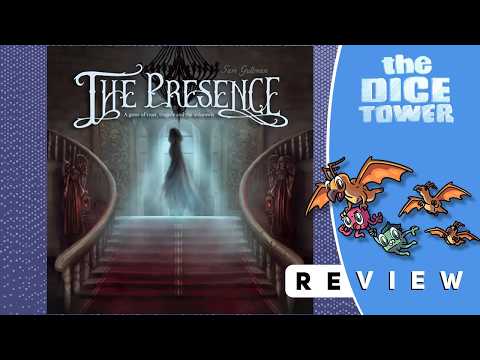
The Presence immerses players in the setting through both visual design and mechanical implementation. The Board Game Garden calls the art gorgeous, and Brian Drake says the game looks fantastic, singling out shaped pawns in place of miniatures. The mansion itself, with its rooms, locked doors, and shifting fireplace tokens, reinforces the Victorian estate theme. Lighting plays a thematic and mechanical role: rooms in darkness become more dangerous and empower the spirit, while lit candles provide protection and allow certain actions to function at full strength. This mechanic transforms what could be a board into an atmospheric space where exploration and tension are tied together.
Asymmetric Tension and Distrust
The game creates a peculiar social dynamic where cooperation exists alongside constant suspicion. Visitors must work together to solve the mystery, yet they cannot be certain their teammate won't sabotage them. The spirit cannot speak freely, so even helpful suggestions are filtered through visible game effects. Brian Drake points out that even a good spirit plays presence cards that are pretty dangerous and can be a detriment to the visitors. This creates genuine moments of uncertainty and accusation, where trust must be carefully negotiated.
What Makes The Presence Stand Out
Unknown Victory Conditions That Shift Mid-Game
Unlike traditional one-versus-all games where roles are fixed, The Presence can radically change its objectives when the spirit's script is revealed. A spirit that seemed to be helping visitors must now pursue a different goal, fundamentally altering the game state. This moment transforms strategies, alliances, and objectives in a single turn. Hungry Gamer singles this out as a highlight: when the script flips and everyone learns the spirit's win condition, the situation can change and suddenly everybody is doing something different.
Presence Dice as an Innovative Mechanic
Rather than moving the spirit pawn directly on the board, the spirit player controls presence dice placed in various rooms. These dice represent the spirit's concentration and power in that location. The spirit can only perform actions using nearby dice, and actions require spending presence, causing dice values to decrease or disappear entirely. This design elegantly solves a mechanical problem while adding thematic resonance. The Dice Tower reviewer noted that this mechanic is well thought out, and it prevents the spirit from being too powerful while maintaining the ghostly flavor of an invisible, distributed presence rather than a single entity on the board.
Potential Drawbacks
Downtime for the Spirit Player
The spirit operates under strict communication rules and cannot participate in visitor discussion. When all players congregate together to discuss strategy, the spirit must sit silently. Hungry Gamer flags this as the first quibble: the spirit can be left sitting there while the other players congregate and talk.
Uncertainty That Can Frustrate Visitors
The deduction puzzle demands sustained attention and careful mental bookkeeping. Visitors must track which clue symbols have appeared, calculate their frequencies, and deduce which secret goes where. A single mistake can derail the entire deduction, causing the players to reveal the wrong secret or misallocate their clues beneath the wrong secret card. Hungry Gamer notes that the uncertainty is part of the point but can be frustrating: one little mistake can throw the group for a total loop, so it is a game that demands close attention.
If You Enjoy The Presence
Hungry Gamer sums up The Presence as Betrayal at House on the Hill meets Mysterium. Like Mysterium, a ghost feeds clues to investigators who must work out what they mean; like Betrayal at House on the Hill, players move through a mansion activating rooms with different effects. Brian Drake also sees a touch of Clue in its shaped pawns, so fans of classic mansion mysteries may feel at home here.
What Reviewers Are Saying
"All in all, at the end of the day, this is a really neat game with a lot of great concepts and ideas behind it. So that is the presence. It is fun. It's got a great eerie feel to it, especially this time of year. It's really well thought out, the mechanics of how the ghost and everything like that work."
— Brian Drake, The Dice Tower
"Lovely production. It just looks so nice on the table, even down to it just has wooden pawns for the different players, but they're all uniquely shaped, and it just looks so nice."
— Hungry Gamer
"I love that hook I love that idea that you never you don't know if you're really all working together or if the ghost is actually against you um that just sounds it like that I feel like that would just create just this level of distrust around the table that would just be so cool"
— Watch Review