/pic2619743.jpg)






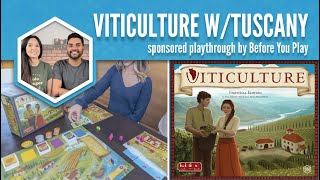







Viticulture: Tuscany Essential Edition Deep Dive
What the Community Thinks About Viticulture: Tuscany Essential Edition
Viticulture: Tuscany Essential Edition occupies a rare space in board game expansions. While base Viticulture is widely respected as a solid, pleasant gateway into worker placement strategy, reviewers across multiple channels describe Tuscany not as an optional add-on but as the version that completes the game's vision. The consensus is striking: after experiencing Tuscany, returning to the base game feels incomplete.
Board Game Critique summarizes this sentiment directly: base Viticulture is good, pleasant, and structured, but Tuscany makes it exceptional. This isn't enthusiasm for more content; it's relief that the game's core mechanical problems have been addressed. The expansion transforms what players experienced as restrictive into what feels like genuine strategic agency. At two-player count especially, reviewers note that the base game's limited structure felt constraining, but Tuscany opens decision space substantially. Allies or Enemies describes a similar discovery: after loving Viticulture but not being entirely sold on it, adding Tuscany made them eager to play more.
Core Mechanics That Define Viticulture: Tuscany Essential Edition
Worker Placement Across Four Seasons
The foundation of Tuscany's innovation is structural rather than additive. Instead of the base game's two-season framework (summer and winter), Tuscany divides the year into spring, summer, fall, and winter. This doubled action space does more than add variety. The cascading seasonal actions force players to think further ahead about sequencing. Vines must be planted in summer, grapes harvested in fall, wine made across fall and winter. This cycle isn't arbitrary; it mirrors the natural progression of viticulture and creates a rhythm that feels thematic and strategic simultaneously.
The practical impact is significant. With twice as many seasonal action spaces available, the tight worker-placement economy of the base game loosens somewhat. Reviewers note this as a slight reduction in direct competition for specific spaces, a tradeoff made deliberately to accommodate new complexity. The wakeup chart system manages this tradeoff by making turn order selection itself a strategic decision with meaningful consequences.
The Wakeup Chart and Turn Order Mechanics
Board Game Critique calls the revised wakeup chart a master class in revision. Rather than turn order being determined randomly and creating structural advantages that feel arbitrary, the wakeup chart ties turn order selection to seasonal bonuses. If you choose an early position in winter, you surrender bonus rewards but secure first-player status. If you choose a late position, you gain more resources or cards but place yourself lower in turn order. This transforms turn order from a fixed advantage into a genuine strategic choice, with real tradeoffs to weigh each round.
This system solves the original game's most glaring structural problem: the late-round first-player advantage. In base Viticulture, being first in the final round could hand victory to whoever got lucky with turn order. In Tuscany, claiming that advantage means paying for it with diminished position bonuses earlier in the year. The elegance lies in the constraint itself becoming the strategy.
The Viticulture: Tuscany Essential Edition Experience
Strategic Depth Without Overwhelming Complexity
One of Tuscany's most consistent commendations across reviewers is that it successfully adds substantial depth while remaining teachable to new players. Before You Play notes that they've taught new players with the expansion included, and those players picked up the system without issue. This is no small feat; adding two entire seasons of actions could easily tip a gateway game into weight territory that alienates the audience it was designed for.
The modular design contributes to this. Each addition to the base game is independent. You can play with just the extended four-season board, or layer in special worker cards, structure cards, or influence stars. This allows groups to dial complexity to their comfort level rather than forcing an all-or-nothing choice.
Satisfying Year-Round Decision-Making
Reviewers consistently highlight a sense of relief that the game no longer forces a rigid, predictable sequence. The extended board gives players real branching decisions each season. In the base game, the sparse two-season structure meant veterans quickly identified optimal sequences and chased the same paths. Tuscany breaks this pattern by distributing actions more logically across the year and providing enough variation that planned strategies must adapt to the seasons' flow.
This translates to turns that feel less mechanical and more purposeful. When winter arrives in Tuscany, it hasn't been a foregone conclusion since spring. The seasonal rhythm creates natural decision points and forces forward planning without feeling punitive when circumstances change.
What Makes Viticulture: Tuscany Essential Edition Stand Out
Modular Design That Respects Player Autonomy
Tuscany includes three major modules: the extended four-season board, special worker cards, and structure cards. No single component is mandatory. The board alone substantially improves the base game experience. Add special workers for asymmetric powers that differ each game. Add structures for personal engine-building. This modularity means Tuscany never feels like a forced upgrade; instead, it offers a buffet of enhancements that groups can adopt as they grow comfortable with the system.
Board Game Critique praises this design philosophy directly, noting that the expansion addresses exactly the right problems without touching what made the base game lovable. That restraint is rare. Many expansions bolt on features that distract from core identity; Tuscany deepens core systems instead.
Special Workers as Variable Powers
The special workers system introduces 11 different worker types, with two randomly selected each game. This creates 55 possible combinations, ensuring that no two sessions follow identical strategic paths. The farmer, for example, can choose any bonus on an action, even spaces without bonuses available at a player's count. The professor can retrieve a regular worker mid-season for redeployment. These abilities are potent but not overbalancing; they refresh each game, keeping the meta fluid.
This approach solves a secondary problem base Viticulture players encounter: once mastered, the game's strategic paths calcify. Special workers force regular reassessment of how to sequence actions and build toward victory.
Potential Drawbacks
Playtime Scaling at Higher Player Counts
At five to six players, Tuscany games consistently stretch into 2.5 to 3-hour territory. This is substantially longer than the base game at the same count. Reviewers acknowledge this as a real constraint but frame it as acceptable given the deeper experience. For groups already accustomed to longer Euros, this is likely not a concern. For groups seeking a tighter 90-minute experience, Tuscany at higher counts requires planning for extended table time.
Reduced Worker Placement Tightness
The expansion's doubled action space necessarily reduces the scarcity that creates direct competition for specific worker placement spots. In the base game, critical actions are bottlenecks; in Tuscany, players have more options. Reviewers note that this is an intentional tradeoff to enable deeper seasonal planning. Some players value the ruthless economy of the base game and may find Tuscany's looser economy less satisfying. The expansion prioritizes strategic variety over cutthroat competition, a choice that plays well for most groups but doesn't suit every table.
If You Enjoy Viticulture: Tuscany Essential Edition
The base Viticulture: Essential Edition is the obvious starting point if you haven't played it yet. Tuscany deepens everything the base game introduces; reviewers universally recommend experiencing both together rather than learning one first and adding the other later. Multiple reviewers explicitly state they don't play base Viticulture anymore; Tuscany is now the default way they encounter this design.
For those seeking similar strategic depth, Viticulture: World offers cooperative play using Viticulture's core system. Reviewers mention it as a valid alternative when the group prefers collaboration over competition, though one reviewer noted they haven't played it solo to completion.
Players who prize modular complexity and engine-building may gravitate toward Terraforming Mars, which uses similar variable-power systems and allows players to build toward divergent victory conditions. Terraforming Mars also benefits significantly from its Prelude expansion, much as Viticulture is elevated by Tuscany.
What Reviewers Are Saying
"Base Viticulture Essential Edition is good. It's pleasant. It's structured. It works. But Tuscany makes it exceptional. The extended board is the star here. Instead of just summer and winter, you get all four seasons. And this isn't just aesthetic. It transforms how seasonal planning works."
— Board Game Critique
"The new wake-up chart is a master class in revision. Instead of a fixed structure, it gives different bonuses depending on which position you choose during winter. That alone resolves the late round first player luck problem, because turn order is now a real strategic choice."
— Board Game Critique
"When we played Viticulture we liked it but we didn't love it, and I think part of that is in a two-player game with only the two seasons it felt really restrictive of what you could do. But with Tuscany, because it introduces two more seasons and you get to use those cards more, all of a sudden it felt like there were just more options that you could do and you didn't absolutely have to do each of those spots in exactly the right order to be able to win."
— Allies or Enemies