/pic2619743.jpg)


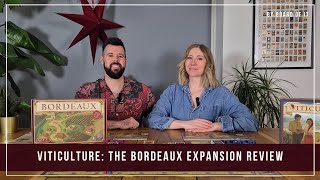



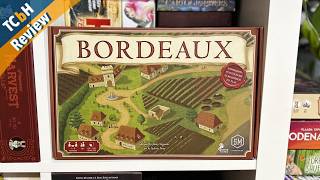
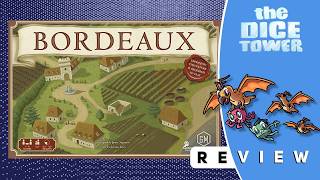





Viticulture: Bordeaux Expansion Deep Dive
What the Community Thinks About Viticulture: Bordeaux Expansion
After a decade of quiet from the Viticulture family, the Bordeaux Expansion finally brings fresh energy to the franchise. Reviewers on Stonemire Games, Unbroken Meeple, and Totally Tabled are unified: this is a substantial step forward that fixes long-standing issues in the base game while respecting the core Viticulture experience. Designer Jamey Stegmaier built this board as a companion to the original Viticulture and Tuscany, deliberately crafted to sit between Tuscany's complexity and the base game's simplicity.
Core Mechanics That Define Viticulture: Bordeaux Expansion
Four-Season Worker Placement with Expert Actions
Like its Tuscany predecessor, Bordeaux presents four full seasonal cycles where players place limited workers on action spaces with escalating capacity. But the expansion introduces the expert system, a transformative addition that lets players buy permanent bonuses tied to specific actions. As Jamey Stegmaier explains, players receive four expert cubes and spend two coins to place one on any of the sixteen board actions. Once placed, that action gains an exclusive bonus for the player who claimed it for the rest of the game, creating strategic fork-in-the-road moments early on. An expert on the plant action might let workers mature immediately within the same season; one on the harvest action might grant a residual income boost. This compounds late-game advantage without feeling overpowered, encouraging players to specialize in their chosen engine rather than dabble everywhere.
Trade Market and Residual Income Overhaul
Bordeaux replaces Tuscany's weak influence map with a finite trade chart featuring concrete commodity exchanges. Players pay one of five options (two cards, three coins, a victory point, or a grape token) to gain one of six rewards (cards, coins, a point, a grape, a wine, or residual income advancement). Each trade option marks off permanently with a glass bead token, meaning trades dry up as players compete for the same conversions across a six-year game. Equally important, the expansion recalibrates residual income generation. Crossing thresholds on the residual track now triggers victory point bonuses, and trades explicitly offer income advancement, making sustained cash flow far more achievable than in earlier editions. This shift addresses a core complaint: Viticulture's original win condition could often ignore wine-making entirely, but Bordeaux rewires the math so that building a functioning vineyard naturally earns more money.
The Viticulture: Bordeaux Expansion Experience
Faster Ramp and Accelerated Strategic Clarity
Players begin with a boosted economic position compared to the base game: starting coins, an aged grape token, a wine token, and one residual income level, plus the standard card benefits. This cushion eliminates the early-game scramble for basic resources and invites immediate strategic choice. Reviewers note the game completes in 90 to 120 minutes even at five to six player counts, compared to Tuscany's two to two-and-a-half hour stretch. The wake-up track (borrowed from Tuscany but redesigned) includes bonuses on every single space, ensuring no turn slot feels like a wasted choice. The top wake-up row rewards going first with benefits for all players, creating moments of positive interaction rather than pure cutthroat blocking.
Engaging Wine-Making as the Natural Win Path
Reviewers consistently note that Bordeaux makes wine-making compelling in a way that feels organic rather than forced. Face-up card slots for vine and wine order cards reduce pure draw luck for the game's most critical decisions. Players can now strategically choose which grapes to plant and which orders to pursue rather than hoping the shuffle favors them. The endgame conversion mechanic turns leftover wine and grapes into money at their printed value, then converts coins into victory points, ensuring a successful vineyard feels like success on the scoreboard. This threading gives players a satisfying sense of narrative: you are running a winery through its full cycle, from planting to aging to selling, and the game rewards that thematic completeness with points.
What Makes Viticulture: Bordeaux Expansion Stand Out
The Expert Cube Specialization System
The four expert cubes available to each player create a portable identity for play styles. Reviewers praise the system for letting players lean into a particular avenue of success: maybe you prioritize harvesting and wine-making, another player builds cheap structures and visitor chains, a third trades aggressively for residual income. The experts make each player's small portfolio of actions genuinely powerful without overwhelming the game with special rules. Unbroken Meeple notes that most experts feel substantive, though a few scale awkwardly depending on player count. Still, this layer of light engine building elevates what could have been a straightforward expansion into something with real forward-planning and replayability.
Eliminating Viticulture's Broken Early-Game Field Sell
A subtle but crucial fix: in the original Viticulture, selling one of the starting fields on turn one was too efficient and became a default opening. Bordeaux changes the field setup so you begin with only the middle field available; the higher-value fields are pre-sold. To access them again, you must spend action slots on the buy field action. This removes the exploit and forces players to actually make trade-offs between field acquisition and other priorities. Reviewers celebrate this as emblematic of Bordeaux's philosophy: respect the game's bones, but tighten the springs that were loose.
Potential Drawbacks
Expert Balancing Variation and Player Count Scaling
Not all expert bonuses are created equal. Unbroken Meeple points out that the give-a-tour expert, which grants one coin per worker present at that action, scales poorly at two players (yielding only one coin) versus six players (potentially several coins from opponents). This isn't game-breaking at medium player counts, where the expansion shines, but it signals that Stonemaier Games accepted some imbalance as a trade-off for mechanical variety. The design team clearly prioritized making each expert feel unique and thematic over mathematical perfection.
Incomplete Face-Up Card Support and Missing Reference Aids
Unbroken Meeple expresses frustration that face-up card slots appear only for vine cards and wine order cards, leaving visitor card draws purely random. While the designer notes that visitors carry small text and would crowd the display, the inconsistency invites house-ruling from players who favor symmetry. Additionally, teaching the expansion to new players requires explaining unfamiliar symbols and the expert bonuses, and reviewers wish a dedicated quick-reference sheet would ease the onboarding for larger tables.
If You Enjoy Viticulture: Bordeaux Expansion
Players who love Bordeaux often reach for Tuscany Essential Edition for its worker specialization and structure-building system; Bordeaux is fully compatible and many consider it a step up in polish. Viticulture World, the cooperative spinoff, remains incompatible due to its distinct rule set, though it scratches a different itch for the same theme. Wingspan, another Stonemaier Games engine-builder with stunning art and similar pacing, appeals to players who enjoy the long-game satisfaction of a growing engine. For those who love the worker placement core, Lords of Waterdeep and Viscounts of the West Kingdom deliver similar action-selection tension in different settings.
What Reviewers Are Saying
"I wanted to give some benefits to this row, but I wanted to add a little bit of positive player interaction. And so if you are going first, when you advance into summer, all players get a coin. Fall, all players age one grape token. Winter, all players age one wine token."
— Stonemire Games
"So, there's a trade chart. You've got the action to make trades like you did before. But what I like in this one is now it tells you what types of trades you can make, and they're finite. So as soon as you make a trade, you put a little glass bead token on it, and it means that nobody else can make that trade for the rest of the game."
— Unbroken Meeple
"I like the fact that you don't have that stupid little early game strategy of selling a field immediately to get a ton of money. That's now gone. So there's a lot of little things that this board does that fix some of those little broken elements from before."
— Unbroken Meeple