








Ghosts Galore Deep Dive
What the Community Thinks About Ghosts Galore
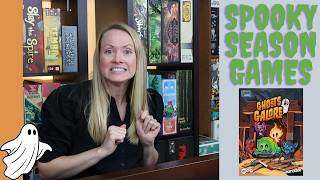
Ghosts Galore has become a quiet success story in the 2026 board game landscape, earning genuine enthusiasm from streamers and convention attendees alike. It's consistently picked as a go-to introduction for experienced gamers, becoming one of the most played games for multiple reviewers in just the first few months of the year. The game has found particular favor as a filler that works harder than its lightness suggests, rewarding players who invest time in mastering its interlocking scoring systems.
What stands out most in the community response is the tone of genuine warmth. Reviewers praise it as charming and simple without condescension. Many return to it repeatedly not out of obligation but out of real enjoyment. One reviewer carried it to a major gaming convention, played it multiple times, and left it as a top recommendation among dozens of freshly played games. Even when critics note its limitations, they do so affectionately, suggesting it fills a specific and valuable role rather than overstaying its welcome.
Core Mechanics That Define Ghosts Galore
Tile Placement as the Puzzle
At its heart, Ghosts Galore is a puzzle about placement. Each player constructs a 3x3 grid over eight rounds, carefully positioning nine tiles featuring different monsters and train-track configurations. The spatial puzzle is where the bulk of tactical decision-making happens. Players must consider not just which tiles they take but exactly where they sit in relation to one another. Some monsters reward adjacency; others specifically punish it. Train tracks must connect between door exits to score bonus points, creating an optimization challenge that grows richer with each tile added.
What makes this placement puzzle feel distinct is that failure is forgiving. Reviewers noted that even when tiles fail to connect in a cohesive track, or when a spatial arrangement doesn't yield maximum points, players still score meaningfully from the monsters themselves. This keeps the pressure light despite the tactical depth, making it approachable for families while remaining engaging for more experienced players.
Push-Your-Luck Drafting Under Pressure
The drafting mechanism is where Ghosts Galore creates its most memorable moments. Players take turns either claiming one of the face-up tiles or flipping a new tile from a stack. The decision is deceptively simple: take what you see, or risk that the next flip holds something better. If you pass, the next player can either take your rejected tile or flip a new one. This escalating uncertainty forces constant recalibration. Do you grab the dragon you spot early, knowing they are rare and critical for high scoring? Or do you gamble that the stack will yield something that fits your board better?
The push-your-luck tension extends beyond individual turns. As the stack depletes, timing becomes critical. Waiting too long risks another player snatching a tile you were eyeing. This creates natural table moments of strategic tension and playful drama, where the slow reveal of tiles becomes the rhythm of the game.
The Ghosts Galore Experience
Swift Play, Dense Decisions
Ghosts Galore plays with remarkable pace for a game with this much decision-making. Most tables see twenty-minute sessions, yet those minutes feel full. The simplicity of the turn structure (claim a face-up tile or flip a new one) means downtime disappears. Players have always been anticipating, even when it is not their turn, since the stack may offer them something unexpected. The learning curve is gentle, but the game respects the intelligence of experienced gamers by packing multiple viable paths to victory and meaningful decisions into each round.
Reviewers consistently remarked on the game's charm. There's something genuinely delightful about the mineshaft theme, the cute monster illustrations, and the satisfying moment when your train track finally clicks into place. The game radiates good humor without relying on whimsy to cover mechanical weakness.
Replayability Through Strategic Variety
The different monsters score in strikingly different ways, creating distinct strategic paths from play to play. Dragons reward quantity and scale quadratically (six dragons yields 36 points). Ghosts want to cluster on the same path. Golems actively punish adjacency, demanding isolation in specific positions. Bats need to sit next to each other orthogonally. Wisps reward pure count. Skeletons multiply by the number of victory-point symbols on your board. This diversity means no two games feel alike. A player might prioritize skeletal power one game, then pivot to building a golem-dominated board the next, then chase dragon synergy another time. The shared tile pool forces adaptation, ensuring that the optimal strategy shifts based on what the deck offers.
What Makes Ghosts Galore Stand Out
Forgiving Design for Mixed Tables
The game's most distinctive quality is how it manages the gap between casual and experienced players. It achieves this not through watered-down rules but through scoring generosity. Even if your carefully planned track falls apart, even if your spatial placement misaligns, you accrue points from individual monsters. There is no snowball effect where one player's early advantage becomes insurmountable. This keeps all players in contention while rewarding deeper thinking. Casual players can enjoy their own puzzle; optimizers can hunt for intricate multi-monster synergies. The game accommodates both simultaneously.
A Filler That Earns Its Table Time
Ghosts Galore became a regular filler game for multiple reviewers not because it fills a gap but because it genuinely earns repeated plays. One reviewer logged 27 plays in just the first five months of 2026, describing it as a go-to game that they actively ask others to play. This elevation of filler status matters. Most filler games are forgetful time-passers. Ghosts Galore is a filler that players remember fondly, recommend actively, and request specifically. It solved a real problem that boardgame groups face: something quick and light that does not feel inconsequential.
Potential Drawbacks
Light for Experienced Gamers Seeking Meatier Challenges
For players who have moved on to heavier games, Ghosts Galore may feel slight. One reviewer with a ten-year-old player noted that once a family has established themselves with games like Pandemic, Small World, or Ticket to Ride, Ghosts Galore can feel like a step backward rather than a step sideways. The strategic decisions, while interesting, do not demand the long-term planning or emergent complexity of weightier titles. This is not a flaw per se, but rather a clarity about what the game is. It is light and meant to be, which some experienced gamers will find insufficient.
Tight Board Limits Route Construction
The 3x3 grid is intentionally constrained, which serves the pacing and simplicity but frustrates some players seeking spatial freedom. One reviewer noted that the board feels tight for route construction, meaning that ambitious track-building plans often run out of physical space or face awkward placement challenges. This tight constraint is by design, keeping the spatial puzzle solvable and games quick. But for players who prefer sandbox-style puzzle spaces with more room for elaborate builds, the limitation can feel restrictive. Expansion ideas proposed at conventions included larger or multi-board variants precisely to address this.
If You Enjoy Ghosts Galore
Reviewers mentioned three games as natural companions or follow-ups. If Ghosts Galore clicks for you, Pandemic offers the cooperative escalation and puzzle-solving depth that many Ghosts Galore fans eventually crave. Small World delivers similar area-control drafting with more strategic layers. Ticket to Ride provides the track-building satisfaction with more physical space and longer gameplay arc. All three share Ghosts Galore's approachability, theme richness, and "one more game" replayability, though each ratchets complexity in different directions.
What Reviewers Are Saying
"It's a really short, sweet, but gives you that little brain burn of am I going to get the right tile? Am I going to push my luck to get the right tile? It's a lot of fun."
— kovray
"Each round, players will take turns either taking one of the face up tiles or flipping a new tile from the stack. So, the longer you wait, the more chances you'll have to grab something, but if you wait too long, somebody might snatch up a tile that you were eyeing. Each of the monsters scores differently, so it seems like there's a cool amount of stuff to pursue."
— One Stop Co-op Shop
"Ghost Galore has become one of our go-to fillers this year. It is such a charming, simple game. All you do is nine tiles. It's nine tiles, nine monsters, place them into your grid, try to optimize your score. I like this game so much."
— BoardGameCo