































Revenant Deep Dive
What the Community Thinks About Revenant
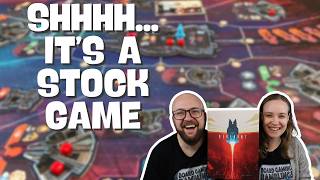
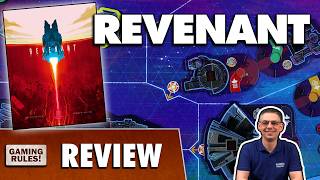
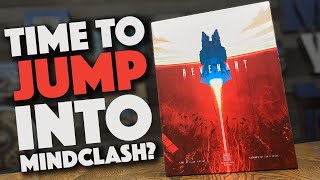
Reviewers across the board see Revenant as Mindclash Games' more accessible spin on their complex Voidfall universe. Most praise it as a successful tightening of the formula, trading the sprawling 4X scope for a focused worker-placement experience that keeps its thematic core intact. Before You Play calls it a "competitive worker placement game for one to four players," while The Broken Meeple emphasizes that despite the shared universe, Revenant is "a very different game" mechanically from its predecessor. The consensus leans positive on the theme and design elegance, though several reviewers flag genuine concerns about teaching complexity and table space. The Board Game Garden notes it as "one of the bigger games" in their preview catalog, and both design and challenge are acknowledged as significant but manageable when properly taught.
Core Mechanics That Define Revenant
Worker Placement
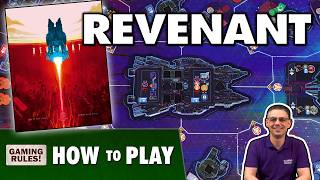
Revenant streamlines Mindclash's signature depth into a tight worker-placement loop. Each round, players send their captain and two cadets out to different ships, each with specific actions tied to that ship's faction. The Board Game Garden's walkthrough clarifies the core tension: you're choosing not just what action to take, but which house's ships to support. Fighters destroy voidborn, drop ships explore planets and grant discovery cubes, ark ships offer resource conversions or faction advancement, and your frigate can serve as fighter, scout, or defense platform. The seven great houses form the spine of the game—each has power tokens tracking how many of their ships remain, which later multiplies your influence score. It's elegant resource management wrapped in military necessity.
Influence Multiplication
The game's scoring hinge is deceptively simple: at the end, your influence with each house multiplies by that house's remaining ship count. The Broken Meeple frames this as the strategic crux: "you're going up which tracks you want those houses to maybe fail while you want others to succeed." This creates constant competitive tension over who destroys which faction's ships during the void breach phase. You gain influence by placing workers on house ships, but you also hide secret influence cards drawn throughout the game. This split between visible and hidden influence echoes Dune: Imperium's influence mechanics while keeping choices opaque until scoring, which prevents runaway leaders from being obvious targets early.
The Revenant Experience
Relentless Pressure
The void threat is inescapable. The Broken Meeple captures the core feel: "it's a constant battle getting slaughtered. You're not able to do much against this void. You can't win the day." Every round, voidborn ships spawn and attack. Players can mitigate with fighters and absorbers, but the tide is essentially unwinnable—players are not trying to defeat the void, they're trying to manage their survival better than opponents. This creates the BSG vibe that multiple reviewers identify, where the fleet retreats and jumps between star systems, gradually losing ships. By the end of Revenant's four rounds, players haven't triumphed; they've just endured long enough for some factions to remain powerful.
Dynamic Board State
The board is in constant flux. Ships get destroyed, actions vanish from the game state, and the hyper jump action—costing three neutronium—lets a player essentially reset the board to a new star system with a fresh voidborn threat level. The Broken Meeple praises this as "very dynamic." Jen from The Board Game Garden walks viewers through how the hyper jump opens strategic branching: stay and accumulate resources at risk, or jump to a cleaner board? And whoever triggers the jump gets to choose the sonar card, controlling how many enemies spawn next round. Combined with four random planets appearing in different sectors each cycle and ships being randomly destroyed, no two games follow the same flow. This tactical unpredictability keeps players reacting and adapting rather than executing one fixed strategy.
What Makes Revenant Stand Out
Thematic Cohesion
The game's mechanics reinforce its story convincingly. Unlike its predecessor, Revenant doesn't just paste a sci-fi theme over euro mechanics. The Broken Meeple credits this shift explicitly: "With this one, it's kind of the opposite. The theme was very strong. You do feel like you're in this constant battle." Placing workers on ships of different factions to earn their favor while protecting them from void attack creates genuine narrative tension. The hyper jump is played out as actual escape, not just board reset. The Revenant flagship in the center that all players can reinforce, and that can trigger cascading failures if too damaged, creates shared stakes within the competitive frame. Players are rival admirals defending a fleet, not just optimizing track scores.
Elegant Action Density
For a Mindclash game, Revenant achieves remarkable clarity. Players take a main action (board a ship, resolve its action, gain bonus actions) then a bonus action from their frigate board, but the flow is logical and self-explaining. The sequence board on the main game board itself serves as a visual rulebook, stepping through sonar, action, recall, breach, and potential hyper jump phases with iconography. Even reviewers who flag the teaching curve acknowledge the underlying design elegance. The Board Game Garden and the commentary from the unknown channel both note that "once you understand the icons you're like okay all we have to do is follow the step," turning what looks overwhelming into a structured dance.
Potential Drawbacks
Table Footprint
Revenant is a notorious table hog. The Broken Meeple devotes significant time to this: "This is one of the worst table hog specimens I've ever seen for games." The main board is massive. Each player needs their frigate board, crew board, captain abilities display, faction influence board out in the middle, plus discard piles, resource tokens, and the round/tactics tracker board. On a solo or two-player game, The Broken Meeple showed photos that barely fit on the second-largest convention table. At four players, reaching across to place workers becomes physically difficult, and players will be passing cadets to each other to place them on distant ships. For anyone with limited table space, this is a genuine pain point that affects game enjoyment—not a minor inconvenience.
Iconography Load and Teaching Barrier
Despite elegant underlying rules, Revenant frontloads significant teaching complexity. The Broken Meeple explains the core issue: "The iconography overload in this game is off the chain." The sequence board, planet cards, ship action icons, ability cards, and UI elements all use symbols that aren't immediately intuitive, even if they're legible once explained. Teaching cannot be done casually; a good teacher who knows the game inside out is practically required for new players to avoid early-round mistakes that can't be recovered in a four-round game. The official glossary—a separate booklet—is necessary to resolve ability questions mid-game. The Broken Meeple actually printed custom reference sheets for every player because passing one glossary around during play was too cumbersome. For casual game nights, this barrier is real, though heavy-game enthusiasts won't mind.
If You Enjoy Revenant
Players who love Revenant's thematic tension and worker-placement core should explore Battlestar Galactica for a similar vibe of managing a fleet under threat, though it plays differently. Dune: Imperium shares the influence-track multiplier system and competitive tension. Voidfall itself offers the same universe with a 4X scope for those willing to invest in a heavier game. Anachrony appears in comparison discussions for its time-travel loan system, which players enjoy as a thematic explanation for a mechanical twist. The Broken Meeple's praise of that mechanic carries over: the hyper jump in Revenant scratches a similar itch—you're escaping to safety in a sci-fi sense, not just resetting the board. For those seeking Ember or Perseverance, other Mindclash titles offer equally heavy euro mechanics with different settings.
What Reviewers Are Saying
"With this one, it's kind of the opposite. Actually, this one I think sold me a lot when I first tried it because the theme was very strong. You do feel like you're in this constant battle getting slaughtered. You're not able to do much against this void. You can't win the day."
— The Broken Meeple
"I'm going to say it—this might be a Mindclash game that won't completely melt my brain. Yeah, this one is definitely more in the medium level, especially when you compare it to its cousin Voidfall which came out last year."
— Watch Review
"It really doesn't feel cooperative even though you are protecting the fleet, you are protecting the Revenant, you are protecting your assets while also trying to expose the houses that your opponents are allying with, so you have this very much a back and forth in the game of like who's going up which tracks."
— Watch Review