
Game Info
Year
2020
Players
2
Age
14+
Playtime
40 min
Complexity
2/5
Collection
Your Tier
Loading…
Mechanic profile
Not enough video data yet
Vibe profile
Not enough video data yet
Description
A two-player dice and area-control game where players place crystals on cards to win powers or points
Featured Videos

Ask a Rules Question
Images
GID0453273.jpg

GID0453273_thumb.jpg
All mentions
Browse transcript mentions, sentiments, pros/cons, mechanics, topics, quotes, and references.
Total mentions: 2
This page: 2
Sentiment:
pos 2 ·
mix 0 ·
neu 0 ·
neg 0
Showing 1–2 of 2
Video mVogFeZYEks
Ryan and Bethany Board Game Reviews Top 10 List at 2:44 sentiment: positive
video_pk 88299 · mention_pk 232477
Click to watch at 2:44 · YouTube ↗
Overall sentiment (raw)
positive
Pros
- Clever, fast-paced
- Accessible entry point to more complex designs
Cons
- Less depth for some players
Thematic elements
- Magic education and learning via competition
- A magical academy where students bid for knowledge
- Educational and competitive
Comparison games
none
Mechanics (from transcript analysis)
- Area Control — Players bid with dice to acquire cards and control study areas.
- area control / dice bidding — Players bid with dice to acquire cards and control study areas.
Video topics + discussion points
No key topics recorded for this video.
Quotes (from this video)
- hi everybody hello I'm Ryan I'm Bethany
- this is our top 10 favorite games about Wizards warlocks and witches
- it's a battle between those two all this kind of this clever card play
- this game is so much fun
- it's a really clever two-player game
- it's a puzzle but the puzzle's alive and it's moving
- this is such a fun game
- it's gorgeous beautiful game
References (from this video)
No references stored for this video.
Video TZ3JhIiJd2w
Board Game Dad Review at 0:00 sentiment: positive
video_pk 37304 · mention_pk 112004
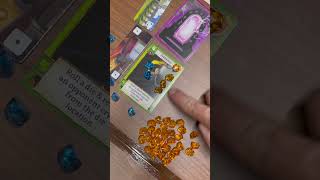
Click to watch at 0:00 · YouTube ↗
Overall sentiment (raw)
positive
Pros
- Compact two-player box with accessible rules and quick setup
- Engaging simultaneous reveal mechanic that keeps both players engaged each round
- Spell cards add depth, variety, and strategic choice to interactions
- Clear, approachable victory condition (race to 13 points) with a satisfying engine arc
- Fits well for fans of lightweight engine-building concepts and dueling card games
Cons
- Potential reliance on dice luck for location availability and timing
- Flavor and thematic richness may feel light or generic for players seeking a strong narrative
- Limited player count reduces replay variety relative to larger group games
Thematic elements
- Competitive magic and resource management within a compact dueling framework.
- A mystical academy in a duel of sorcery where players vie for control of powerful sorcery cards across a fixed set of locations.
- Tactical, engine-building contest with fast-paced reveals and counterplay; flavor emerges through spell interactions and location-driven actions.
Comparison games
- Battle Line
- Lost Cities
Mechanics (from transcript analysis)
- Card-driven spells and abilities — Gained spells grant unique abilities that alter dice results, gem allocation, or card resolution, enabling engine-enhancing combos.
- Die-mapped locations — There are six locations corresponding to the six faces of a die; rolling three dice guides which locations are eligible for gem allocation each round.
- Engine Building — Players build an engine over successive rounds by improving efficiency with spells and card effects, aiming to outpace the opponent to the target score.
- Engine-building and chaining — Players build an engine over successive rounds by improving efficiency with spells and card effects, aiming to outpace the opponent to the target score.
- Resource Management — Players collect gems across rounds and work toward meeting victory criteria by resolving cards and gaining points; the race to a set point total drives pacing.
- Resource management and scoring — Players collect gems across rounds and work toward meeting victory criteria by resolving cards and gaining points; the race to a set point total drives pacing.
- Simultaneous action selection — Players secretly allocate gems to locations (or perform reverse phase decisions) and reveal simultaneously, creating tense interaction without turn-by-turn latency.
- Simultaneous Actions — Players secretly allocate gems to locations (or perform reverse phase decisions) and reveal simultaneously, creating tense interaction without turn-by-turn latency.
Video topics + discussion points
No key topics recorded for this video.
Quotes (from this video)
- School of sorcery is a two-player small box game where players will battle over control of sorcery cards
- six locations corresponding to the six faces of a die
- one player exceeds the opponent and crystals by the specified amount before resolution
- engine over one another in a race to 13 points
- if you like this game take a look at Battle Line and Lost Cities
References (from this video)
No references stored for this video.
Transcript Navigation
Showing 1–2 of 2