





"Tanks" for the Apocalypse Deep Dive
What the Community Thinks About "Tanks" for the Apocalypse
"Tanks" for the Apocalypse has struck a surprisingly welcoming note within the tabletop wargaming community, despite being a distinctly niche game about armored combat in a post-nuclear wasteland. Reviewers across Tabletop Minions consistently highlight the game as an accessible entry point into wargaming, one that doesn't demand years of commitment or vast model collections. The game has proven itself capable of entertaining both seasoned miniature painters and newcomers alike, with one notable playtest featuring children at a birthday sleepover who enjoyed the game so much they asked to play again the next morning rather than return to their usual video games. This enthusiasm suggests the game succeeds at its core purpose: delivering fun, unpretentious tank-on-tank combat without the barrier-to-entry that plagues larger wargaming systems. The consensus leans toward appreciation for the straightforward design philosophy and the designers' visible engagement with the community.
Core Mechanics That Define "Tanks" for the Apocalypse
Tank-on-Tank Skirmish Combat
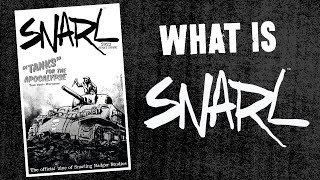
The fundamental engine of "Tanks" for the Apocalypse centers on direct combat between individual M4 Sherman tanks rather than large formations or armies. Each player controls a single tank, and the game scales to accommodate two through ten players simultaneously on a 3-foot-by-3-foot board. The rulebook, at 28 pages (printed in the Zen publication format), keeps complexity deliberately low while still allowing meaningful tactical decisions. Reviewers appreciate that the rules remained lean enough to teach quickly without sacrificing gameplay depth. The game's 28mm scale makes it compatible with tanks from popular miniature lines like Bolt Action and Flames of War, though Snarling Badger Studios designed it with no specific tank model as mandatory, making the game genuinely miniature-agnostic. This flexibility proved essential to the designers' vision: players liberate whatever Sherman tank models they can find near old tank manufacturing facilities, then scavenge or craft ammunition from whatever materials survive the apocalypse.
Post-Apocalyptic Customization and Salvage
Rather than field pristine, factory-fresh war machines, players outfit tanks as survivors would, adding improvised armor, jury-rigged weapons, and battlefield scavenged stowage. The rulebook positions this customization not as a complex subsystem but as visual flavor that lets players express their tanks' personalities and backstories. Reviewers noted this approach echoes the customization philosophy seen in games like Gaslands, where personalizing your vehicle becomes part of the fun. Some playtesters went further, painting tanks in post-apocalyptic motifs: mud-caked vehicles with red war paint and skull markings, representing wasteland warriors rather than historical accuracy. The sketchy, homebrew ammunition mechanic reinforces the setting; shells aren't issued fresh from pre-war stockpiles but cobbled together by survivors, establishing that firepower is hard-won and unpredictable rather than guaranteed.
The "Tanks" for the Apocalypse Experience
Immediacy and Accessibility
Players consistently report that "Tanks" for the Apocalypse delivers quick, satisfying gameplay sessions without the setup overhead or rules complexity of larger wargames. The game doesn't require painting display-quality models; rough, quickly painted tanks or even older unpainted figures work just fine. One reviewer mentioned enthusiastically bringing a game to an event, confident that anyone who dropped by could learn the rules and play a complete game in an afternoon. The 28mm scale and 3-foot-by-3-foot board footprint keep terrain requirements reasonable without forcing modular battlegrounds or elaborate table construction. This accessibility extends to the most basic level: the joy of piloting a tank and trying to destroy your opponent's tank is immediately satisfying, without layers of campaign mechanics, morale checks, or formation requirements standing between player intent and action.
Joyful, Unselfconscious Fun
The game carries a palpable sense of "we made this because it seemed cool," and reviewers respond to that authenticity. Unlike systems that take themselves seriously through dense lore, official tournaments, or endless supplementary materials, "Tanks" for the Apocalypse invites players to show up, set up terrain, load their tanks, and start blasting. The post-apocalyptic 1945 setting, born from the question of what if the Trinity test actually ignited the atmosphere, is whimsical and specific enough to inspire modeling and painting projects without demanding historical accuracy or geopolitical realism. Children, in particular, gravitated toward this unvarnished fun; the tank game didn't try to teach them anything except that tanks shooting each other is entertaining. Adult reviewers appreciated that the designers weren't trying to dethrone Games Workshop or carve out a massive market share, but simply wanted players to have a good time piloting tanks in a nuclear wasteland.
What Makes "Tanks" for the Apocalypse Stand Out
The Sherman Tank as Humble Hero
While designers could have chosen any tank or multiple tank types, the focus on the M4 Sherman gives the game a distinct identity and a narrative anchor. The designers chose Shermans deliberately: they're iconic, relatively simple to model and paint, and abundant in the miniature market because they're popular in historical wargaming. More importantly, the game's setting, centered on the Lima Locomotive Works in Ohio (one of the actual Sherman manufacturing hubs), grounds the post-apocalyptic scenario in a kernel of real history. Reviewers appreciated that this specificity lent character to the game without requiring players to memorize historical statistics. Any Sherman is "correct"; the game doesn't demand players know whether they're piloting an M4A1 or an M4A3. This permissiveness, combined with the uniqueness of choosing a WWII tank for a post-nuclear wasteland game, makes "Tanks" for the Apocalypse feel distinctive in a crowded wargaming landscape dominated by large-scale armies and complex historical simulations.
Designed for the Reality of How People Actually Wargame
The game succeeds because it makes deliberate design choices that match how casual wargamers actually behave. The rules fit in 28 pages, acknowledging that people won't memorize a 200-page codex. The game plays with 2-10 players, so you're not locked into exactly four people or forced to split tables. It works on a 3-foot-by-3-foot board, fitting in a corner of a game store or hobby room rather than demanding the full table. You can use whatever tank models you have or want to buy, from any manufacturer. And you don't have to paint anything to play, though most wargamers will want to. Designers Adam and Vince from Snarling Badger Studios appear to have internalized that good wargames solve problems players actually face: finding opponents, gathering models, learning rules, and finishing games in a reasonable time. "Tanks" for the Apocalypse addresses all four with elegant simplicity.
Potential Drawbacks
Limited Solo and Cooperative Play in the Core Game
The 28-page rulebook doesn't include solo or cooperative mechanics, a deliberate choice to stay within the page constraints of the Zen print-at-home format. Reviewers accepted this limitation without complaint, understanding that adding AI opponent rules would have required substantial additional rules text. The designers' position is clear: "Tanks" for the Apocalypse is meant to be played with friends, and solo wargaming, while growing in popularity, wasn't a design priority for this particular game. However, this does limit the game for players without regular opponents or those who prefer narrative-driven solo campaigns. The answer, the designers suggest, is to play it with other people, a reasonable stance for a skirmish game, though it may disappoint solo-focused hobbyists.
Terrain Dependency and Scale Sensitivity
While the game itself is flexible about tank models, the interplay between tank scale and terrain scale requires attention. A 28mm Sherman tank needs appropriately scaled terrain; mixing 28mm tanks with smaller-scale buildings or trees breaks the visual coherence that makes the game fun. This isn't a hidden cost, reviewers understood it implicitly, but it does mean players can't simply borrow terrain from other games without considering scale parity. The game also benefits from having some terrain on the board; open 3-foot-by-3-foot tables become somewhat predictable. Neither of these is a design flaw, and terrain doesn't need to be elaborate or expensive, but players should account for it in their planning.
If You Enjoy "Tanks" for the Apocalypse
Players drawn to "Tanks" for the Apocalypse often gravitate toward games that celebrate accessible, fun gameplay over simulationist complexity or competitive intensity. If you enjoy the focused, one-model-per-player gameplay, consider Gaslands, which applies a similar philosophy to post-apocalyptic car combat with extensive customization. For those who love the wargaming spectacle and model-painting appeal without the commitment of full-scale armies, Bolt Action offers 28mm historical miniature combat in manageable squad sizes. If the post-apocalyptic setting resonates, Fallout: Wasteland Warfare delivers skirmish-level combat in an even more visually chaotic wasteland. Those interested in tank-focused gameplay without the post-apocalyptic theme might explore What a Tanker, a lighter historical tank game, or Flames of War for more detailed WWII-era armor combat.
What Reviewers Are Saying
"So much so that the next morning when they got up, they were like, hey can we play that tank thing again. They weren't just being nice and going, okay old man, we'll do your weird thing with the dice and the plastic tanks."
— Tabletop Minions
"It's basically a tank battle game. You have a 28mm Sherman-size-scale tank. So basically like Bolt Action, you know, that size tank, and each player has just one tank and it's just, you know, my tank versus your tank versus their tank. And you can play up to 10 players on a three-foot-by-three-foot board, which is pretty cool."
— Tabletop Minions
"Customizing and tank model like you do in Gaslands is going to be a lot of fun. The next one that I'm going to do I really want to go kind of crazy with. I really want to like really decorate it up and do that."
— Tabletop Minions