






Winds of Numa Sera Deep Dive
What the Community Thinks About Winds of Numa Sera
Winds of Numa Sera has struck a remarkable balance that appeals to players who typically diverge on what makes games enjoyable. Reviewers consistently praise the game for delivering compelling strategy while remaining accessible, combat-heavy yet negotiation-rich, and thematically immersive without overwhelming complexity. The asymmetric faction design and multiple paths to victory create a game where every playthrough feels distinct, and players are encouraged to adapt their strategies based on what competitors pursue. Brains On Games called it a "big surprise" with "a fun, unique experience," while reviewers on other channels found it overcame their natural resistance to direct player conflict. The standout observation across channels is that the game successfully addresses the needs of both competitive combatants and diplomatic builders, making it a rare title that genuinely works for mixed gaming groups.
Core Mechanics That Define Winds of Numa Sera
Engine Building Through Asymmetric Build Trees
At the heart of Winds of Numa Sera lies an asymmetric build tree system unique to each of the four playable factions. Rather than purchasing abstract economy upgrades, players tick boxes on their personal boards to unlock faction-specific abilities and passive bonuses. These build trees branch from a starting position, creating multiple upgrade paths that define each player's strategic identity throughout the game. Some boxes activate one-time powerful effects, while others grant ongoing bonuses that compound over time. The brilliance lies not in forced progression but in strategic choice: players spend their primary action (build or attack) to advance down their tree, slowly building an engine that generates more resources and better abilities as the game progresses. This creates the classic engine-building tension where early investments pay dividends later, but committing to defense or exploration early can leave you behind on economic power. The dry-erase implementation makes tracking trivially easy, keeping the focus on strategy rather than bookkeeping.
Hidden Victory Points Through Multiple Endgame Conditions
Winds of Numa Sera refuses to declare a winner until someone achieves two of four distinct victory conditions: becoming a Conqueror by holding four strongholds simultaneously, a Master by reaching level three in any two skill types, a Legend by unlocking all five character classes, or a Champion by slaying two enemy heroes. This architecture creates profound uncertainty about game state. A player who appears to be winning through military might might suddenly lose when someone quietly researches two skills and claims the Master condition. The exploration deck constantly feeds new cards into play (mavens to hire, boons to gain, mythic items to equip), meaning viable paths toward victory shift as the game unfolds. Reviewers noted this creates a magical tension where victory feels "tenuous" and the game frequently reaches checkmate positions where the most clever player maneuvers into alignment with multiple win conditions simultaneously, making strategic sequencing of heroes and resource acquisition critically important.
The Winds of Numa Sera Experience
Kingdom-Building Grandeur With Real Stakes
Playing Winds of Numa Sera feels like commanding a fictional kingdom with authentic consequences. Each player chooses a line of succession, determining which of their three faction-specific heroes enters battle first and which follow if their predecessor falls. This mechanic transforms hero death from binary elimination into strategic sequencing. One reviewer discovered mid-game that their seemingly weaker second hero had powerful economic abilities, and deliberately engineered their first hero's defeat to unlock that hero's potential. Heroes carry stats (attack, defense, power/health), and upgrading them with equipment found during exploration creates a palpable sense of building toward power. The deluxe edition's weighty metal coins and the elaborate dry-erase boards with accordion-fold reveal enhance this visceral sense of managing a realm. Even when heroes fall, the game communicates that it is survivable: there is always a next hero, and strongholds stolen can sometimes be reclaimed. This design philosophy makes Winds of Numa Sera one of the few direct-combat games that doesn't punish failure with elimination, instead offering a gentler succession mechanic.
Negotiation and Emergent Diplomacy
The game's exploration deck creates constant surprises, but the real gameplay emerges in the negotiation phase. Players can trade almost anything except heroes and classes: coins, strongholds, equipment, skill cards, even promises of future actions. One reviewer recounted paying another player to attack a third player's stronghold, reaping the rewards when that attack succeeded. Another player offered coins in exchange for a guarantee of non-aggression. These deals create social dynamics where cooperative moments punctuate competitive turns. The multiple victory conditions amplify this: if one player pursues stronghold conquest while you focus on skill mastery, there is no reason for constant conflict. The game accommodates table talk, favor trading, and temporary alliances without devolving into analysis paralysis. Reviewers consistently highlighted that the negotiation layer made the game feel fresh and dynamic, especially at the recommended four-player count.
What Makes Winds of Numa Sera Stand Out
Thematic Connection to a Graphic Novel World
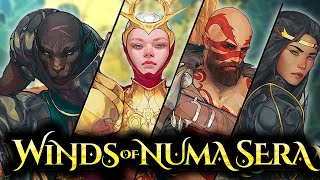
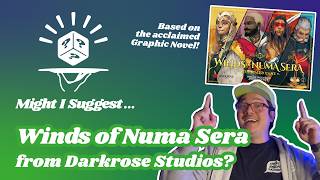
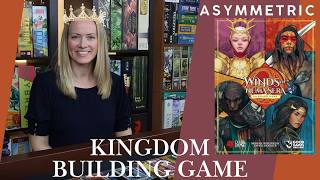
Winds of Numa Sera draws directly from a Darkhorse graphic novel of the same name, and this literary grounding infuses the entire design. The four playable factions (Numasera, Ci'nya De'Aya, Dena Veil, and Mer'an) are kingdoms from the comic, each with a distinct aesthetic and strategic flavor. Numasera is wealthy and economically focused; Ci'nya De'Aya are ferocious warriors; Dena Veil are defensive and resilient. Rather than flavor text pasted onto generic mechanics, the artwork and component design reinforce these identities. The exploration deck's cards tell stories through their illustrations. The battle die itself (half positive, half negative results) thematically mirrors the chaos and sacrifice inherent in the graphic novel's fictional conflicts. Reviewers noted that even players unfamiliar with the source material respond to the production values and cohesive visual language. The game does not require reading the graphic novel to enjoy it, but having done so enriches the thematic resonance considerably.
Exceptional Clarity and Organization in Presentation
One of Winds of Numa Sera's subtlest strengths is how thoroughly it solves the problem of rules clarity without condescension. Every player board includes an accordion-fold layout with all turn phases printed directly on it (Income, Market, Exploration, Command). Quick-reference cards outline combat resolution, card abilities, and symbol meanings. The rulebook contains a table of contents, index, and worked examples. Iconography is consistent and immediately readable. The dry-erase boards mean players never lose track of stats or progress. Even with 80+ unique cards and multiple interacting systems, reviewers reported minimal time spent in rules disputes. This clarity frees mental bandwidth for actual strategy: you are not calculating whether an action is legal; you are plotting three moves ahead. The game respects player intelligence by removing friction, not by oversimplifying systems. Brains On Games specifically praised the organization as making the game "very clear" and "straight forward once you've played a round or two."
Potential Drawbacks
Attack-Heavy Gameplay and Player Elimination Risk
Multiple reviewers noted that Winds of Numa Sera is fundamentally a combat-centric game. Nearly every turn features at least one battle (whether against strongholds or player heroes), and aggressive play is economically rewarded. For players who philosophically dislike direct player interaction or elimination, this is a material concern. One reviewer explicitly warned "this is a very attack-heavy game" and recommended the game only for players comfortable with constant conflict. That said, the line-of-succession mechanic substantially mitigates player elimination: losing a hero does not end your game, it transitions you to your next hero (ideally with different abilities). The community's experience suggests complete elimination is rare, but it remains a possibility if all three heroes are slain. Additionally, careful defensive purchases (armor, shields) and strategic negotiation ("I will pay you not to attack me next turn") offer mitigation strategies that engage players in the conflict rather than avoiding it entirely.
Optimal Experience at Four Players; Three Works but Shifts Dynamics
Brains On Games explicitly noted that four players represents the ideal player count, because negotiation becomes richer when there are more potential allies and targets. At three players, kingmaking (where one player's decisions determine another's victory or defeat) becomes more acute. Two players simply don't work (the game scales to 3-4 only). Reviewers who played at three players reported enjoyment but noted that the negotiation layer felt less impactful when there were fewer potential deal partners. For groups with consistent three-player counts, this is not disqualifying, but those with flexible player groups should recognize that the game sings at four.
If You Enjoy Winds of Numa Sera
Players drawn to Winds of Numa Sera typically appreciate games that combine strategic depth with player interaction and emergent storytelling. The Witcher: Old World offers similar worldbuilding and asymmetric hero progression, though with a map-based movement system instead of economic engines. Cosmic Encounter remains the gold standard for asymmetric factions with wildly divergent abilities, delivering similar chaos and negotiation at faster play speeds. The Old King's Crown shares Winds of Numa Sera's hybrid nature, blending combat, area control, and multiple strategic paths without defaulting to pure war-gaming. For those seeking games where multiple victory paths create strategic flexibility and negotiation rewards clever deal-making, Dice Throne and Blood Bowl offer competitive combat with more accessible rulesets, though less thematic richness. Ultimately, Winds of Numa Sera occupies a rare space: it is a game that accommodates both competitive dominators and diplomatic builders, making it a bridge title for tables that otherwise diverge on what makes games fun.
What Reviewers Are Saying
"I feel like Winds of Numa Sera the board game meets those players in the middle that want a lot of conflict and the players who don't. Because there's just enough you could build and do everything else, you could defend, you can really build up on your battle cards. It's okay if you lose a hero. You've got another hero. So it's not the end of the world if someone comes and kind of beats up on you for a minute. It's okay. You're probably going to beat up on them in the next turn. So there's, it's okay."
— Watch Review
"The strategy for this game really reveals itself as you play. In my first game of Winds of Numenera, I had a hero that was getting me a bunch of money at the beginning of the game, but I had a really powerful hero tucked in second place. At a certain point throughout the game, I needed to transition from one hero to the next, and so I baited someone into attacking my hero and slaying them just so I can move on to my second, more powerful hero, which helped me take home the win. There's some really interesting strategy that you have to think about, especially with your heroes and how you want to sequence them, that I thought was really, really clever and something I hadn't seen a lot of before."
— Might I Suggest A Game
"It overcame my dislike of player-versus-player games. Even in the inevitable combat in this game, which typically I'm not a huge fan of, I enjoyed that there was a level of chaos to it. You always have to roll the battle die, and it could be a swing of up to six battle points, which can totally turn the tides of a battle. I felt like the battles in the graphic novel and the struggle between heroes always begets a level of chaos, so I thought this element was very thematic."
— Might I Suggest A Game