






Warhammer Quest: Darkwater Deep Dive
What the Community Thinks About Warhammer Quest: Darkwater
Warhammer Quest: Darkwater is a cooperative dungeon-crawler that sits at an interesting crossroads. It carries the Warhammer Quest name, yet it plays quite differently from the 1995 original that many traditionalists remember fondly. Rather than sprawling exploration and character progression across a vast fantasy world, Darkwater is a focused, three-act narrative skirmish game set in the corrupted Jade Abbey, where one to four players battle Nurgle's forces. The game has earned genuine enthusiasm from reviewers who approach it on its own terms. For those willing to accept that Warhammer Quest is not a fixed formula but a banner under which Games Workshop experiments with cooperative adventure, Darkwater delivers compelling, replayable storytelling wrapped in elegant cardboard and beautifully crafted miniatures.
Core Mechanics That Define Warhammer Quest: Darkwater
Campaign Structure with Non-Destructive Legacy Elements
The heart of Darkwater's design is its clever campaign deck system, which creates remarkable replay value without requiring permanent alterations to components. Each of the three acts comes with approximately 28 different encounter cards, but during a single campaign playthrough, players only face seven encounters per act, with the choice between two options each turn. This asymmetry means players can complete the full three-act campaign multiple times and encounter radically different scenarios, objectives, and narrative beats each time. As progression unfolds, players unlock new hero characters and additional reward cards that shuffle into future campaign decks, giving returning players access to stronger abilities and equipment without ever permanently removing original components. This legacy framework encourages repeated plays without the commitment or irreversibility of some other campaign systems. The structure keeps the entire campaign tight: players are mounting a three-day rush on the Jade Abbey to stop the corruption before it spreads, creating urgency and narrative focus rather than episodic meandering. Games Workshop has created a campaign experience where each playthrough feels meaningfully different, and the emotional rhythm of preparing, pushing through three acts of encounters, and facing a final confrontation creates a satisfying narrative arc that players want to experience again with new tools and different strategic paths.
Objective-Driven Encounter Design Over Combat
Rather than defaulting to "kill all enemies," Warhammer Quest: Darkwater's encounters typically ask players to accomplish something while enemies serve as complications. Scenarios might involve fetching hidden keys to unlock doors, playing an explosive hot-potato variant with enemy forces closing in, defending a location against waves, or surviving exploration under time pressure. This objective-first mentality reframes combat as a tactical constraint rather than the point of the exercise. Players must manage their loot cards strategically, deciding when to spend powerful equipment, when to save it, and how their action economy on each turn serves the scenario's specific goal. Each character activates with core ability cards that can power each other, creating a resource system where players chain actions together to generate enough momentum to achieve their objectives before the turn counter runs out. The tight time limits on encounters enforce a puzzle-like quality that rewards forward planning and creative use of abilities and gear. This design philosophy moves Darkwater closer to a narrative skirmish game than a traditional dungeon crawl, making every encounter feel distinct and meaningful rather than another fight with similar enemies.
The Warhammer Quest: Darkwater Experience
Strategic Depth in a Quick-Playing Package
Darkwater plays remarkably fast and sets up even faster. The mapbook innovation, rather than requiring tile-based setup each time, means players move from box to table in minutes. Yet that speed never sacrifices tactical decision-making. Each turn requires genuine thought about positioning, ability chaining, and loot expenditure. The combat itself is straightforward to resolve, with heroes and enemies rolling d6 pools and comparing hits against defense ratings, but the resource constraints before combat and the time pressure during it create constant, meaningful choices. The game respects player time while demanding sharp thinking, creating an experience that feels weighty and impactful without excessive fiddling or rulebook consultation once players grasp the core flow.
Narrative Emergent from Encounter Variety
Players construct their own story as they move through the campaign. By selecting between two encounter options each turn, players implicitly choose their own narrative path, and the card descriptions and encounter objectives weave a coherent if somewhat abstracted tale of infiltrating and corrupting the Jade Abbey. Encounters include strange, creative narrative events that break expected patterns: dice-rolling mini games, dialogue moments, and situations that use the game's components in inventive ways. This creates a feeling that the campaign is alive and surprising, rather than executing a predetermined script. Each campaign feels like a unique journey because the sequence of encounters, combined with how players approach them strategically, shapes a different story each time.
What Makes Warhammer Quest: Darkwater Stand Out
Push-Fit Miniatures That Actually Work
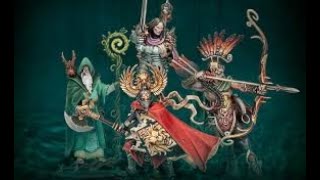
Games Workshop's push-fit assembly represents a genuine innovation for their board games. The 49 miniatures in the box snap together cleanly without glue or paint, yet the model quality remains beautiful and detailed. This approach removes one traditional barrier to getting a board game to the table: the need to spend hours assembling, gluing, and potentially painting figures. A player can open the box and begin playing in minutes without sacrificing visual appeal or component quality. For hobby players who love assembly and painting, the push-fit models work beautifully as a painting project. For players who just want to play, having gorgeous models that require no preparation is genuinely valuable. This represents a thoughtful design choice that opens the game to players intimidated by traditional miniature assembly while respecting the investment and craft that modeling enthusiasts bring to the hobby.
Replayability Through Unlockable Content and Strategic Variety
Most board games with a campaign system reveal their full content over one or two plays. Darkwater saves genuine surprises for players willing to campaign multiple times. Unlocking new heroes, new reward cards, and new encounters across successive campaigns means that even experienced players will encounter content and face strategic situations they have not seen before. The variety is not purely random; players can influence which encounters they face through their choices, allowing some control over their experience while preserving discovery. The loot deck also expands over time, giving players new tools that shift strategic possibilities. This philosophy rewards engagement and mastery while preventing the game from feeling solved or exhausted after a single campaign completion. For a game that plays in a few hours per act, the promise of three or four fundamentally different campaign experiences keeps the box feeling fresh across many table sessions.
Potential Drawbacks
The Name Creates Expectations It Cannot Meet
Warhammer Quest carries historical baggage from the beloved 1995 original game, which featured character progression over long campaigns, settlement events, travel phases, and a vast world to explore. Darkwater is a focused, three-day rush with no town phases or exploration, making it feel narrower in scope to players expecting the epic sandbox experience of its namesake. The game plays more like a narrative skirmish variant, closer to Blackstone Fortress or Warhammer Underworld: Spire, than to the original formula. Some traditionalists will feel shortchanged by the name alone, regardless of the game's actual quality. Calling it something like Warhammer Underworld: Dark Water might have set clearer expectations and reduced the controversy around whether this title truly represents Warhammer Quest. The naming choice, while leveraging a brand with deep history, also invites comparison to a game that cannot be beaten on its own terms because they are fundamentally different experiences.
Failure Cascades and Strict Time Limits
When players lose an encounter, the punishment is asymmetric in a way that can compound: the group discards four reward cards as a group, losing resources that powered their strategy, then must replay the same scenario with fewer tools. This creates a snowballing failure state where a tight scenario becomes tighter after a loss, making the second attempt harder than the first. If players lose the same scenario twice, the entire campaign ends and players start over. This design prioritizes tension and stakes, but some players find it frustrating rather than engaging, especially since many encounters have strict time limits that make them feel puzzle-like rather than emergent. There is little room for creative, unconventional approaches that take longer; the clock enforces a single optimal difficulty tuning. Some players might prefer failure mechanics that offer alternative paths forward rather than pure setback and retry, or softer time constraints that enforce strategy without feeling arbitrary.
If You Enjoy Warhammer Quest: Darkwater
Fans of Warhammer Quest: Darkwater should explore Blackstone Fortress, which shares the narrative skirmish DNA and tight, objective-driven scenarios, though with less campaign progression. Silver Tower similarly delivers a focused adventure through a single location with creative encounters and strong replayability. For those drawn to the push-fit assembly and cooperative dungeon-crawling with strong loot systems, Shadows of Brimstone offers a grittier, more Western-fantasy aesthetic with deeper narrative progression. League of Dungeoneers and Dungeon Universe Solace appeal to players seeking that classic dungeon-exploration feel the original Warhammer Quest pioneered, though neither is set in Games Workshop's Age of Sigmar universe. If the three-day rush and Nurgle corruption theme appeal strongly, Cursed City provides a different Games Workshop cooperative experience with its own unique mechanics and setting, though reviewers note it had a troubled release history. Warhammer Underworld: Spire offers competitive skirmish gameplay in the same Warhammer Underworld universe with less campaign structure but more direct player-versus-player strategy for those who outgrow cooperation.
What Reviewers Are Saying
"I think Dark Water is my favorite Warhammer Quest game since Silver Tower. Silver Tower is my favorite Warhammer Quest game. I love Silver Tower so much, even more than the original."
— The Dungeon Dive
"Is it Warhammer Quest? No. Okay. Can you get hung up on that? Maybe. But for me, who is a diehard Warhammer Quest guy, I'm not getting hung up on it. I'm accepting this for what it is."
— Rob's Tabletop World
"Games Workshop needs to be commended on doing such a fantastic job without losing too much of the quality of their fantastic miniatures."
— Rob's Tabletop World