







Crab Rage Deep Dive
What the Community Thinks About Crab Rage
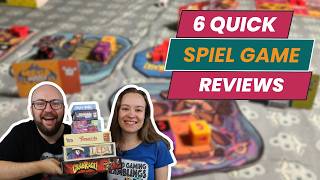
Crab Rage is a game that inspires genuine delight and lively debate in equal measure. Reviewers consistently celebrate the sheer audacity of its theme, a post-apocalyptic wrestling spectacle where sentient crabs battle for dominance and glory. Yet beneath the colorful premise lies a lightweight area control game that divides players along predictable lines: some embrace the chaotic cutthroat energy as its greatest strength, while others find that same chaos undermines the strategic depth they crave. Board Gaming Ramblings offers a particularly honest take, with Cinema and Johannes agreeing that the theme is fantastic while disagreeing sharply about whether the game mechanics match that thematic ambition. Cinema felt the game worked well when players leaned into meanness and manipulation, while Johannes appreciated the experience despite feeling ultimately that the game did not hit as hard as the incredible theme promised. Other reviewers, including Grant Lyon and Game Night Picks, found the rapid-fire player interaction and temporary alliances far more rewarding, describing the experience as exhilarating rather than frustrating.
Core Mechanics That Define Crab Rage
Area Control Through Dice Deployment
Crab Rage takes the familiar area control template and strips it down to its essence. Players roll and deploy dice representing their crab teams across three arenas, competing for control and the fans that come with victory. What makes this approachable is the speed: in each round, you are simply trying to have the highest combined value in an arena to win the fans placed there. The dice themselves act as your crabs, and their face values determine your power. It is straightforward enough for newcomers to grasp in minutes, yet reviewers note that small positioning decisions and alliance choices create meaningful game states throughout play.
Rage Spending and Signature Moves
The second pillar is rage, a resource you accumulate each round and spend during the action phase to bend the rules in your favor. You can spend rage to move crabs into new arenas, to muscle up your dice and increase their values, to weaken opponents, or to trigger devastating signature moves. Each player has a unique once-per-game signature move costing two rage that delivers both immediate power and a permanent bonus. One reviewer described Ice Ghost's avalanche as forcing rival crabs from an arena entirely. Another highlighted Jurassic Thorax building rage whenever his crabs occupy an arena. These signature moves are not mere flavor; they are meaningful tactical tools that can swing momentum at crucial moments. Osprey Games has balanced the rage economy so that it feels like a true strategic resource, not a simple bonus action system.
The Crab Rage Experience
Chaotic Cutthroat Energy
The predominant feeling reviewers report is one of controlled chaos. The game actively encourages you to mess with your opponents, backstab temporary allies, and throw your best moves at whoever is ahead at any given moment. Grant Lyon called it a knife fight in a phone booth, compressed into 30 to 45 minutes. One reviewer described it as transformation of competitive crab fighting into a global spectator sport where the goal is not only to control territory but to keep the action exciting enough to impress the crowd. This rapid-fire betrayal and realignment of alliances creates a table dynamic that feels more like theater than a chess match. Players lean into the absurdity and the wrestling narrative, complete with signature moves and meme-worthy crab names.
Playful Brawling and Thematic Immersion
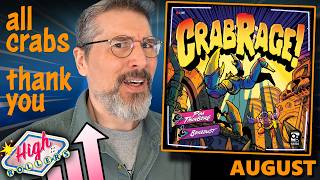
Reviewers consistently note that the game's art style and component design amplify the fun factor. The board itself looks like a wrestling arena, the standees depict ridiculous crab characters, and every action feels resonant with the theme. One reviewer marveled at the artwork being so evocative that it immediately sold them on the game before even learning the rules. This thematic immersion is not accidental. Every mechanic echoes wrestling and spectacle: fans instead of points, rage instead of a generic resource, signature moves instead of plain abilities. The game feels like it was designed from the theme outward, and that coherence makes even moments of random dice rolls feel like they belong in a crab wrestling broadcast.
What Makes Crab Rage Stand Out
Signature Moves and Asymmetric Player Powers
Each of the five crab teams has a completely different signature move, creating asymmetry that gives every player a distinct moment of power. One reviewer highlighted that their rampage move allowed them to build rage based on their presence in an arena. Another's cannonball moved all crabs from one arena to another in a single devastating action. These are not small tweaks; they are core to the player experience and give each faction a memorable identity. For players who enjoy asymmetrical games, this is a major draw. It also means that learning the matchups and teasing out the unique capabilities of your team is part of the strategic depth.
Shifting Alliances and Social Play
The alliance system is deceptively simple and extraordinarily effective at driving social interaction. When you move into an arena, you can form an alliance with another player already there, pooling your combined dice value to contest the arena. If you win, you split the fans, with disputes going to whoever contributed more muscle. This creates a genuine decision point: do you trust this player to honor the alliance, or will they suddenly pivot and leave you high and dry? One reviewer noted that alliances described as tenuous are truly the game's lifeblood. The threat of betrayal hangs over every handshake, and that tension keeps the table engaged even when it is not your turn. Players are not passively waiting; they are constantly evaluating the current political situation and adjusting their strategy.
Potential Drawbacks
Chaos Can Overwhelm Strategy
Not every player finds the chaos charming. One reviewer acknowledged that the game is lighter and shorter than they prefer, and that the sheer unpredictability of dice rolls and shifting alliances meant they often felt they had little control over the final outcome. When players do not lean into meanness and active manipulation, the game can feel like it is simply unfolding around them rather than something they are driving. The theme carries a lot of the weight, and if the theme does not land for a player, the mechanical depth may feel shallow by comparison. This is a social game that needs buy-in from the table; it does not work if half the players are trying to play it like a tight euro and the other half are enjoying the chaos.
Scoring Lacks Tension
One reviewer felt that the final scoring sequence felt anticlimactic after three intense rounds of jostling for position. The bulk of the points are awarded during the rumble phase at the end of each round, and while the hardcover fans system adds one final layer (players secretly allocate hardcore fans to arenas), it does not recover the momentum once the action stops. Some reviewers wanted more tension in the endgame, or a scoring system that felt more tied to the moment-to-moment drama. For those seeking games where every mechanism feels weighty and every phase contributes equally to the narrative arc, Crab Rage front-loads its satisfaction.
If You Enjoy Crab Rage
Players who love Crab Rage typically enjoy area control games that prioritize player interaction over pure optimization. If you appreciate games like Twilight Struggle for their constant jockeying and negotiation, or games like Cosmic Encounter for their chaotic alliances and special powers, Crab Rage will resonate. The game works best with groups that are comfortable with backstabbing, that enjoy role-playing their decisions, and that can find humor in the occasional catastrophic dice roll. If you want a game that plays in under an hour and delivers memorable moments of betrayal and triumph, Crab Rage is designed exactly for that. Conversely, if you prefer games with deep strategic trees, where luck plays a minimal role and every decision is mathematically defensible, you may want to manage expectations. Crab Rage is a game about theater and chaos first, and strategy second. But for tables that embrace that philosophy, it is a delightful show.
What Reviewers Are Saying
"It's like a knife fight in a phone booth, right? Where it's done quickly, but you did a lot of fighting along the way."
— Grant Lyon
"I love the theme of this game. I felt that it is a shorter game and I think to make this work you have to be way meaner maybe than we were when we played the game because we are not mean players most of the time."
- Board Gaming Ramblings
"I am fascinated by any game that is confident enough to combine area control, professional wrestling, and treacherous shellfish in the same box."
- Game Night Picks - Pair Of Dice Paradise