





Upland & Prairie Deep Dive
What the Community Thinks About Upland & Prairie
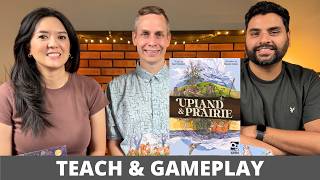
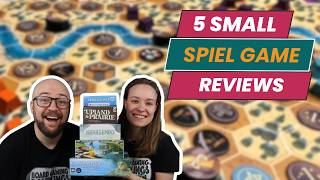
Upland & Prairie is a 2026 strategy game from designer Peer Sylvester, published by Osprey Games, in which players rewild either the Scottish uplands or the Montana shortgrass prairie by releasing animals and connecting habitats. Coverage so far is limited, and the reviewers who have played it do not agree on whether it works. Rahdo Runs Through came away impressed with its cleverness, while Board Gaming Ramblings found it dull and said it failed to deliver in any way.
The split is real rather than a matter of tone. Rahdo describes a design that is quick, simple to teach, and full of bluffing, and Rahdo calls it a clever game with no two ways about it. Board Gaming Ramblings describes the same core as flat. In one of those videos the reviewers say it lacked the sense of agency that would make their choices feel meaningful, and in the other the game is named as the biggest letdown of the month because it was the title they had hoped would be better. Both sides agree that the design is unusual and that the core idea is distinctive, so the disagreement is mostly about whether that idea produces enough excitement at the table.
Player count also comes up repeatedly. Rahdo says the game works with two players but is at its best with three or four, where the shifting table dynamics have more room to develop. Board Gaming Ramblings' reaction was negative regardless of setup, so the player count question is a matter of which experience a group expects. Anyone considering the game should weigh this detail heavily, since the reviewers' experience of the design changes with the number of people sitting down.
Core Mechanics That Define Upland & Prairie
Investment
The defining mechanic is a hidden bet on which animal will dominate the landscape. On a turn, a player draws three animal tokens from a bag without revealing them, keeps one secretly as a stake, returns one to the bag in secret, and places the last one openly on the shared map. Rahdo summarizes the core as "a bet," describing how a player who keeps a blue animal is wagering that blue will be the ascendant species by the end. Scoring then rewards whoever has invested most heavily in the winning animal. Because the kept token is hidden, the table reads each other only through the tokens that appear on the map.
Rahdo places Upland & Prairie in a route-building tradition but notes that it can just as easily be called an investment game. The tension comes from timing and pivoting. A player may build toward one animal, watch the table start to favor another, and shift stakes mid-game. Board Gaming Ramblings called the secret investment idea interesting on paper, saying that when they read the rules "it sounded really nice," but that in play the bet did not generate enough excitement.
Tile Placement
The second mechanic is spatial placement on a shared route. Rahdo explains that the goal is to connect watering holes or meadows on opposite sides of the board with one continuous line of a single animal type, and that the game ends once that connection is made. Each placed animal extends the network, and the board itself becomes more permissive as play goes on. Rahdo notes that early in the game only one animal can occupy a hex, but later two can share a space, which opens routes that were previously blocked. Each player's personal board is also built from tiles, so the layout can vary from game to game.
The placements matter because a new animal can cut off another player's route, and a player may help a rival simply by blocking an opponent's line. Rahdo describes this as "mind games upon mind games," since placing a red animal may reflect a real red stake, a bluff, or nothing more than a forced draw.
The Upland & Prairie Experience
Hidden-Bet Mind Games
Playing Upland & Prairie feels like reading a poker table without any cards showing. Every turn asks a player to decide what to keep, what to return, and what to place in full view, and the answers are never fully visible to anyone else. Rahdo emphasizes that the people at the table can only judge what has been put on the map, so each open placement becomes a clue to be interpreted. The result is a constant sense of second-guessing, with players wondering whether a visible move is a real commitment or a feint. For reviewers who enjoy reading opponents, this is the source of the game's appeal.
Brisk, Abstract, and Sometimes Flat
The other feeling is speed paired with a thin theme. Rahdo describes the game as taking well under twenty minutes, with simple rules that could be taught to almost anyone, and Rahdo frames it as a filler that still offers depth. The animals and habitats give the setting a light flavor, but the play itself is abstract and quick. Board Gaming Ramblings found the same brisk pace less rewarding. Johannes compared the experience to other games from the designer, saying The King is Dead offers far more excitement, and felt the choices in Upland & Prairie did not carry enough weight to stay engaging.
What Makes Upland & Prairie Stand Out
Simple Rules With Genuine Mind Games
Rahdo's strongest praise is for how much tension comes from very few rules. Rahdo says the design is "elegant" with "such simple pure rules that you could teach anybody in an instant," yet it still produces the hidden-bet and blocking decisions that keep players thinking. The game also plays quickly enough that Rahdo expects some players will make it a favorite they play several times a week. For groups looking for something short and different, this combination of accessibility and layered decisions is the main reason the game earned a place on the table.
A Board That Changes Over Time
Rahdo highlights how the board evolves. The early game is restrictive because each hex holds only one animal, but the later game opens spaces and creates new routes, which forces players to revisit plans they thought were settled. Combined with the modular player boards that can be laid out on either biome, this gives the game a structure that rewards adapting rather than memorizing a single path. Rahdo also points to the optional team mode as something Rahdo would like to try, which suggests the design has room beyond the standard competitive game.
Potential Drawbacks
Luck and Volatility at Two Players
Rahdo's main reservation is that the two-player game is highly exposed to the luck of the draw. With only one opponent, a player may see the trend toward a particular animal and then draw none of that animal for several turns, which can make the game feel decided too early. Rahdo felt the game is better with more people, where more bets and blocks interact and the outcomes are less predictable. Players who mainly play with two should expect this variance to shape their experience significantly.
Limited Agency and a Dry Feel
Board Gaming Ramblings' criticism focuses on whether the choices feel meaningful. Johannes said the game was missing a quality that would make the player feel more in control and more invested in each decision, and that the bet did not produce the satisfaction they expected. Their verdict was that the game was not for them, and that it was boring in play. Those who prefer a stronger theme or a stronger sense of direction may find the abstract, lightly themed design less engaging than Rahdo did.
If You Enjoy Upland & Prairie
Players who enjoy Upland & Prairie's hidden-bet tension will find a related appeal in The King is Dead, which Board Gaming Ramblings named as a more exciting design from the same designer. It is the natural next step for anyone who likes the idea of committing to a secret direction and then adjusting to what the table reveals.
Players who want the choice of cards but in a different structure can look to Courtiers. Board Gaming Ramblings compared the two because both ask a player to choose among a small set of options each turn, and they felt Courtiers handled that decision more engagingly. It suits anyone who wants more clarity over what each choice does while keeping the quick pace that Upland & Prairie offers.
What Reviewers Are Saying
"Mind games upon mind games because there's no way you can know for certain what anybody is specializing or focusing on. All you can judge is what have they put out on the table."
— Rahdo Runs Through
"It ended up being just not that exciting. I think like other games from the same designer, for example, The King is Dead, has way more like excitement in this."
— Board Gaming Ramblings
"Upland and Prairie didn't work for me in any way. I thought it was very boring. And that's why it was the game I hoped was going to be better than it was."
— Board Gaming Ramblings