













Wild World Deep Dive
What the Community Thinks About Wild World
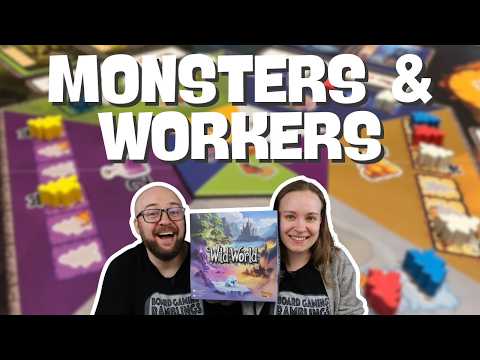
Wild World from Chilifox Games has impressed reviewers with its elegant blend of worker placement and multi-use cards. The consensus centers on respect for the design's depth and staying power: a game that reveals new layers with each play, never feeling solved despite its streamlined ruleset. Board Gaming Ramblings noted that the game "keeps growing on me" across repeated plays, with appreciation building for the subtle ways variable player boards and randomized action bonuses force different strategic approaches each session. Reviewers appreciate that the game is approachable for new players yet rewards optimization without becoming a puzzle to crack. The game lands firmly in the medium-weight Euro camp, offering what one reviewer called a "comfort food feeling" where challenging decisions coexist with snappy turns, particularly in two-player games.
Core Mechanics That Define Wild World
Multi-Use Card System
The creature cards at the heart of Wild World are the game's central engine, functioning as true multi-use cards that do vastly different things depending on how you deploy them. Each creature can be sent on a journey along a travel path to collect bonuses and points, placed at home to increase your recruiting strength for summoning new creatures, used as a fighter to engage monsters, or discarded for quick cash. This flexibility means that acquiring the right cards is crucial to success, as those cards then enable nearly everything else you do. The genius of the system lies in the permanent commitment of that choice: once a creature walks a path, it cannot fight. Once it guards home, its combat potential is locked away. This creates a satisfying puzzle of planning and sequencing that reviewers found kept them engaged across multiple plays.
Worker Placement with Rest Mechanic
Wild World takes the familiar worker placement formula and adds an unusual twist with the "rest" mechanic. After placing a worker to activate a realm action, you can later send that same worker to rest on an island, gaining a bonus action before the round ends. However, this carries risk: once all players have sent at least one worker to the island, the round immediately ends, even if players still have unplaced workers. This creates a push-your-luck element where rushing to use your advantage must be weighed against the danger of ending the round prematurely for your opponents. Reviewers noted this mechanic adds tactical depth, rewarding players who think carefully about timing without punishing those who make different choices.
The Wild World Experience
Building a Functioning Engine
Playing Wild World feels like constructing a living system where each decision ripples forward. The game creates satisfying cascades as you discover how creatures synergize, how your cauldron upgrade enables stronger fights, how a clever travel path placement gives you the resources to recruit the exact creature you need next turn. Reviewers consistently described finding joy in optimizing sequences of actions across their three limited turns, knowing that careful planning could unlock surprising bursts of efficiency. The multi-round structure means early positioning decisions pay off later, and the experience of watching your strategy come together, or the tension of watching it fall just short, creates memorable moments at the table.
Perpetual Tension Over Resources
Despite the elegant simplicity of Wild World's rules, the game creates constant tension through scarcity. Gold comes slowly and is always needed. Evolution tokens that make your creatures powerful are limited. Crystals serve multiple purposes but are hard to acquire in quantity. Cauldron space for potions must be upgraded deliberately. This tightness means most turns feel like solving a satisfying constraint: you want to do many things, but your limited actions force real choices. Reviewers appreciated that this tension feels fair rather than punishing; players who optimize can generally do most of what they want, yet the game never feels trivial. The difficulty scaling works, making the game accessible to new players while remaining engaging for those seeking to refine their approach.
What Makes Wild World Stand Out
Variable Setup That Prevents Solved States
Each game of Wild World presents different monsters to defeat, different travel paths to unlock, and crucially, different optional player boards and randomized action bonuses that rotate each round. This design choice matters tremendously for longevity. Reviewers noted that even after a few plays, the core puzzle never solidifies into a single dominant strategy. The variable boards in particular force players to pivot their approach based on which bonuses are available, preventing the optimization that can make medium-weight Euros feel tired after three plays. The flexibility keeps the game interesting session after session, rewarding players who understand the fundamentals while preventing mastery from becoming predictability.
The Island Mechanic's Risk-Reward Elegance
The island rest mechanic stands out as an unusual twist that changes how players think about worker placement fundamentally. Rather than the traditional approach of placing all workers first and then resolving, Wild World's rest action creates a second layer where you can boost your advantage but risk triggering the round end for everyone. This single rule adds remarkable depth: you must decide when to commit, when to push your luck, and when an opponent might use the island strategically to cut your turn count short. Reviewers found this created memorable moments of tension and forward planning, making each round feel like a complete micro-game with stakes that extend beyond the obvious point gains.
Potential Drawbacks
Tight Resource Economy in Early Plays
Wild World's economy of actions, gold, crystals, and cauldron space feels deliberately constrained to create decision weight. For players unaccustomed to optimization-focused games, this tightness can initially feel frustrating rather than engaging. You cannot comfortably do everything you want in your three turns per round, and stumbling into inefficient card usage can leave you scrambling. However, reviewers found this resolved naturally through familiarity: once players understood the synergies between cards and actions, the tightness became the game's primary appeal rather than a drawback. Still, the first few plays may feel more like puzzle-solving than the free exploration some players prefer.
Art Style Does Not Resonate Universally
The creature artwork, while functional and clear, does not match the aesthetic sophistication of some modern board games. Board Gaming Ramblings noted that the art style was not to their taste, with the graphic design feeling somewhat dated compared to the rest of the presentation. Some duplicate artwork across the creature deck may also feel like a cost-cutting measure to observant players. However, reviewers emphasized that this aesthetic choice does not undermine the game's mechanical excellence: once the game begins, the focus shifts entirely to the elegant systems and decisions, and the art fades into irrelevance for most players.
If You Enjoy Wild World
Players who appreciate Wild World's blend of worker placement and optimization will find similar satisfaction in other medium-weight Euros that reward careful planning and synergy-building. Consider Spectacular, which shares the theme of assembling creatures or components with complementary abilities. Come Together offers comparable satisfaction from building efficient card synergies. The core appeal of Wild World extends to any game where multi-use cards or variable player powers create the need to adapt strategy to your specific setup rather than follow a predetermined path.
More broadly, Wild World appeals to players who value games that stay engaging beyond the first few plays. If you seek a game that feels different each time without requiring new rules or complex modules, and if you enjoy the satisfying puzzle of sequencing limited actions for maximum effect, Wild World deserves serious consideration. The game's round structure makes it swift enough for weeknight play, yet the decisions are weighty enough for engagement-focused sessions.
What Reviewers Are Saying
"There's a really interesting twist to worker placement. Normally once you place a worker down that's it. They're not going to move until you recall all your workers at the end of the round. But in this game you can get a second bonus use out of workers."
— Rahdo Runs Through
"This game keeps growing on me. It's a little weird. I don't know. But I keep liking it more for each time I play it and I don't know if we play it 10 or 15 times if I will be like 10 out of 10, but it has for now at least staying power."
— Board Gaming Ramblings
"I think that this is a solid medium weight Euro. The thing is like even though you are if you are into like very heavier crunchier games, this is like a comfort food feeling. This is one where you sit down especially as I said with two players it was a bit longer with four, but going to get it down if you play it more."
— Board Gaming Ramblings