

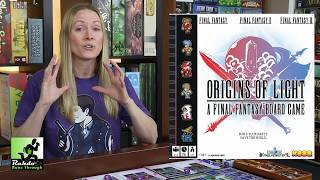


Origins of Light: A Final Fantasy Board Game Deep Dive
What the Community Thinks About Origins of Light
Origins of Light: A Final Fantasy Board Game, the adventure game from KessCo that was funded on Kickstarter, has drawn a split response from the reviewers who have covered it. Rahdo Runs Through came away enthusiastic after playing a two-player competitive game using the Final Fantasy 1 module. The Dice Tower approached the project with open skepticism. Good Time Society offered a shorter, positive first look at the prototype.
Rahdo Runs Through gave the most detailed endorsement. The reviewer described the game as a competitive strategy game that also supports cooperative play, and closed the video with a "real double thumbs up," adding that the playthrough was "tons and tons of fun." The channel's criticism was mostly limited to the prototype's components and some fiddly bookkeeping.
The Dice Tower's hosts were more guarded. They were speculating from a first look at the game rather than from play, and they tied their doubts to the track record of earlier Final Fantasy board games, citing Chocobo's Treasure Hunt as a disappointment. The hosts also said they love the Final Fantasy property and want it to succeed. Their skepticism is a prediction, not a verdict, and it sits alongside the more favorable reactions above without resolving them.
Good Time Society kept its comments brief but positive. The hosts called the game "very cool," praised its theme and the way it lets players level up dungeon boss battlers, and noted that they had filmed with a prototype that may change before release.
Core Mechanics That Define Origins of Light
Dice Rolling
Dice rolling sets the rhythm of every turn in Origins of Light. Before a hero acts, the active player rolls the targeting dice. The four-sided die shows one of four colored symbols, a green tree, a blue moon, a red cave, or a yellow sun, and each symbol tells the monsters and bosses which party position they strike. Rahdo Runs Through explained that the symbols include artwork so the game stays colorblind friendly. An "S" face triggers a special effect instead.
The reviewer's main strategic insight was that the die does not land evenly. Lower numbers come up more often, so Rahdo Runs Through recommended placing sturdier heroes in the front slots and fragile characters further back. The channel summed up the tension this creates: "because it's a dice roll, you never know." That uncertainty is what makes an enemy's attack feel like a live threat rather than a foregone conclusion, even when the party lineup has been planned carefully.
Resource Management
KessCo built Origins of Light around a steady flow of limited resources. Gold, items, action pawns, and ether tokens all compete for the same turn. Rahdo Runs Through described how each hero can only act once per cycle until the party's action pawns are spent. An ether token can refresh a pawn, so a player who spends one can send the same hero back into battle. Gold comes from kills, from the thief when that character is attacked, and from bosses, and it is spent in town on spells, equipment, potions, and cures.
The trade-offs are where the reviewers' interest sharpened. The Rahdo Runs Through reviewer deliberately held back gold after a town visit, reasoning that party healing and status removal would be expensive later. Every boss hit also presents a choice between buying a spell, taking three gold, or gaining an ether. Each option is worth something, and each one closes off the others.
The Origins of Light Experience
Building a Party Like a Role-Playing Game
The most consistent feeling in the reviews is that Origins of Light plays like a tabletop role-playing campaign. Players pick four heroes from six classes, line them up in order, and then equip them with weapons, armor, and spells that match each class's symbols. Rahdo Runs Through described the process as "the dungeon crawl and character buildup" that the box is built around, and emphasized that heroes grow stronger as they level up. Good Time Society likened the leveling to dungeon boss battlers.
That RPG feeling extends to the pacing. Party members drop and return, towns interrupt the dungeon run, and the monsters and bosses on the route escalate as the marker advances. Rahdo Runs Through said the design makes players feel like they are actually crawling through a dungeon, building up characters and fighting through each room.
Tense Turns with Just Enough Choice
Turns feel tense because each decision is small but meaningful. A player chooses one of three places for an action pawn, decides whether a hero should attack, cast a spell, or use a special ability, and then resolves the outcome against a random monster attack. Rahdo Runs Through said the balance was right: "there's just enough choice," and noted that turns get quicker as fewer heroes remain available to act. The reviewer also described the thrill of finding a strong combo, such as a spell that pairs with a hero's attack bonus, and then deciding whether to use it immediately or save it.
What Makes Origins of Light Stand Out
Competitive and Cooperative Play in One Box
Reviewers consistently highlighted that Origins of Light supports two different ways to play. In the competitive mode, players score victory points from leveled-up heroes, defeated monsters, and bosses, and lose points for hero deaths. Rahdo Runs Through noted that in competitive play, "it just never feels too bad" because players rarely interfere with one another. The only meaningful interaction is racing to defeat the same monsters and bosses.
The cooperative mode changes that dynamic. Rahdo Runs Through described the party working together to defeat bosses before penalties accumulate, such as hit point losses across the whole party when a boss survives too long. Good Time Society put it most simply: "This game is very cool. It's cooperative, but there is a competitive version." The Dice Tower also noted that the core game centers on Final Fantasy 1, with Final Fantasy 2 and Final Fantasy 3 modules available to scale characters up. Rahdo Runs Through said it was skeptical of competitive play at first but came away enjoying it.
Boss Fights That Reward Every Hit
Bosses in Origins of Light have far more hit points than ordinary monsters, so the reviewers focused on how the design keeps those long fights rewarding. Rahdo Runs Through explained that every point of damage dealt to a boss earns a bonus reward, whether that is a spell, gold, or an ether. Even the player who lands the final blow receives the boss card, which is worth three victory points compared with two for a regular monster. The reviewer said this prevents a last-second steal from feeling unfair, since everyone who contributed gains something.
Potential Drawbacks
Skepticism Rooted in Earlier Final Fantasy Board Games
The clearest concern comes from The Dice Tower. The hosts were excited by the Final Fantasy property but doubted that a board game could do it justice, and they referenced Chocobo's Treasure Hunt as a past disappointment that made them wary. One host argued that Final Fantasy should be able to produce a good board game, comparing it to other fantasy properties that have successful adaptations. The hosts also suggested that Final Fantasy Tactics and fantasy games such as Vantage, Lands of Gowser, and Sleeping Gods show the kind of design a Final Fantasy board game could draw from. Neither Rahdo Runs Through nor Good Time Society addressed the license's track record in their reactions, so this concern remains specific to The Dice Tower.
Prototype Components and Fiddly Bookkeeping
Both Rahdo Runs Through and Good Time Society stressed that they were playing a prototype. Rahdo Runs Through said the team was still refining the quality of the cards and boards, and that the reviewer's copy might not match the final product. Good Time Society warned viewers that "prototypes always different" and urged caution. Rahdo Runs Through also noted that the rules involve a lot of tracking, including experience, victory points, action pawns, and gear, and that players can easily forget a step. The reviewer admitted that "I had eight characters in my brain at once" and still wanted more time with the finished version.
If You Enjoy Origins of Light
- Final Fantasy Tactics is the title The Dice Tower's hosts pointed to as the video game most likely to translate into a strong board game. If the tactical party battles and character progression in Origins of Light appeal to you, the source material is the reference point the hosts kept returning to.
- Vantage, Lands of Gowser, and Sleeping Gods were named by The Dice Tower as the kind of fantasy-world board game design that a Final Fantasy property could borrow from. Readers who want a similar sense of adventure and exploration built around a strong setting should look at these titles.
What Reviewers Are Saying
"Essentially, you're doing your RPG. You're giving them equipment. You're giving them spells."
— Rahdo Runs Through
"I am a little worried about this in the sense of in just speculation. I think it's going to suck."
— The Dice Tower
"This game is very cool. It's cooperative, but there is a competitive version, which we highlighted the rules to here."
— Good Time Society