Investigating Board Game Miniatures
Games in This Video
4 games are featured in this video — they unlock as you watch.


Transcript
Because I've already purchased one miniatureheavy board game from publisher Steam Force Games, I knew better and did not bag Elden Ring the board game on Kickstarter. I already had experience with their kind of bad and boy oh boy did I not want more of it in my life. Okay, that's a lie. I did buy Elden Ring the board game in retail but in my defense only out of professional cur but only out of morbid curiosity. There I'm honest now. Happy. Okay. Almost honest. The real reason I bought Elden Ring the board game is because I wanted the miniature for Iron Fist Alexander which does not even come with the base game. It's an optional 20 pound add-on that I could have gotten for free if I did back the game on Kickstarter, but I didn't because I have principles. You see, I don't at this moment recall what the principle was, but that doesn't matter. Today, we'll be talking about everything plastic board game miniatures. The how and WHY AND WHY. BY THE END OF THIS VIDEO, unless you are literally a person that produces board game miniatures, you will have learned something that will help you understand why board games are the way they are. And armed with that knowledge, you will be able to make better choices when deciding if a board game is for you. For this video, I have consulted
with informed professionals who understand board game production better than anyone. I've talked to publishers. I've talked to miniature sculptors. That's the two type of people I talk to, but that's all I need really. They know this subject inside out. And every single one of them wished to remain anonymous. So, I can't credit anyone, which is sad, but also not that sad because I've extracted their soul and fed it to this YouTube video, which in a way immortalizes them anonymously. Also, this video was incredibly complex to write and film. The link to our Patreon is in the description. Back to this guy. If you're not video game brain, you are probably still aware of Elden Ring, and you might even have seen this jarhead in popular culture. But let me explain his deal. It won't be a long explanation, and I'll take any excuse to talk about this potbelly fella. Ironfist Alexander is a living jar. In Elden Ring, living jars are jars that store the flesh and viscera of dead soldiers. If that sounds weird, cool. Okay, you're kind of getting the point. Elden Ring is not a game that makes literal sense, and its authors are clearly obsessed with death and decay, and most from software games are basically a collection of all possible poetic expressions of these concepts in interactive digital mediums.
They're the Edgar Alan Pose, the Bram Stokers, the Mary Shellies of the 21st century, which makes Ironfist Alexander the modern modern Prometheus, the warrior flesh inside living jars animates them and gives them new life. They are new beings made of dead life. Thus, they are both Frankenstein and Frankenstein's monster. Buy one, get one free. They are explicitly coded, pun intended, as peaceful until provoked. The in-game item description that gives us this background then states, "Perhaps they were made to be better than their inards." Gothic fiction is having a bit of a revival at the moment. In the last year alone, we had a new Frankenstein movie, a new Withering Heights movie, a take on The Bride of Frankenstein is literally playing in cinemas as I write this. And also, Poor Things wasn't that long ago. Noserati was last year. But you know what started this revival in pop media? Elden Ring, Bloodborne, and Dark Souls. Admittedly, Gothic has never been my thing. No shade, it's just not my jam. But Frankenstein I have always loved. And I think not only it is the most timeless of them all, not that it's a competition, but it also speaks truest to human nature. An examination of what makes us us. If we remove taxes.
No, wait, it's the other one. If we remove death. Ironfist Alexander's story is that unlike all the other living jars who are happy chilling in the lands between being their new selves, he is keenly aware that he is made of warrior stuff literally. So he reasons that the purpose of his life is to pay homage to the ones he's made of. This is a sort of ego death. Here is new life, new chance given out of old. And Ironfist Alex Jarexander goes, "Actually, none of that for me, please. I want to make the same mistakes as the people whose dead flesh animates me." He takes part in many of the climactic battles of the game as a sort of assistant fighter. And because these battles involve you destroying the pantheon of this existence, Iron Fist Alexander is a god killer. As far as warrior stuff goes, that's hard to beat.
But it's not enough for him. For what is the ultimate expression of being a warrior if not to die in battle? And he can only think of one person that's made of sterner stuff than he is. That's right. You kill him. Nothing was learned. The whole thing is pointlessly nihilistic. I am of course being reductive. You could similarly argue that Elden Ring itself is the same expression of nihilism just extrapolated to a much grander scale. You play not only as a god killer, but as a killer of everything. Because by the time you are done with Elden Ring, every character that had a voice line is felled by you. Maybe not the giant poke turtle, but you can kill him too if you want. Frankenstein removes humanity a step from nature by breaking a fundamental link in nature's cycle. In nature, death is a scattering. We decompose and fertilize. The cycle is evolution, not reanimation, not new chances. In Frankenstein, the monster is a direct violation of that tenet. And Elden Ring says, "It doesn't matter because the cycle repeats anyway. It doesn't escape me that warrior Jar Alexander is a purposefully stupid character. The first time you meet him, he's stuck in the ground and you have to whack him out.
It's classic comedy relief." My point being is that Elden Ring is a game that contains multitudes, Walt Whitman intended. And Alexander is just a small sliver of a joke and I only gave you a small sliver of him. Pinocchio was never meant to ask what if a boy is just wood and that is already such an interesting question. The poetics of it are endless. So this jar of multitudes is on my um gaming table, right? The plastic encapsulates all of those poetics and expresses it in a new medium because THAT'S WHAT ADAPTATIONS DO, RIGHT? That's the point to reexplore or expand or steer it in new directions. The optional 20 pound add-on purchase for Elden Ring the board game continues the provocative conversation of existence and rebirth and semi plastic figurine.
Is evolution a fundamental part of nature or is it just an illusion? A tarnished may target Alexander with an attack. After resolving the attack, they may move him once. It's not quite what I was looking for. If you asked Reddit or BGG how NPI feels about games with miniatures, the consensus would be that we hate them, which is absurd and not true. Some of my best friends are miniatures. I own games with miniatures I am never getting rid of. And some of these games I like in part because the miniatures in them are cool. Would I have spent time of my life painting this scorpion from Ank if I hated miniatures? No. That's silly. However, some games, in my opinion, should not have miniatures. But for better or worse, spoilers, it's worse. Our industry demands miniatures, and I am not sure we will ever escape them. I knew things got weird when I opened the box for Matt Leox's latest corporative family game, Animal Rescue Team. In it, you are an animal rescue team dashing around a thinly disguised fictional version of the Bay Area, rescuing pets and farm animals who've been trapped by various disasters and bringing them back to shelters. My reductive review of this game is that it's a bit like Pandemic, but with mitigatable dice rolls to see if you succeed that is carried by the weight of a charming but also immediate
and timely setting. I like this game and would recommend it for family fun time, but only if you think your child will not cry when a pet dies in a fire. Mercifully, any pet dying is an instant loss, so mostly you're going to be fine. And if not, your kid just needs to get good, as they say. What's weird is that most pieces in the game are made out of wood. Your player pawn is a very old-fashioned ludoesque figurine. And the animal pieces that you rescue are adorable animeles of various sizes. This is important because they have bases that have to fit into the vehicles your rescuers drive, which are big honking plastic miniatures. To add complexity to the issue, the same spaces that hold the animals could alternatively hold a gear token. They cannot hold both. It is either the animal or the token. This miniature then solves a logistical design challenge. It physically represents that one space fits one of two things, which admittedly is an elegant use of a miniature. But aesthetically, there is a mismatch. The game is so colorful, yet the vehicles are citadel drab gray. But unlike games with big flashy miniatures that are meant to capture your attention so you part with money on crowdfunding like Elden Ring the board game, these miniatures are just sort of blocks of
plastic. I am 100% certain, even though this is just a guess, that the reason they chose plastic miniatures was because you simply cannot create wooden pieces with these precise cutouts to fit the wooden animals, much less also the tokens. But this is a production choice with trade-offs. Wooden vehicles would not only complement the other game pieces, but there's also screen printing, meaning that this game could have been 10 times more charming. You couldn't have the cutouts, but this doesn't feel like an unsolvable problem. The space restriction on vehicles could be represented in a different way. Instead, we have this. And it's like fine, but I don't think it fits the aesthetic or the feeling that this game is going for. In my book, a miss. And don't get me wrong, I am absolutely sure that the people who made this game are perfectly aware of this. They've weighed the pros and cons and plastic one in a game where pretty often animals are being put into dangerous situations because of fires caused by rising temperatures caused by plastic which also kills turtles and other animals.
The question then is why? Before we speculate on that, let's establish some basics. What are the pros of minis? What are the cons? Some of these will be obvious, but we need to have a baseline to continue this conversation. Pros. Minis can be much more intricate. Wood is aesthetically elegant, but as mentioned before, there's just so many things it can't do. If we look at Animal Rescue Team again, here's a trailer that can hook onto your car. Once again, this communicates a rule of the game visually and intuitively. That's neat. I mean, I'm sure I remember wooden toys from Soviet kindergarten that could do this, but it's entirely likely the complexity of the carving becomes too cost prohibitive because capitalism once again ruined everything. That's my Soviet joke. They can also be more representative. This looks more quote unquote realistic than a wooden block made to look like a car.
So, it can make a board game feel more serious, which is a tone you might want to go for if you want people to take your setting seriously, which is obviously why in Animal Rescue Team, they went with ludo ponds for the players. The realism minis also offer more potential for personalization. People can and probably have painted these and that goes a long way towards making something feel like your own and also gets people more excited when you break it out for game night. And finally, plastic is lighter than wood, reducing the overall weight of a board game, which makes the game easier to carry and in some cases cheaper for the publisher to ship. There are many more pros, but I am conscious of video length. So, on to the cons. I did mention that personalization is a pro, but it is also a con because most of us don't do it. We just have gray miniatures because we are not miniature war gamers. Again, some of you are, but I'm talking about the average board gamer. And even if we do paint, we probably don't have time to paint every board game with minis we own. this mini I showed you that I painted. I look at it and I think to myself, I should probably leave this painting log to the pros. So, I have a copy of Ank with two painted miniatures and the rest is just flat plastic. One day, though, right?
I'm sure the time will come. Plastic is more expensive to you, which is weird because traditionally we use plastic because it's a cheaper material than wood. The problem is that if you want your board game to have unique miniatures, you have what is called a tooling cost where they create the injection molds for your miniatures out of steel and they are not cheap. However, the cost is reduced to the publisher for repeat orders, which technically means that if the board game is successful, the publisher can reuse the molds and the cost per unit keeps decreasing. Let's say that hypothetically a miniature for your first print run costs 13 American cents to manufacture. For the second print run, it could be as low as three American cents. But that's only relevant to the publisher because obviously they're not going to reduce the cost of the board game for you. So, as an enjoyer of board games, plastic is always an increase in cost despite it ultimately being a cheaper material.
Miniatures need delicate storage, making boxes bigger. These boxes take up more space on your shelves and are bulkier to carry to game night. Plus, the figurines in the vacu tray things are a real hassle. They are clunky and cluttered for setup and play. And now the elephant. Obviously, plastic is plastic. Some people want their games to outlast them for some reason. I am not one of them. The environmental impact of board games is something we've discussed plenty of times in the past. So, I won't belabor here, but I will add one thing. Even if recycling was effective and even if the plastic miniatures were made of was recyclable, there's so very little likelihood of someone recycling a board game. We never throw these things into the bin. It's not in our nature, which is probably where you are asking,
EA, are plastic miniatures recyclable?
That's a great question. The short answer, probably no. The long answer is it depends. Like I mentioned, before publishers can give you miniatures, they have to make the molds. And not all molds are made the same. Most molds are created via a method called drop casting, which consumes so much electricity, it has to be performed at night because otherwise it would take out the grid. Drop casting only allows for soft plastic like PVC, which is technically recyclable, but not in a way that you have access to. If you chuck your mini into a recycling bin, no one will recycle it. It's going to become plastic waste. Theoretically, recycling centers could accept PVC, but they generally only want large uncontaminated pieces, meaning if you paint them or if they come prepainted, again, not recyclable. But also, PVC plastic miniatures already contain a pigment that was mixed into them during the production, the Citadel Drab Gray. So, the recycling potential of soft plastic miniatures is dubious at best. Another much more expensive way of creating molds is called digital tooling. The cost isn't the only reason why most publishers don't use it. Digital tooling is a technological secret that only a
few companies like Games Workshop and Asmody possess. But it allows for use of hard plastics like polyyrene or polyethylene terafal. also known as PET. Like PVC, polystyrene is recyclable only industrially, but according to an expert I spoke to, easier to recycle than PVC. PET, which is the plastic all your flying miniature see-through stands are made of, is quite recyclable. And whilst we're on the subject of Games Workshop, in some countries like England, Scotland, France, and parts of the US, you can take your old miniatures, sprews, and paint pots to your local Warhammer shop and deposit them into their special recycling system. They can do this because all Games Workshop miniatures have the same formula, making them more effective to recycle. Games Workshop claims that between 2023 and 2025, they have recycled 16 tons of plastic, which I imagine pales in comparison to how many tons of plastic they produced. But unlike the entirety of the board game industry, at least there is a system of unified materials with recycling solutions. In summary, technically I can't say no, your plastic miniatures aren't recyclable because there are edge cases where theoretically and in the lone case of Games Workshop, practically recycling is a possibility.
But really, it just doesn't happen. There's one more con that I've saved for last because to me it is the most perplexing element of miniatures in board games and it is exclusive to games like Elden Ring which are based on already existing video games or sometimes other media. A miniature is a physical representation and ownership of something you otherwise connect with only emotionally. The problem, as I've alluded to in the intro, is that the miniature cannot hold any of what made you connect with it in itself. Sometimes it will try to represent the core of the thing mechanically, but only in the shallowest terms. In Elden Ring, the board game, Iron Fist Alexander serves as a companion in certain fights. This is where the mechanical representation of what this character is begins and ends. It requires your emotional investment to carry the meaning over, but the mini itself doesn't hold that meaning. You can just catch a ghost of it via the physical portrayal in the sculpt, which is a tricky thing when you're trying to play these IP board games with someone else. If they're not into the thing that the board game is based on, this means nothing to them. No miniature will ever explain why you love it. It's like you're speaking different languages. In other words, when you play a video game, you can connect with something emotionally, but you don't get
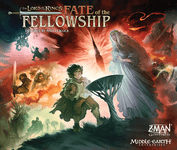
to own it physically. When you buy a board game version of that video game, you get to own it physically, but not connect with it emotionally. It is, for lack of a better word, a meme. But a meme you cannot always share. To prove my point, I will immediately contradict myself by telling you about a game where a miniature from an IPbased board game did carry over some emotional resonance that it had in the original work. Fate of the Fellowship is maybe one of those rare games that mixes all three figure representations, wooden, miniature, and cardboard standees. And if you're saying right now, wait a minute, Fit of the Fellowship does not have cardboard standees. It's made out of cardboard and it's stand.
I dare you to argue. This is a great example of a game that understands what the strengths and weaknesses are of each type of figure and when and where to use them. Plastic figurines for player characters would create a board state that's too difficult to read because each player controls two of them and the board is quite busy. Thus, each wooden figure has its own color, making them easy to identify on that busy board. Unlike player characters, the Nazoul don't move via the board's pathways. They are simply a presence in a game's given region. They also fly, so elevating them above the figures makes sense mechanically and thematically. The nauseical standies have different heights, giving them dynamic elevation, but most importantly, it lets them tower above the player figures with the wings engulfing our heroes. This once again makes the game state easy to read, but it also translates some of that sense of dread when a nasco appears in the story.
The feeling of being relentlessly hunted by a nearly unbeatable foe. That is not to say that it carries the full encapsulation of the character. You cannot imbue it with everything Nazgoul that they were once nobility that they fell to greed and corruption that they were raped neither living nor dead. This can never be the full monty but if used well it can elicit the precise emotion that is desired by the design. And that is something. I hope you can see the contrast here. The gulf between a mini deployed smartly and a mini deployed I'm going to say it manipulatively. This has been created to part with your dollar. This a smaller simpler sculpt has been created because it was the right tool for the piece to provoke a desired emotion and to make the work more approachable. When people say NPI hates miniatures, this is what I want them to understand. No, we don't. It would be absurd. We'd have to hate the entire genre of miniature wargaming on principle. And that's not what we're about. But we do like to think about whether miniatures were the correct artistic choice or are they here just so you can spend money to feel like you own the thing even though you never own the thing. So the obvious question is this.
If miniatures aren't always the correct artistic choice, if they are more expensive to the consumer and less practical, why are they used so frequently? Here comes the inconvenient truth. Miniatures are cheap to produce and they sell extremely well because they are seen as a premium item and can be priced accordingly. There are also other reasons. For example, some games belong to a genre like fantasy boss battlers, space themed 4x games, area control games with mythical characters. Each of these genres has an inbuilt core audience that will get excited about the next installment and they will look for identifying Marcus they have come to expect. So, if your fantasy boss battler doesn't have a giant boss miniature or your Space Forex game does not have dinky plastic spaceships or your area control game does not have miniature armies, you might lose a significant portion of your audience and profit by not playing towards their expectations.
Naturally, this raises the game's price, and some publishers, as a compromise, do offer a miniature less and a miniature full version of their games, which is a good thing. I like that this exists, but as a consequence, it created the perception that a game with miniatures is a more premium product. This perception of value extends further. For example, miniatures take up a lot of space in the box. So, the box has to be much bigger. If the box is bigger, surely it is more valuable, right? I will answer this. But first, here's my very belated, reductive review of Elden Ring, the board game. As I've already mentioned, it's terrible. This is a cooperative campaign game that is split into three parts. The first part is a narrative, choose your own adventure.
For the first mission, some poor schmuck at Steam Forged Games had to write a novelization of Elden Ring's tutorial cave. Even assuming that novelizing the tutorial cave is what people want out of Elden Ring the board game, the text itself and the gameplay prompts within the text thoroughly misunderstand Elden Ring. So, you get a narrative that feels like someone sitting down to play Elder Ring for the first time and literally writing down everything they observe, including how mossy the stones are. What do you do with that? Then you play this weird tile exploration game that is overong and tedious and for the first mission asks you to collect resources that are then literally taken away from you. Why did I waste my time on this?
And then you get to do a boss battle part, which is what some people say is the good part of Elden Ring, the board game. And I say it is only fine. It is functional. It is okay. I wouldn't actively choose it. Certainly not if I have to do the choose your own adventure tile exploration before it. They suck. Okay, here's a pop quiz to test the knowledge you've gained in this video so far. This is one standard size PVC plastic board game miniature. And this is one standard board game card with artwork. Which one of these is more expensive to produce? That's right. Trick question because the answer is, of course, it depends. How many print runs has the board game had? How many miniatures in the box? How many cards in the box? How much rules writing done for the card? How much rules writing done for the miniature? How much did the shipping cost? etc., etc. Before I inevitably tell you that yes, the plastic miniature was cheaper to produce than the one measly card, there's a few more things I want you to understand about everyone's favorite and most exciting subject, shipping. Every industry professional I spoke to was vehement about one fact. Paper is the most expensive material in board game production. Paper is much heavier than plastic and shipping containers have a weight limit. When you're dealing with large boxes, you are likely to hit that
weight limit sooner than you will hit the volume limit. A go. If your big board game box is mostly paper, you will hit that limit before your container is say 2/3 full at which point you are paying to ship air across the world. Anecdotally, I know of one game that has a particularly large box and uses a lot of paper. And I have heard that the shipping containers for that game are half empty because the weight threshold hits way too soon. Which means that if your big box has more miniatures in it than it has paper, you will save a lot of money because you can shove more games into the container to fill that space. So, the real answer to the pop quiz is this. It depends. But most of these dependencies relate not to which one of them is cheaper, but how much cheaper the plastic miniature is than the single paper card. Pop quiz number two. This Elder Ring board game box is gigantic and most of it is vacuay filled with minis. For it, I have paid £200 plus shipping. This is Dante Inferno, a boss battler that normally comes with minis, but this is the miniature less version with standees. I paid $120 for it before shipping, so about $90.
Although I did back this on crowdfunding and I bought this in retail. So to make the comparison fair, let's adjust Elden Ring's price to what they charge on crowdfunding as well. Uh Elden Ring is also a little bit wider. But then again, Dante Inferno uh was not just this one box. I also got this additional box of Kickstarter goodies and also this additional box of Kickstarter goodies. And also this additional box of Kickstarter goodies and also this tiny box of Kickstarter goodies. This is absurd and I don't really understand how any of this is economical, but that's the world of board games for you. So, now the obvious question, which of these was more expensive to produce? Again, trick question. No one's going to tell me how much it actually cost for them to make these. As a consumer, part of the price increase for you is that you are paying specifically for Elden Ring miniatures. But this price is a markup that does not reflect the cost of production. Ignoring these extra absurd Dante Inferno expansions, I cannot say this for a fact, but everything I have learned about board game production doing research for this video tells me that the miniatureless version of Dante Inferno was more expensive to produce than Elden Ring the board game. despite both boxes being about the same size and Elden Ring costing you almost twice as
much. Make that make sense. This creates a perverse incentive for publishers. Suddenly the business becomes less game and more miniature. If the perceived value comes from miniatures, then surely it's more important to deliver the miniature part than the game part. if that's what people pay money for. No one's going to be upset if the game is bad as long as they have that McGrit Defel Omen statueette. This isn't necessarily a great rule of thumb, but if a publisher is offering you two boxes and one of them is a much cheaper version of the game without miniatures, it's a telltale sign that they actually care about getting their game into your hands. because whenever they do it, they're producing a much less economical version of the game at a cheaper cost to you and a greater cost to them. They've already paid the massive tooling costs for the miniatures and the miniature less version could be more expensive to make than the one with miniatures. It could be that this is just a marketing move, but that marketing only pays off if people play the game and speak about it.
They're betting on gameplay. But what about the miniature itself? One thing we've not talked about yet is that a person made these. There is artistry in the sculpt. It's humanmade. I don't want to brush this point by the wayside because our industry tends to already do sculptors a disservice. If designers get top billing and artists often second billing, then a sculptor's name will almost never be seen on the box. I certainly appreciate miniatures for their artistry, but I find myself often associating that artistry with the publisher rather than the person who actually made them. I painted this scorpion, but I only know that the scorpion was produced by Simon. By heart, I could tell you the game was designed by Eric Lang. The art was Adrien Smith. Without looking into the rule book, I couldn't tell you who made this sculpt. It lists eight names and one studio. I still have no clue who made this. A lot of sculpting work is done as side gigs by 3D modelers who are normally contracted by video game studios. It is common for these contracts to include non-compete clauses, which means that the 3D modeler might ask to not be credited when they're working on a board game. Compare this to, for example, Magic the Gathering, which drops hundreds of new cards every couple of months, each with unique artwork, each of which is credited to the artists that drew them.
I'm not praising Hasbro here. They are their own bucket of problems. But when comparing industry practices to crediting, there is a Mariana trench between crediting artists in collectible card games and crediting miniature sculptors in board games. In summary, there is a part of this industry that makes bang on artistic work, does not like to credit the artistic work, appropriate the artistic work to bolster their brand, and is sometimes incentivized by the artists themselves to not credit the artistic work. I could stop here, but there's one last bee in my bonnet, and I am a big fan of bonnets, and also bees, but not together. I couldn't help but notice that when I purchased the Iron Fist Alexander miniature, it looked really cool. In fact, it looked just like Iron Fist Alexander from popular video game Elden Ring, but entirely in Citadel Party Brown. Notice that I said when I purchased, not when I received. And this is a very important distinction because the promotional image I saw for Ironfist Alexander on the Kickstarter page was a digital render rather than the miniature itself. What happens with digital renders is that they are very precise.
They have a lot of definition and they look cool. When you see that 3D model render, you are thinking, "Wow, this is amazing. I want that miniature because it looks just like the thing that I like." Of course. Then what happens is they make the steel molds and pour in the resin. And by the time the thing gets to you, the results vary from comparable to runny plastic, dull edges, and mold lines. The problem is this. Publishers cannot take a representative image of the actual miniature because at the time the campaign goes live, the miniature does not exist. They need funds from crowdfunding to afford the molds. They are the single biggest cost for making that entire board game. 3D printing one in advance would not create a miniature of the same quality either.
No matter how you try to dodge this issue, you are not creating a picture of what people will get. It will either be better or worse looking, but not the real deal. Some publishers will mark somewhere on their campaign that these are just renders, not actual images. But how prominent they make that information is questionable. If you've bought one of these games before, you already know the deal. But the reality is that whilst this miniature heavy side of the industry is propped up by a very strong core base of repeat Kickstarter backers, a large portion of backers will be firsttime buyers who saw these promotional images of miniatures of the characters they know and love from the video game or the movie or a '90s cartoon on social media and thought to themselves, "This sounds cool. I want that." But what they get is not quite what they've been promised in the picture. Even though the game has been produced and physically existed for at least a year now, Steam Forge Games website still lists this digital render as the image that showcases the miniature for Iron Fist Alexander. Not maliciously. I don't think they want to mislead you. They're just following industry standards and creating promotional images again is just so long and boring. Imagine having to take a nicely lit picture of every miniature with a cool background when that work's already been done. I tried to recreate the digital render as an actual photo.
And overall, I have to say this is not the worst example I've seen of before and after when it comes to miniature digital renders and the thing I got sent to me. But you can definitely see differences. The ring handles are less pronounced. The gaps between his toes have webbing. The base is much less sharp and doesn't look as elevated. And overall, this midrift section is much less detailed. It benefits from being a big miniature, a bigature, you might say. The smaller the miniature is, the more it suffers from losing detail. Although, again, there's a whole bunch of caveats here. For example, big miniatures are actually much more complex to make and usually are assembled in factory from many separate parts. But all of that aside, most miniatures you get in these boxes are small and usually not nearly as detailed as promised. The only practical solution to this issue is for publishers to make it as obvious as possible that these are 3D renders and not what the final product will look like, especially on advertisements. But most don't because none of this is regulated. Industry is cowboy [ __ ] and everyone does whatever they want. And when you try to raise any issue, the response is that the margins are very low. We are barely surviving.
We can't afford to change anything. I am not insensitive to that. If you ask me what it is like to run a board game YouTube channel that is independent and does not take publisher money, my answer would be that the margins are very low. We are barely surviving and we can't afford to change anything. I know what the deal is and that compromises have to be made. We try and put catchy titles and thumbnails on our videos, too, even though we're not very good at it. I'm not doing an expose here. I don't think any of these things are individually bad. I guess I would say that prioritizing producing a lot of plastic miniatures and then just slopping some systems together so you can call it a quote unquote game is bad. But that's me. There's plenty of people out there who actually want that. I don't understand why, but maybe it's not my business to understand and I am only judging a little bit. What I am saying is that there are a lot of incentives around miniatures. Incentives that create opportunities for producing more of them than necessary. incentives for producing miniatures over alternative types of pieces even when they are not the appropriate artistic or functional choice and incentives of marketing them in not entirely transparent ways and issues with crediting artists. And when you add all of that together, it creates
a trajectory for this industry that values volume over human work. But as a byproduct of that, it gives you the tools to better recognize intent. Whenever you see miniatures in a board game of any kind, you can ask yourself, should this have been a miniature? Does it serve it aesthetically and functionally? If no, why is the publisher thinking less about this than I am? It's not foolproof. I think Animal Rescue Team is a genuinely better game than the choice of using miniatures would imply. It probably has miniatures because of that reduced cost of repeated printings. The publisher probably thinks this game will have repeated printings because it's good enough to warrant the rules for why miniatures changes with genre, box size, price, target audience, and even current state of the world.
It's complex, but hopefully I helped untangle some of that complexity. What I don't want to do is put the responsibility of this on you. It would be incredibly easy to end this video with, I gave you the tools, now go make better choices. And that is precisely the opposite of what would encourage better practices in the industry because the onus should not be on the consumer. It should be on the industry itself. But short of creating a worldwide regulatory body that, I don't know, monitors the use of plastic and somehow gets every board game publisher to conform, I cannot get them to change how and when and how much they decide to use miniatures. What I can do, however, is dispel the idea of the value of miniatures. They are not as expensive as the price of board games with miniatures would lead you to believe. In fact, they are often cheaper to manufacture than some games that cost half as much. Ours is not one of the world's big industries. I imagine if we combined the entire total output of plastic, we'd still be generating less waste than any single given tech giant. Forget giant, we probably wouldn't outpace a tech taller than average person. But if we can decrease how much waste we produce, it is a global net positive. We should
clean up after ourselves. You know how people say starters, you mean to go on? This is it. This is the nence of our industry and the practices we establish now will dictate our future. And the only way we can encourage publishers to use less plastic is by decreasing our interest in it. They will only make what they think sells. So then I'm not asking you to change your behavior. I'm asking you to factor in this knowledge when you choose to buy. Often times I see people on big crowdfunding campaigns saying they see them as quote unquote good value. I'm asking you to consider that maybe it isn't. This video originally started out as an unscripted bonus video for our backers on Patreon. It was only when I realized the immensity of the subject did it dawn on me that no, this needs to be scripted because there's just so much ground to cover. And it's interesting, right? Who else wrote a video essay on board game miniatures? No one. Why is that? Don't answer. I secretly don't want to know. But if you want more NPI and don't mind it being unscripted, we started posting more bonus videos on slightly more esoteric subjects, how about a review of a Mario Kart board game. I say board game, but I mean, you will have to see for yourselves. Or my terrible attempt at staining a wood
insert and the many things you can learn from it to not repeat my mistakes. All of that is on our Patreon with the added bonus of supporting independent board game media.